
The 112th edition of the Tour de France begins on 5 July 2025, returning to its roots with a route raced entirely within France—the first time in five years. Starting in Lille, the peloton will journey westward through Normandy and Brittany, then carve an anti-clockwise arc down to the Pyrenees and back up through the Alps and Jura before the iconic finish on the Champs-Élysées in Paris.
| Date | 5 July 2025 – 27 July 2025 |
| Total distance | 3,320 kilometres (2,063 miles) |
| Number of stages | 21 |
| Start location | Lille, France |
| Finish location | Paris, France |
| UCI ranking | WorldTour |
| Edition | 112th |
| Total climbing / elevation gain | 51,550m |
| Leader’s jersey colour | Yellow (Maillot Jaune) |
| Last winner | Tadej Pogačar (Slovenia) |
| TV coverage (UK) | Eurosport, Discovery+ |
| TV coverage (US) | NBC Sports, Peacock |
Route Breakdown: A Test for the Pure Climbers
The 2025 route is a high-altitude gauntlet, featuring five summit finishes and covering four major mountain ranges: the Alps, Massif Central, Jura, and Pyrenees. A brutal 11km mountain time trial to Peyragudes and a total of 44km against the clock will severely test general classification ambitions.
Key climbs include the Col de la Loze (eastern side debut), Hautacam, Mont Ventoux, Puy de Sancy, and Col du Tourmalet. With the first summit finish landing on Bastille Day, expect fireworks in week one, while the GC is likely to be shaped across weeks two and three in the Alps and Pyrenees.
Read our full guide to TdF 2025 Stages

| Stage | Date | Start | Finish | Distance | Terrain |
|---|---|---|---|---|---|
| Stage one | 5 July | Lille | Lille | 185km | Flat |
| Stage two | 6 July | Lauwin-Planque | Boulogne-sur-Mer | 212km | Hilly |
| Stage three | 7 July | Valenciennes | Dunkerque | 178km | Flat |
| Stage four | 8 July | Amiens | Rouen | 173km | Hilly |
| Stage five | 9 July | Caen | Caen | 33km | ITT |
| Stage six | 10 July | Bayeux | Vire Normandie | 201km | Hilly |
| Stage seven | 11 July | Saint-Malo | Mûr-de-Bretagne Guerlédan | 194km | Hilly |
| Stage eight | 12 July | Saint-Méen-le-Grand | Laval Espace Mayenne | 174km | Flat |
| Stage nine | 13 July | Chinon | Châteauroux | 170km | Flat |
| Stage ten | 14 July | Ennezat | Le Monte-Dore Puy de Sancy | 163km | Mountains |
| Stage 11 | 16 July | Toulouse | Toulouse | 154km | Flat |
| Stage 12 | 17 July | Auch | Hautacam | 181km | Mountains |
| Stage 13 | 18 July | Loudenvielle | Peyragudes | 11km | ITT |
| Stage 14 | 19 July | Pau | Luchon-Superbagnères | 183km | Mountains |
| Stage 15 | 20 July | Muret | Carcassonnne | 169km | Hilly |
| Stage 16 | 22 July | Montpellier | Mont Ventoux | 172km | Mountains |
| Stage 17 | 23 July | Bollène | Valence | 161km | Flat |
| Stage 18 | 24 July | Vif | Courchevel Col de la Loze | 171km | Mountains |
| Stage 19 | 25 July | Albertville | La Plagne | 130km | Mountains |
| Stage 20 | 26 July | Nantua | Pontarlier | 185km | Hilly |
| Stage 21 | 27 July | Mantes-la-Ville | Paris Champs-Élysées | 120km | Flat |
Return to Paris: Tradition Restored
Following last year’s Olympic detour to Nice, the race’s final chapter is set to play out where it belongs—on the Champs-Élysées. Fifty years since its debut on Paris’ most prestigious boulevard, the Tour returns for its classic celebratory sprint showdown.
Contenders for Yellow: Four Giants Collide
The GC battle will center around a formidable quartet:
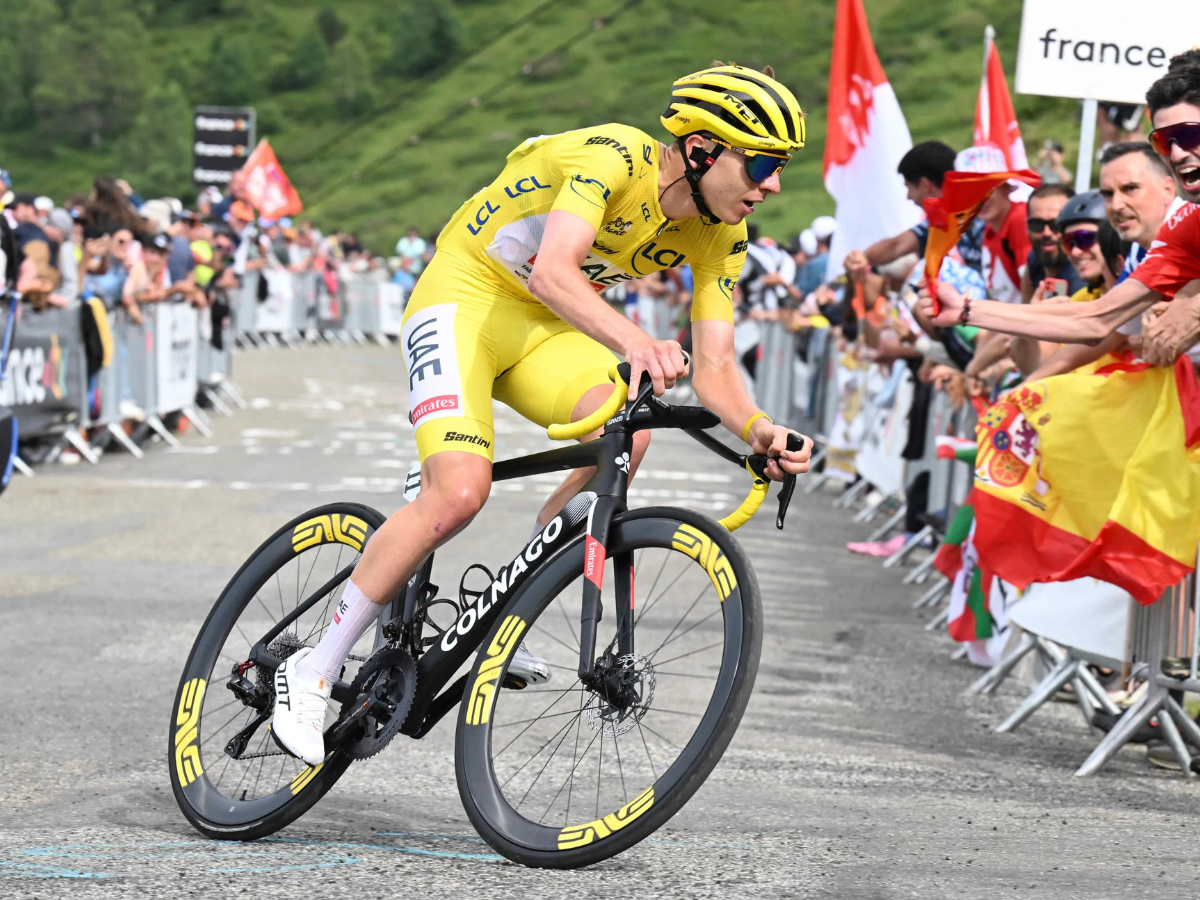
- Tadej Pogačar (UAE Team Emirates): 2024’s Triple Crown king arrives as favourite after a dominant season that included wins at the Giro, Tour, and Worlds.
- Jonas Vingegaard (Visma-Lease A Bike): Double Tour champion and last year’s runner-up, aiming to reclaim supremacy.
- Remco Evenepoel (Soudal-Quick Step): A 2024 podium finisher and white jersey winner, targeting the flat ITT on stage five as his springboard.
- Primož Roglič (Red Bull-Bora-Hansgrohe): A Grand Tour legend seeking to finally conquer the Tour after years of near misses.
Look out as well for Carlos Rodríguez, who leads Ineos Grenadiers after an impressive 2023 debut.
Sprinters to Watch
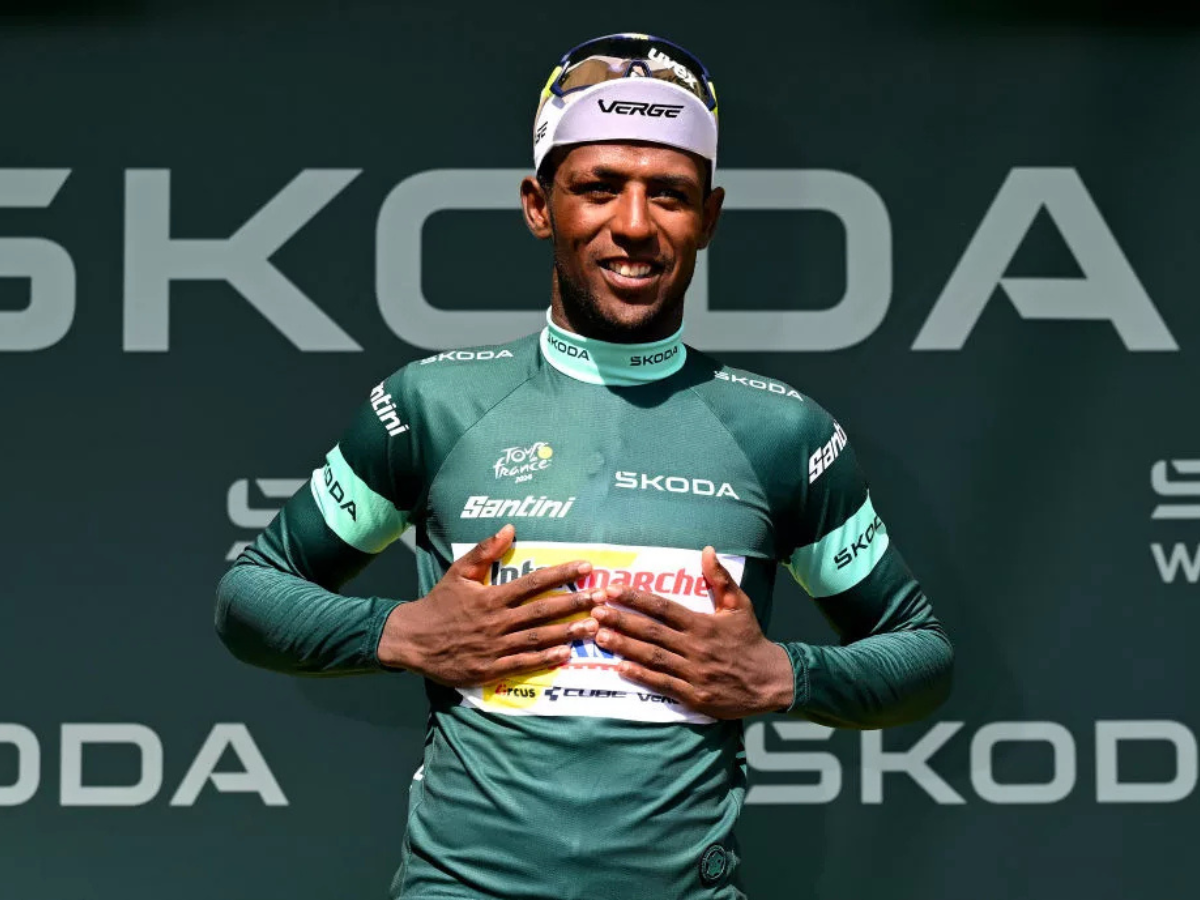
Jasper Philipsen (Alpecin-Deceuninck) and Biniam Girmay (Intermarché-Wanty) were last year’s headliners, bagging three stages each. Girmay made history as the first black African stage winner and green jersey holder—can he do it again?
Other elite sprinters in contention: Dylan Groenewegen (Jayco-AlUla), Tim Merlier (Soudal-Quick Step), and Jonathan Milan (Lidl-Trek).
Teams Lining Up
A record 23 teams will start the race, comprising all 18 WorldTour teams, two top-ranked ProTeams, and three wildcard entries:
Alpecin-Deceuninck, Arkéa-B&B Hotels, Bahrain-Victorious, Red Bull-Bora-Hansgrohe, Cofidis, Decathlon AG2R La Mondiale, Team Picnic PostNL, EF Education-EasyPost, Groupama-FDJ, Ineos Grenadiers, Jayco-AlUla, Intermarché-Wanty, Israel-Premier Tech, Lidl-Trek, Lotto, Movistar, Soudal Quick-Step, TotalEnergies, UAE Team Emirates-XRG, Uno-X Mobility, Visma-Lease a Bike, XDS Astana Team.

Where to Watch the Tour de France 2025
UK & Europe: Live on Discovery+ and Eurosport (£6.99/month or £39.99/year). ITV4 will stream for free in the UK—for the final time.
USA: Watch on NBC Sports via Peacock Premium ($4.99/month).
Canada: Stream on Flobikes for $209.99/year.
Australia: Free via SBS on Demand.
Check out our full Where to Watch the TdF 2025 Guide
Jersey Classifications
- Yellow: Overall time leader
- Green: Points (sprinter) classification
- Polka-dot: Mountains leader
- White: Best young rider (U26)
- Red Number: Most combative rider per stage
The team classification aggregates the times of the first three riders per team. Bonus seconds (10, 6, 4) are awarded on stage finishes and select climbs to encourage aggressive racing.
Prize Money
Expect similar payouts to 2023, when Vingegaard earned €535,220 for his overall win, distributed among riders and staff.
Tour de France: Key Facts
The Tour spans 23 days (21 race days) with two rest days. Stage lengths range from 100km to over 210km, with average daily ride times around 4–5 hours. The 2025 edition features:
- Stage 5 ITT: 33km in Caen
- Stage 21: 120km final sprint into Paris
- Longest Stage: Stage 2 – 212km
Modern Tours require a complete rider—one who can dominate in climbs, handle time trials, and tactically navigate flat stages. Just ask Pogačar or Vingegaard.
- Where to Watch Tour de France 2025
- Tour de Frace 2025 Odds
- How are the favourites preparing for the Tour de France 2025?
- Tour de France 2025 Route Preview
Tour de France FAQ
How does the Tour de France work?
The Tour de France stands out as one of three prestigious races that span three weeks, collectively known as the Grand Tours, alongside the Giro d’Italia and the Vuelta a España. The Tour stands out as the most recognized and arguably the most esteemed event.
The second of the three races on the calendar unfolds, with the Giro scheduled for May, the Tour typically in July, and the Vuelta set for August and September.
The Tour, akin to all Grand Tours, features a diverse landscape that includes flat stages for sprinters, hilly segments for puncheurs, and mountainous challenges for climbers and GC contenders, complemented by time trials. To emerge victorious, a rider must excel across all types of terrain.
The ultimate accolade in the race, referred to as the general classification, hinges on time, with the overall leader proudly donning the iconic yellow jersey. The rider who accumulates the least amount of time over the 21 days of racing emerges as the race leader and ultimately claims victory. It is possible for riders to clinch the Tour de France title without securing a single stage victory, as demonstrated by Chris Froome in 2017. Stage winners receive time bonuses of 10, six, and four seconds, providing a compelling incentive for general classification riders to pursue individual victories and reduce their overall time.
In 2020, Tadej Pogačar clinched victory with an impressive time of 87 hours, 20 minutes, and 5 seconds, finishing just 59 seconds ahead of the second-place rider. The journey extends to the very last place rider, Roger Kluge from Lotto-Soudal, who crossed the finish line 6 hours, 7 minutes, and 2 seconds later.
The white best young rider’s jersey is determined in a similar fashion, with eligibility restricted to riders who are 25 years old or younger.
The polka-dot mountains jersey and the green points jersey are awarded based on a points system rather than time. Time would only be a factor if riders are tied on points; in that case, the determination would shift to who holds the best position in the general classification.
The team classification relies on the overall times of the top three riders from each team during every stage. The combined time of the three riders is calculated and added to their team’s overall time, resulting in a general classification list similar to the individual standings. The top team proudly dons yellow numbers and helmets throughout each stage.
The ultimate classification on offer is the combativity prize. A race jury or, more recently, Twitter, makes this decision. This occurs right before the conclusion of each stage, typically awarded to a rider from the breakaway who has delivered an audacious performance or sought to invigorate the stage with an attack. The recipient of the combativity award proudly dons a distinctive red race number in the next day’s stage.
A final prize has been introduced, with the Super Combativity award set to be presented on the podium in Paris. The selection is made in a manner akin to identifying the most bold, captivating, and audacious rider throughout the entire three-week event. Typically, this will be directed towards a rider who has consistently been part of the breakaway.
Stage winners don’t don anything extraordinary the following day, aside from receiving a small yellow jersey to affix to their bike number. This jersey can be swapped out if they clinch additional stage victories.
Teams previously arrived at the race with nine riders, but the UCI, the governing body of cycling, determined that having nine riders per team posed too great a risk. As a result, the limit was reduced to eight riders, leading to an increase in the number of participating teams.
How long is the Tour de France?
The Tour de France unfolds over an exhilarating span of 23 days, featuring 21 thrilling race days. The riders enjoy two days of rest, typically scheduled for the second and third Monday of the race. However, this year, the first rest day is set for a day later than usual to accommodate the excitement of racing on Bastille Day.
Road stages can vary significantly, typically spanning from approximately 100km to nearly 250km, and occasionally even longer. This year, the shortest road stage is stage 21, spanning 120km from Mantes-la-Ville to Paris, while the longest stretches 212km on stage two, traveling from Lauwin-Planque to Boulogne-sur-Mer.
Road stages typically last about four to five hours, with some of the longer days occasionally stretching beyond seven hours.
Time trials consistently take less time. In the realm of road racing, team time trials have faded into the background, leaving individual time trials as the primary focus of attention today.
In 2025, riders will face two individual time trials during the Tour, presenting a unique challenge to showcase their skills. Stage five presents a challenge for the specialists, featuring a 33km time trial that begins and ends in Caen. The second route spans just 11km, winding through a captivating mountainous landscape from Loudenvielle to Peyragudes.
When does the Tour de France start?
The 2025 Tour de France kicks off on July 5 in Lille, located in northern France, featuring an exciting road stage. This year marks a remarkable return, as the Tour is set to unfold entirely within the borders of France for the first time in five years. The race culminates in Paris three weeks later, featuring the classic procession for the general classification riders and an exhilarating sprint for the speedsters on the legendary Champs-Élysées.
The race in 2025 is set to take place from July 5 to July 27, featuring an exciting lineup of 21 stages.