 Alex MacQuoid
The Giro d’Italia is never won in one day — it’s a meticulous game of strategy, not unlike chess. And just like in chess, losing a key piece can alter the trajectory of the endgame. For Primož Roglič and Red Bull-Bora-Hansgrohe, that moment came on a chaotic stage six when superdomestique Jai Hindley was forced to abandon.
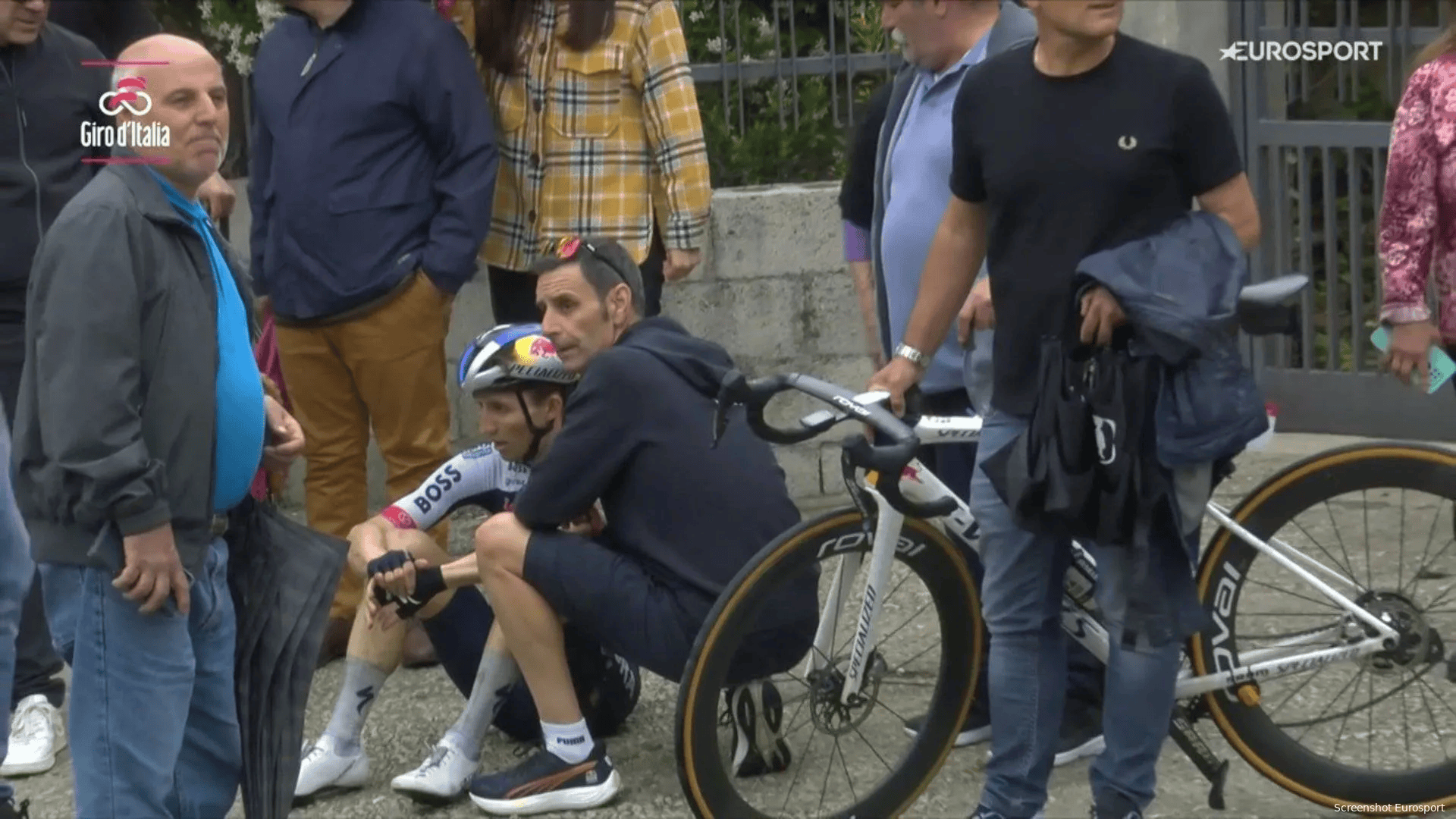
Why Hindley Was More Than Just a Domestique
Labeling Hindley as a mere pawn does a disservice to his stature. The 2022 Giro winner was expected to double as a high-GC threat and a crucial asset in the mountains. His role was to apply pressure, challenge rival teams, and serve as a tactical cushion for Roglič. The Australian’s presence would have allowed Red Bull to deploy multi-pronged attacks, mirroring the strategies of super teams like UAE Team Emirates-XRG and Visma-Lease a Bike.
What Changes for Red Bull Tactically?
Without Hindley, Red Bull loses flexibility. Gone is the option to send multiple riders up the road to test rival squads. Now, they must be more conservative — a shift from aggressor to reactor. The strategy of whittling down GC contenders via relentless climbing pace from Hindley, Daniel Martínez, and Giulio Pellizzari must be reconsidered. There’s a real risk of overextending their remaining mountain support and leaving Roglič exposed in critical moments.
Currently sitting second overall with an 18-second buffer over Juan Ayuso, Roglič holds a promising position. His dominant time trial on stage two has set the tone, and with another chrono still to come, time is on his side — for now. But Grand Tours are as much about survival as they are about strength. One bad day, a mechanical mishap, or fatigue, and without Hindley, the Slovenian could find himself isolated and vulnerable.
If there’s a team capable of capitalizing on Red Bull’s loss, it’s UAE Team Emirates-XRG. With Ayuso as leader and a support cast featuring Adam Yates, Isaac del Toro, Jay Vine, Brandon McNulty, and Rafał Majka, their mountain arsenal is formidable. Should they decide to