
| Prefer us on Google — see Tips.gg in Top Stories & Discover | Add on Google |
The 81st Vuelta a España is built to punish complacency: roughly 3,300 kilometres from Monaco to Granada, 58,156 metres of climbing, six summit finishes, a fortnight of Andalusian heat, and a Granada finale with a real kicker on its closing circuit. Tadej Pogačar confirmed on 3 August, chasing the one Grand Tour missing from his palmarès, and he arrives with João Almeida, Jay Vine, Pavel Sivakov and Pablo Torres alongside him. Behind him the race is more open than any Grand Tour has been in years, and the previews have mostly settled on the same three or four names. These are the riders they are skipping.
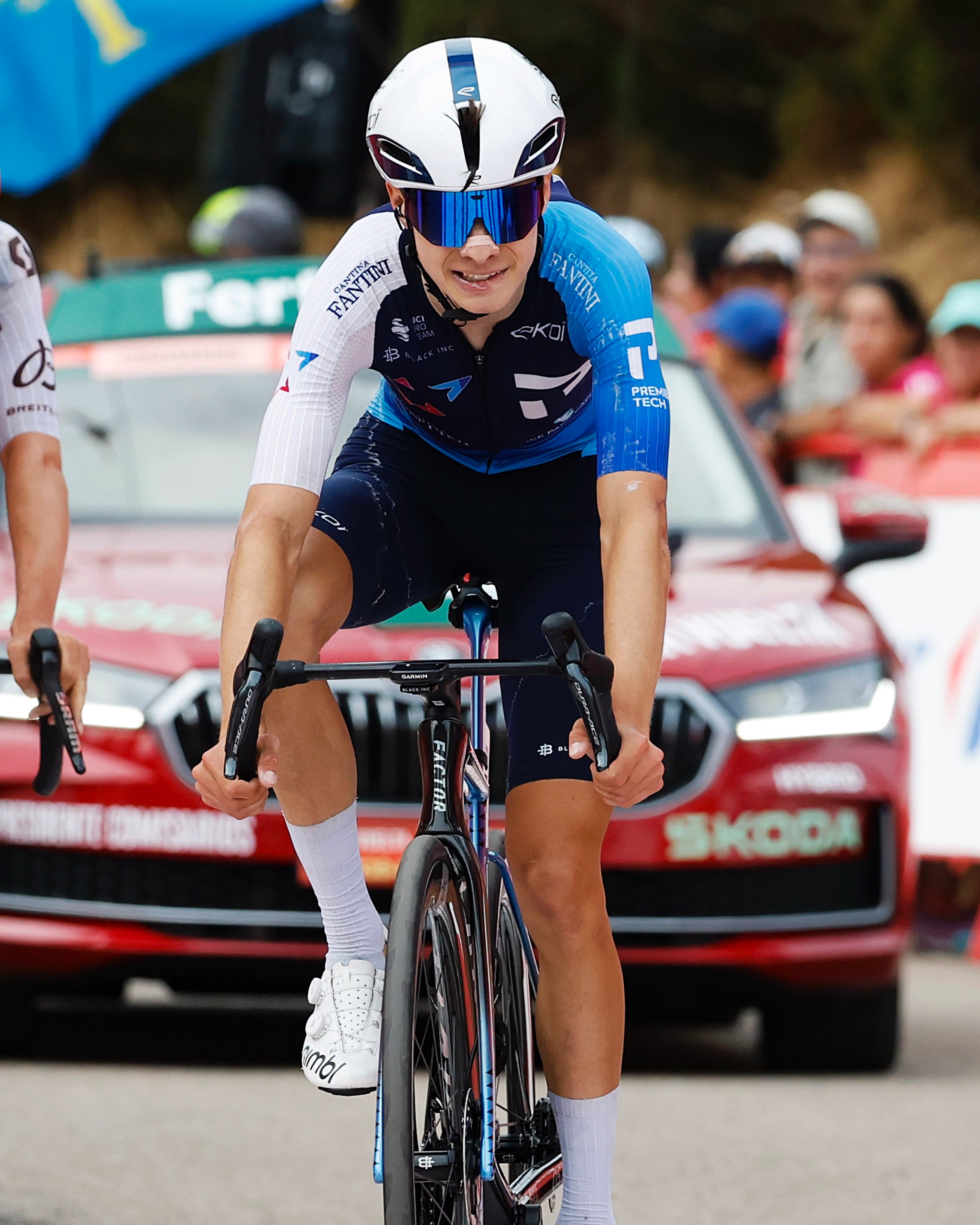
Matthew Riccitello
https://x.com/NSNCyclingTeam
- Finished 5th overall at the 2025 Vuelta a España and won the white jersey as best young rider
- Won the 2026 Tour de la Provence overall, including the summit finish at Lure, where he outclimbed Carlos Rodríguez for his first victory in Decathlon colours
- Won the Tour du Jura 2026, attacking roughly 3km from the top of Mont Poupet and soloing in ahead of teammate Léo Bisiaux and Jordan Jegat
- Finished 7th overall at the 2026 Tour de Suisse and second in the young rider classification, behind only Mathias Vacek
- First season at Decathlon CMA CGM on a three-year deal
The 2025 result is the foundation and it deserves more weight than it gets: fifth in the most heat-exposed, altitude-laden Grand Tour on the calendar, held through a 24km flat time trial on stage 18. At 55 kilograms he loses less against the clock than the watts-per-kilo model predicts, which is exactly why his three-week ceiling is higher than his build suggests.
2026 has been a season of confirmation rather than a single headline. Provence in February, Mont Poupet in April, then seventh overall at a Tour de Suisse that Pogačar turned into a procession — no collapse, no bad day, consistent placement against elite climbers across five months. Stable form matters enormously over 21 days, and it is the thing most easily overlooked in favour of a single spectacular result.
The complication is Felix Gall. Decathlon go to Spain with genuine dual leadership: Gall arrives off second overall at the 2026 Giro d’Italia, 5:22 behind Jonas Vingegaard, and the team’s stated goal was a top-five GC at both the Giro and the Vuelta. That is not a rider who will ride in support. The counter-argument is timing — Gall’s Giro was in May, riders peaking twice a season rarely peak equally, and Riccitello has been building toward August since February. If Gall’s form has faded, the hierarchy resolves itself quickly on the road.
The route fits Riccitello almost absurdly well. The Andalusian second half — Calar Alto on stage 12, Sierra de la Pandera on stage 14, Peñas Blancas on stage 19, and the 5,041-metre monster to Collado del Alguacil on stage 20 — is exactly where he does his best work. Stage 18’s flat 32km to Jerez will cost him, but 2025 says the damage is survivable if he arrives inside 90 seconds of the leaders. Font Romeu on stage 3 is the first test; the Alto de Aitana on stage 9 is the real one.
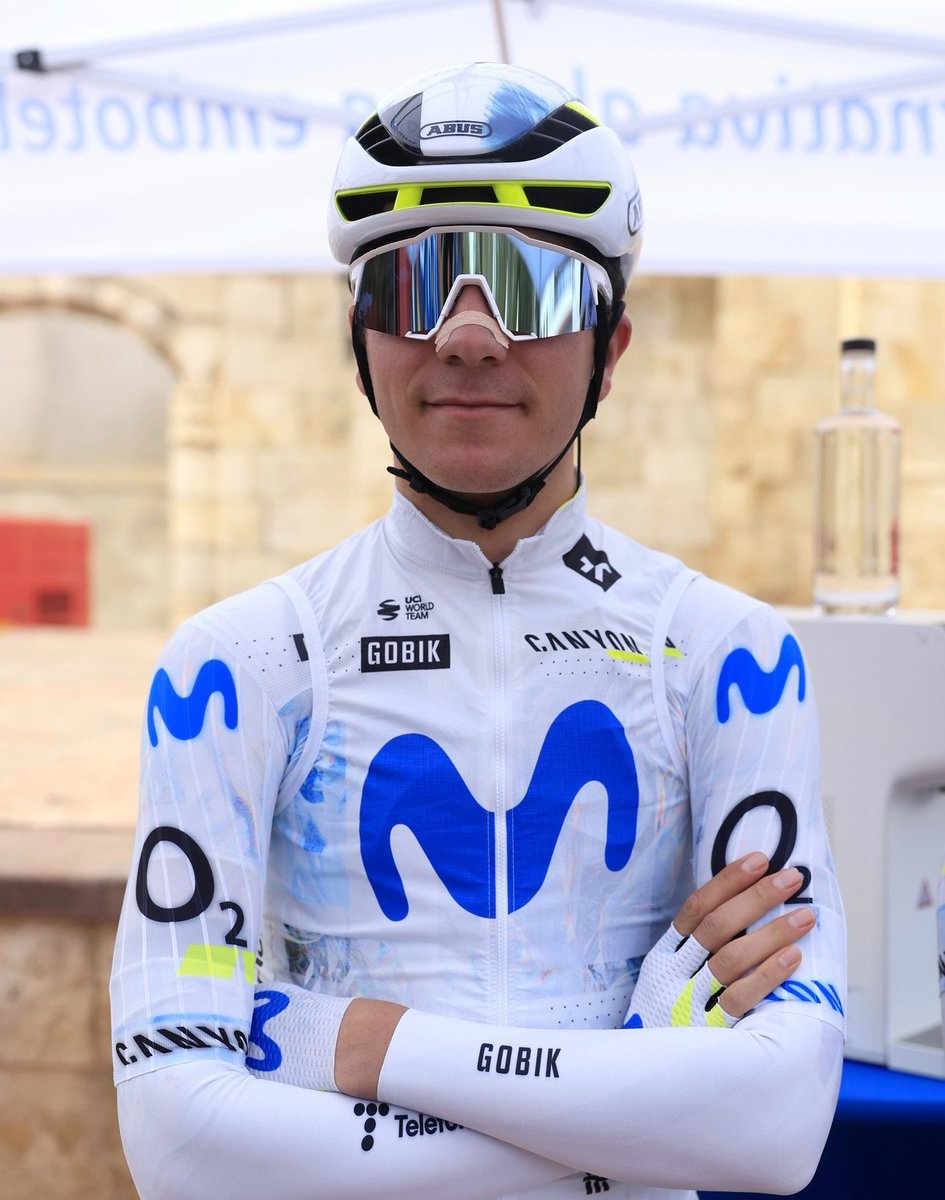
Cian Uijtdebroeks
https://x.com/Movistar_Team
- Won the 2025 Tour de l’Ain overall with a solo victory on the Col du Grand Colombier, dropping Nicolas Prodhomme and finishing over three minutes clear — his first professional win
- Finished 4th overall at the 2026 Tour Auvergne-Rhône-Alpes in June, 3:11 behind Isaac Del Toro, immediately before the Tour de France
- Abandoned the 2026 Tour de France on stage 6, dropped on the Col d’Aspin and withdrawing on the Tourmalet after a week of fever and stomach problems, compounded by a shoe failure
- Finished 8th overall at the 2023 Vuelta a España on his Grand Tour debut
- Rides for Movistar alongside Enric Mas, with Einer Rubio, Nairo Quintana, Pablo Castrillo, Iván Romeo and Raúl García Pierna confirmed
Almost every assessment of Uijtdebroeks written since July leans on the same event, and it is the wrong one to lean on. His Tour de France revealed no physical ceiling and no tactical weakness. He was ill from the opening week, lost time before the mountains arrived, was fighting to stay in contention by stage 5, and once UAE lifted the pace on the Aspin there was nowhere to hide. Movistar pulled him to protect his health and point the season at Spain.
Two weeks earlier he had finished fourth overall at the Tour Auvergne-Rhône-Alpes, in a race won by Del Toro and contested by Ayuso, Jorgenson and Skjelmose. That is a genuine WorldTour GC result, six weeks old, and it is the number that should be doing the work in any honest assessment of him. The 2025 Grand Colombier win shows the mechanism underneath it: a solo raid from more than 10km out, three minutes clear at the line.
Uijtdebroeks is a diesel climber in the truest sense — no explosive punch, but enormous sustained wattage over long sequential efforts, and this Vuelta is loaded with them. Stage 20 to Collado del Alguacil, over 5,000 metres of climbing in a single day, is the environment he was built for, and Rubio, Castrillo and Quintana can pace deep into it.
The real question is not health, it is hierarchy. Enric Mas was third at Burgos on the Valle del Sol, two seconds off the win, and looks closer to his best than he has in years. Movistar arrive with two credible riders and no mechanism for choosing between them before the road decides. If Uijtdebroeks survives the Aitana on stage 9 in the lead group, that question answers itself.
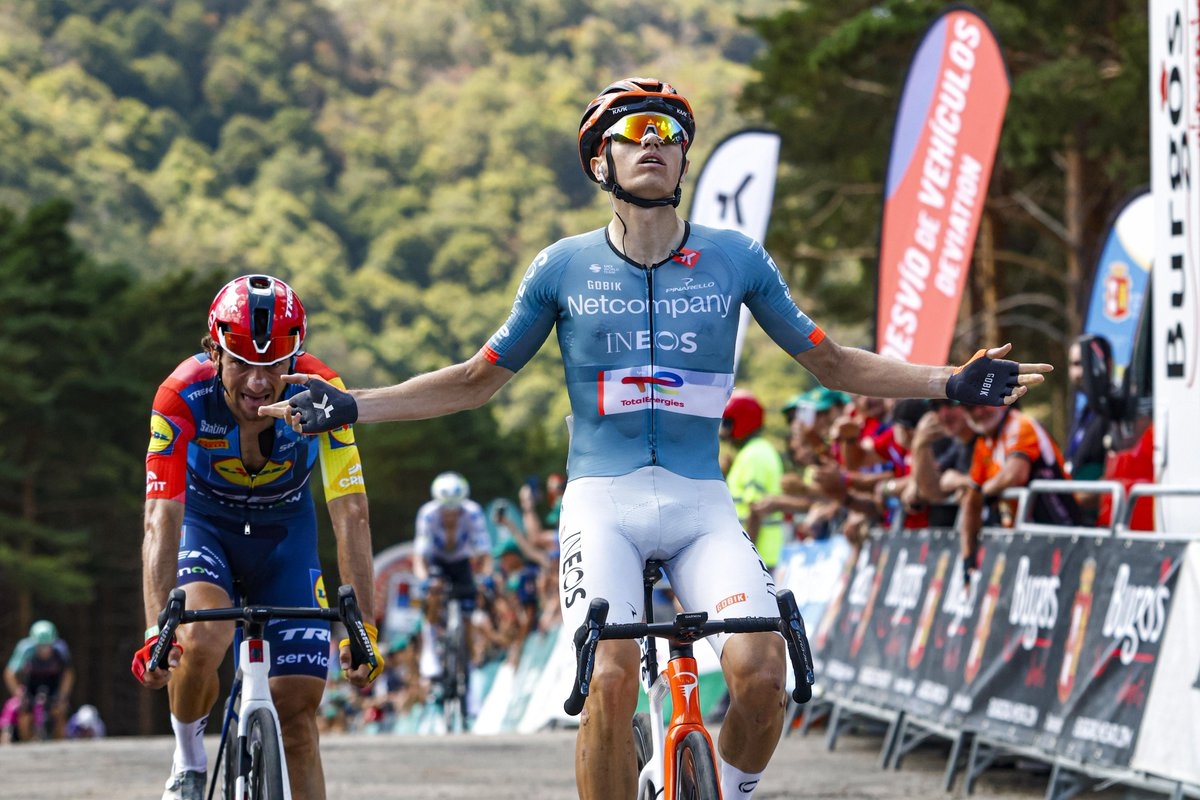
Oscar Onley
https://x.com/Domestique___
- Won stage 2 of the 2026 Vuelta a Burgos on 5 August, beating Giulio Ciccone in a two-up uphill sprint on Valle del Sol (3.4km at 7.6%), with Enric Mas third and Jarno Widar fourth
- Finished 4th overall at the 2025 Tour de France, just over twelve minutes behind Pogačar, equalling the best result by a Scottish rider in race history
- Missed the 2026 Tour de France after crashing at the Tour Auvergne-Rhône-Alpes in June, following illness that ended his Paris-Nice and Tour de Romandie
- Joined Netcompany INEOS for 2026; Burgos was his first win for the team and only the third of his professional career
Onley is the most in-form rider heading into this race, and by now the least secret pick on any list of outsiders. The Burgos win was the real thing: not a solo raid against fatigued domestiques, but a head-to-head on a 7.6% gradient. Jay Vine tested the group inside the final 1.3km, Widar opened the sprint too early off the steep pitches, and Onley came past him and held off Ciccone in a straight two-up drag, with Mas third at two seconds. Elite climbers at peak Vuelta preparation, beaten from the front, in his first race back.
Three things temper it. The first is that this has not been a freshness season, it has been a broken one — illness out of Paris-Nice and Romandie, no condition at Catalunya, a crash into a ravine at Auvergne-Rhône-Alpes that cost him the Tour. One good day at a 2.Pro race is evidence of form returning, not proof of three-week condition. What is true is that he arrives without the fatigue of a completed Grand Tour in his legs, and that tends to show in the third week.
The second is leadership. Sporting director Imanol Erviti said openly that the team made Carlos Rodríguez the focal point for the Vuelta given the uncertainty around Onley’s availability. Co-leadership resolved on the road is the realistic scenario, not undivided team commitment.
The third is that as of 7 August he is not among the 71 riders on the preliminary startlist — Netcompany INEOS have entered Rodríguez, Laurens De Plus and Axel Laurance. That list is nowhere near complete, so absence proves nothing on its own, but the squad is unconfirmed. Assume he rides, and the strongest case for him is the finale: stage 21 into Granada is an uphill circuit demanding repeated anaerobic bursts, which is precisely his profile, and within two minutes of the lead he can take time there.
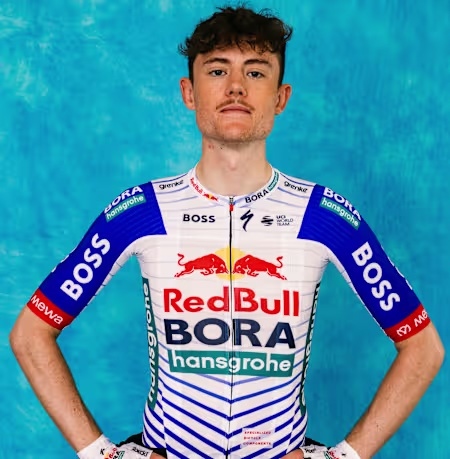
Luke Tuckwell
https://x.com/RBH_ProCyclingF
- Finished 2nd overall at the 2026 Tour Auvergne-Rhône-Alpes as a 21-year-old neo-pro, 54 seconds behind Isaac Del Toro and ahead of Juan Ayuso
- Took the yellow jersey on stage 6 after infiltrating a 60-rider breakaway, then defended it across the final two mountain stages before losing it on a closing day carrying nearly 4,000 metres of climbing
- Finished 6th overall at the 2026 Tour de Romandie months after turning professional, and was second overall at the 2025 Giro d’Italia Next Gen
- Confirmed for Red Bull-BORA-hansgrohe on his Grand Tour debut, alongside Primož Roglič, Gianni Vermeersch and Alexander Hajek
The quality of the evidence is what makes Tuckwell worth a paragraph rather than a footnote. He finished ahead of Juan Ayuso over a week of WorldTour racing and lost only to Del Toro on the final climb of the final day. The breakaway got him the jersey on stage 6, but holding it for two mountain days against that field, with his team down to three riders, was a physical statement rather than opportunism. Six weeks earlier he was sixth at Romandie, months into his first professional season.
Red Bull have managed his load deliberately since: no Tour de France, and a season shaped around arriving in Spain with something left. The ceiling, though, is defined by Roglič. He is unambiguously the leader, with a record in this race that is hard to overstate, and Tuckwell’s realistic role is a free one behind him — which becomes something more only if Roglič falters, as his recent Grand Tour history suggests is not impossible.
One caution against over-reading him: Tuckwell’s time trialling is unproven at this level, and stage 18 is 32 flat kilometres. The case that holds up is the one his results actually support — composure under pressure, an instinct for getting up the road, and the physiology to limit losses when the elite start attacking.
Jørgen Nordhagen
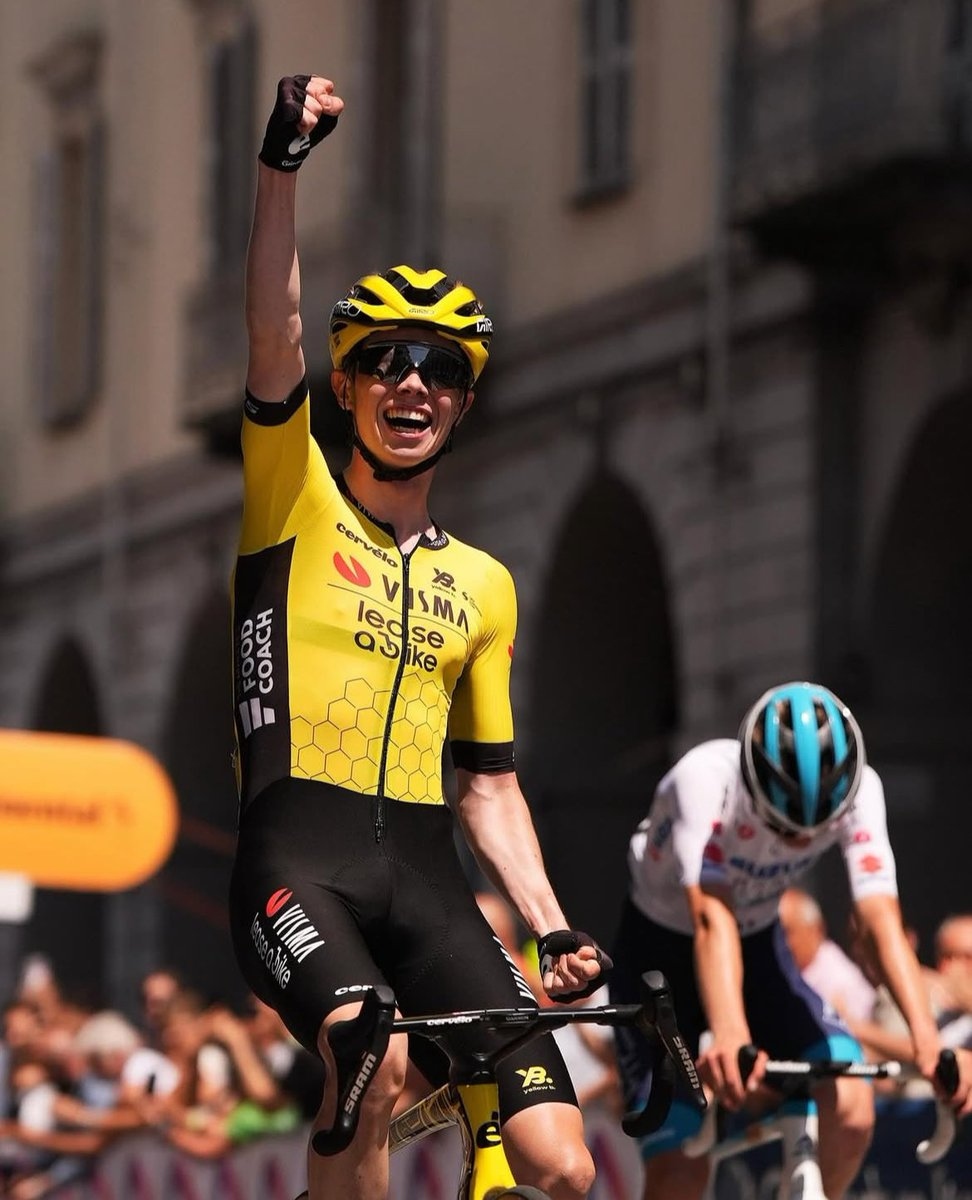
https://x.com/gironextgen
- Finished 4th overall at the 2026 Tour de Romandie, second in the young rider classification
- Finished 8th overall at the 2026 UAE Tour and second overall at O Gran Camiño
- A former cross-country skier who won the mass start freestyle at the 2024 Nordic Junior World Ski Championships before committing to cycling full time
- 21 years old and 59kg, confirmed on the Visma-Lease a Bike startlist
Visma arrive in Monaco without a general classification leader, and almost nobody is talking about it. Jonas Vingegaard is not here — he won the Giro in May, then crashed out of the Tour with a broken collarbone. Wout van Aert is a classics rider, Steven Kruijswijk is at the end of his career, Matthew Brennan is a sprinter. The climbing options are Nordhagen and Ben Tulett.
The results underneath the hype are real: fourth overall at Romandie in a WorldTour field, eighth at the UAE Tour, second at O Gran Camiño, all in his second season at this level. Norwegian television pundits have spent the spring openly framing him as the rider Visma see stepping into Vingegaard’s long-term Grand Tour role, and the team’s selection here suggests they are not in a hurry to contradict that.
The caveats are the ones that apply to any debutant, plus one more. He abandoned the Tour Auvergne-Rhône-Alpes in June, so his most recent stage race data point is a non-finish. He has never ridden three weeks as a protected rider. And a rider who came to cycling from cross-country skiing at 19 has an aerobic base that is genuinely unusual but a much shorter history of stacking hard days on top of one another.
What separates him from the other debutants here is role. Tuckwell rides behind Roglič and Widar rides for a team with no GC ambition at all. Nordhagen is likely to be protected from stage one at one of the strongest squads in the sport, on a route where Visma have nothing else to chase.
Jarno Widar
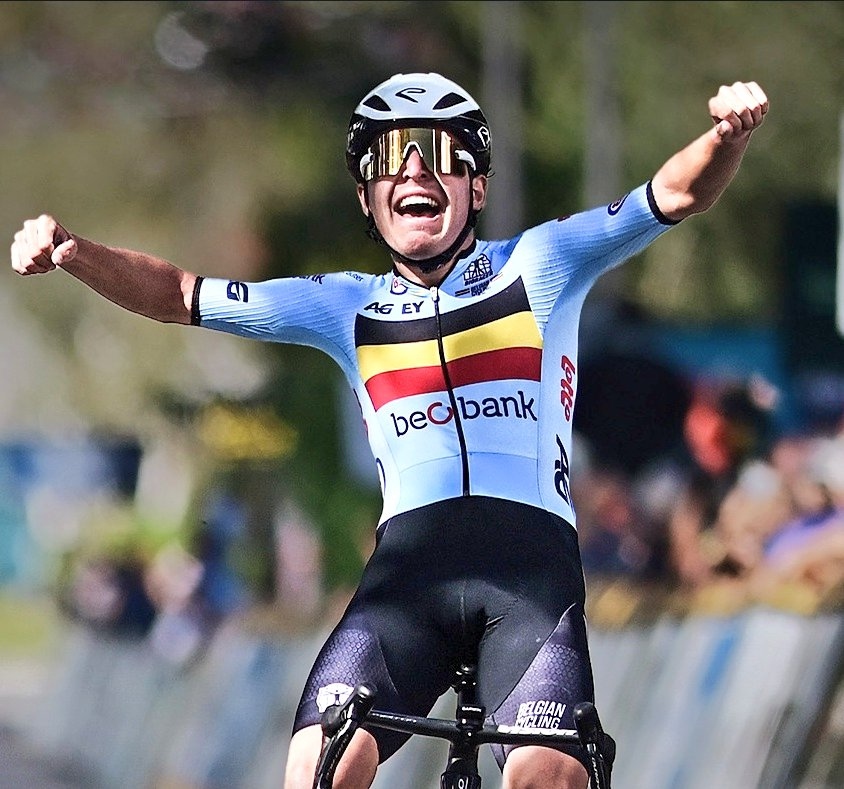
https://x.com/LeCyclismebelge
- Won the Giro d’Italia Next Gen as the first Belgian to do so, the Giro della Valle d’Aosta twice, Liège–Bastogne–Liège U23, and the European U23 title in 2025, having beaten Paul Seixas twice at the Tour de l’Avenir
- Finished 4th on the queen stage of the 2026 Tour de Suisse on his return from injury — the best of the non-breakaway riders behind Pogačar
- Finished 4th on stage 2 of the 2026 Vuelta a Burgos, launching the sprint on Valle del Sol before being passed by Onley, Ciccone and Mas
- Confirmed for Lotto-Intermarché on his Grand Tour debut, having just extended his contract through 2028
Widar is 20, and the honest framing is that the general classification is the wrong ambition for him at this race. What is not in question is the talent or the current form. A knee injury after a February crash cost him most of the spring; he did not return until the Tour de Suisse in mid-June, and on the queen stage to Villars-sur-Ollon he finished fourth, losing only to Pogačar among riders who had not been up the road all day. That is a WorldTour result from a standing start.
Burgos confirmed the trajectory if not the tactics: he went from too far out on Valle del Sol and was swallowed by Onley and Ciccone, with Mas coming around him as well, but fourth in that company three weeks from his debut is the point.
His asset is repeatability on steep gradients — violent accelerations, a high baseline while recovering, then another surge. On a route full of short vicious ramps preceding the high summit finishes of the south, that is a mechanism for taking seconds. Lotto-Intermarché carry no expectation pressure, so the favourites will not mark him early or burn domestiques chasing him on medium mountain days, and that invisibility is a genuine tactical resource. Where it pays off is a stage win from a break, or a serious run at the white jersey — not three weeks of general classification, and three weeks of accumulated fatigue on a 20-year-old body remains a real unknown.
Others on the startlist
Carlos Rodríguez is the most underrated rider in this race by some distance. His own sporting director named him Netcompany INEOS’s focal point for the Vuelta, he has finished top-ten at the Tour de France, and his 2026 has been a rebuild rather than a decline — he returned at the Tour de la Provence 215 days after fracturing his pelvis, and was twelfth at Romandie. A designated Grand Tour leader arriving healthy after a season of rehabilitation is a more interesting proposition than his coverage suggests.
Jay Vine won the Tour Down Under overall in January and has two Vuelta stage wins behind him, but he is here to work for Pogačar. The mountains classification is where that talent gets expressed. Max Poole was meant to lead Picnic PostNL at the Giro before Epstein-Barr virus removed his season from February onwards; he is entered, which is itself news, but returning from six months of viral illness to hold three weeks is a different question. Luke Plapp is genuinely strong against the clock, which matters more than usual given the flat 32km at Jerez, though he has never converted a week of form into a three-week GC. Ben Tulett becomes interesting only if Visma protect him rather than Nordhagen.
Who isn’t here
Half of why this race is open is who is missing. Vingegaard completed his Grand Tour set at the Giro and then broke his collarbone at the Tour. Florian Lipowitz, third at the Tour in 2025 and fifth on GC in 2026 before he crashed at speed in the stage 16 time trial, fractured his right collarbone and was ruled out for a minimum of six weeks — a timeline that makes starting in Monaco impossible. Remco Evenepoel, Isaac Del Toro and Juan Ayuso, second, third and seventh at the Tour, are all skipping Spain. What that leaves behind Pogačar is a field of returning riders, debutants and second-tier leaders getting a rare opportunity — which is precisely the condition under which a Vuelta produces a surprise.
How this gets decided
What every rider here has in common is that their situation is unresolved. Decathlon, Movistar and Netcompany INEOS all arrive with two credible leaders and no public hierarchy. Visma arrive with no established leader at all. Red Bull and Lotto-Intermarché bring debutants with no three-week history to judge them on. None of those questions gets settled by a press release.
They get settled on the road, and this route settles them early. Font Romeu on stage 3 is the first filter, arriving before anyone has properly found their legs. The Alto de Aitana on stage 9, with more than 5,000 metres of climbing, is where a rider either belongs in the conversation or does not. The flat 32 kilometres to Jerez on stage 18 will punish the pure climbers among them, and Collado del Alguacil on stage 20 — 5,041 metres in a single day, two days out from Granada — is where whatever is left gets sorted.
None of these riders is likely to beat Pogačar, and that is not really the question this Vuelta poses. The question is which of them uses three weeks with unusually little traffic in front of them to turn a promising season into a Grand Tour result. By Granada, at least one of them will have.