 Frokat
The great legacy of multiplayer FPS titles was established way back in 1996 with the release of the original Quake. The beloved game – that all the nerd oldies remember fondly, telling the stories about their glory days the same way you talk about winning a football championship in your youth league – featured a high-paced, unforgiving battleground for the players in its multiplayer arena mode. Back then, it was all about that raw mechanical skill – the only way to win was to move better and, most importantly, shoot better than your foe. Even now, this kind of mechanical gameplay attracts numerous fans, as the title retained its core mechanics in all future iterations for all the enjoyers of this niche.
And niche is the right word for what the title has become. As time passed, more and more people seemed to realize the importance – and beauty – of team play. While in Quake, it didn’t really matter if it was an FFA or Team Deathmatch as you’d be doing your own thing popping bodies regardless, the newer titles continued putting more and more increasing emphasis on working with your team to even have a chance at winning.
Such an environment dictated that games must emphasize things besides just raw aim. After all, if all you have in your FPS is your weapon, your friends, and your opponents to shoot, team shooting and player linking will be the only form of team play there is, and that’s way too easy to learn and master. Not to mention – in such an environment, there’d be less room for star clutches and big highlights – which are half the fun of playing in the first place! While not being a competitive FPS title by any margin, Destiny 2 (Year 1 specifically) Crucible was a shining example of a game with the most basic teamplay possible – which was quickly found by the community as a no-fun meta and was changed inside out by the developers the following year.
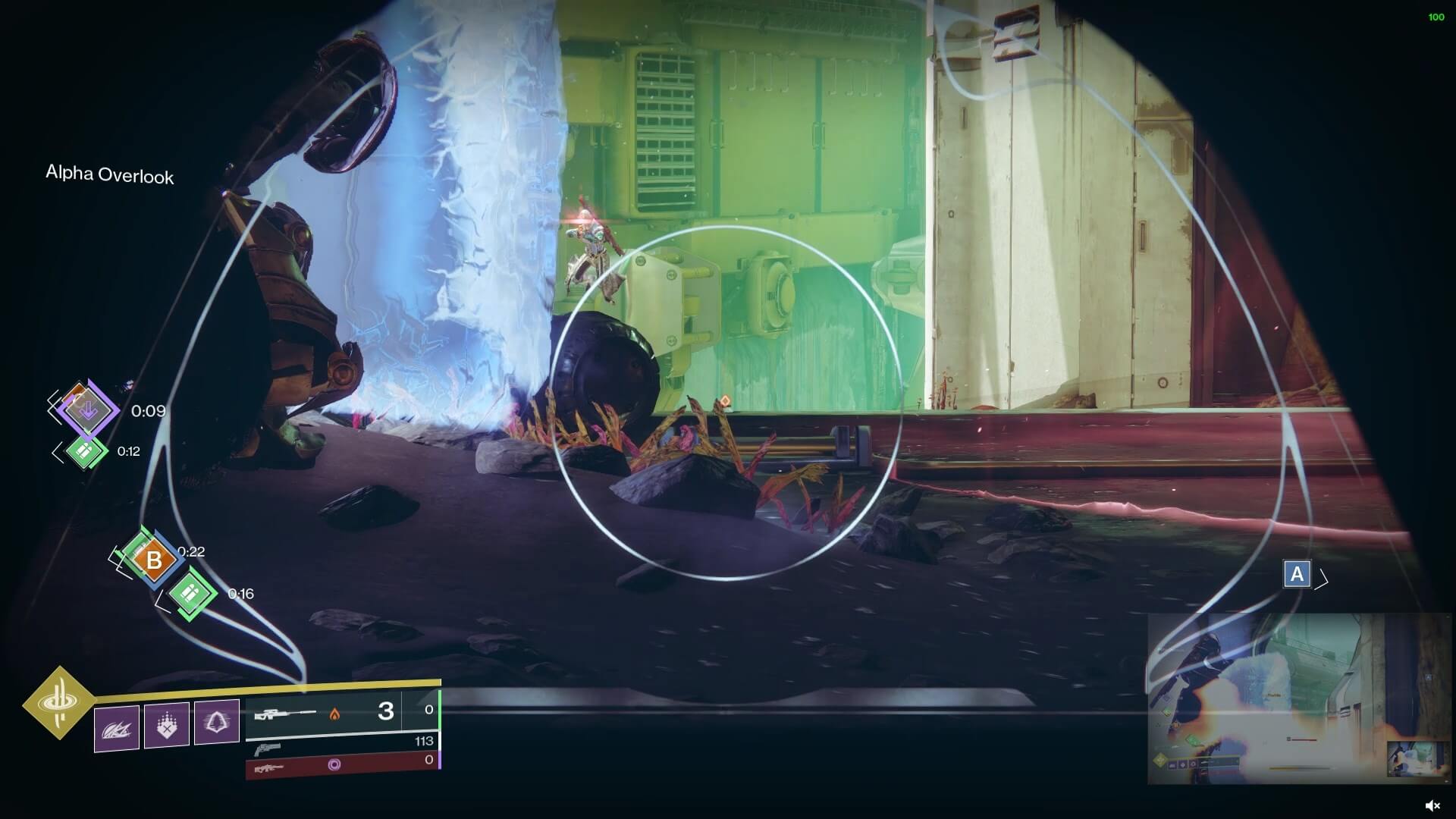
They did fix it in Y2, however!
So, herein lies the rub – how do you promote teamplay without making the game boring, and at the same time without losing its core idea of a mechanical showdown? Over the years, the developers attempted many different solutions. One of the most recent titles, for example, decided that promoting unique playstyles in the form of other playable characters with wildly different gameplay patterns was the answer. Of course, I’m talking about Blizzard’s Overwatch here. Yet, nowadays, it serves as an example of how straying from the core FPS ideas is… suboptimal, as eventually Blizzard was forced to abandon the first-person shooter idea and move one first-person MOBA with its thousands of HP and Shield pools.
For FPS games, it seems that the best answer to this problem was also the first (or one of the first). As such, the greatest FPS title in the world, Counter-Strike, would go on to release in 2000, bringing not only a deadly arsenal of firearms to choose from but also non-lethal equipment to disable your foes with. After all, why invent something new when you can simply look at what people do in real life?
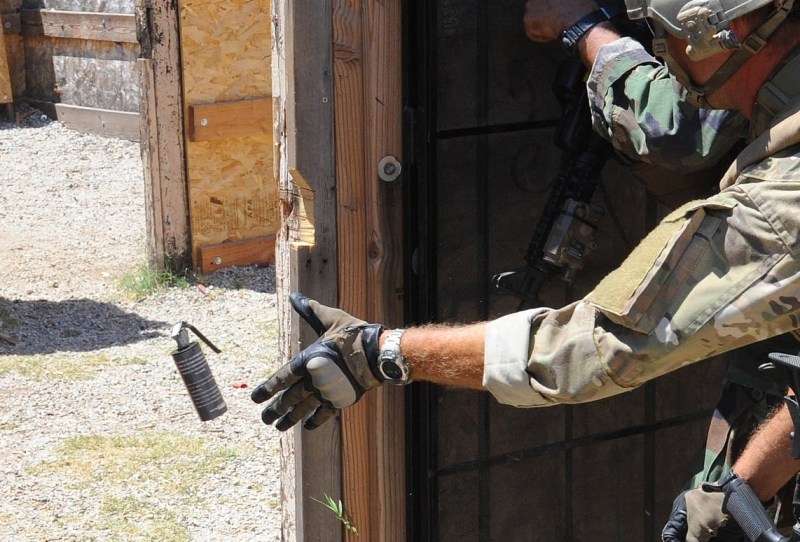
Flashbang!
Long story short: from that point on, this additional equipment would become a staple in all team-based FPS titles. Utility usage separates good players and teams from great ones. Although knowing how to use it isn’t flashy, it is deceptively effective. Hard to learn and hard to master, it is often overlooked by beginners – and not even. But still, everyone knows the saying: nades win games.
But some developers took it way too seriously.
The basics
On the surface level, using utility is fairly straightforward. Take CS:GO, for example – flashbangs blind your enemy, smokes block off sight, and incendiaries deny areas. Frag grenades are even simpler than that – they simply deal damage in a radius, discounting some special interactions where they’re used to clear up a path like on Nuke.
Unlocking the full potential of utilities is actually impossible, though. Even now, on the oldest maps in Counter-Strike, people sometimes find new ways to use their nades effectively. New pop-flashes – that leave no room to react and enable your teammates or yourself to destroy the enemy unchallenged. New smoke lineups – that block off entire areas without ever exposing yourself to danger. All of this takes years to learn – and is always a team effort.
Sometimes smoke grenades are used in unconventional ways to confuse the enemy.
It is not uncommon to see a professional team lining up before the push, counting pixels as they count down seconds until they move out. And when they do, the enemy is rained upon with four smoke grenades, three flashbangs, and an incendiary.
We’re all used to it – it even feels weirder when you push without utility support. Yet, in another title, players seem to be experiencing the opposite.
A new entry
When Riot Game’s second massive project, VALORANT, came out in 2020, it was completely different from what it is now. Not unlike when a new map releases in Counter-Strike so the players can’t utilize their favorite smoke lineups, the original days of Valorant saw the players settle their differences solely in gunfights. Even though Riot’s game places increased emphasis on the character’s individuality instead of everyone being the same nameless goon/enforcer, it was also clear that Riot was cautious enough not to follow Blizzard’s footsteps and turn the game into anything but an FPS.
Since VALORANT features 18 different Agents (at the time I wrote this article), each with four unique utility gadgets, it takes more time for the community and the pros to figure out the optimal ways to use them compared to CS:GO’s five grenades. Both that and the apparent limitations of maps still being an “uncharted territory” contributed to the beginning of the professional season being dominated by those with a greater affinity for clicking heads.
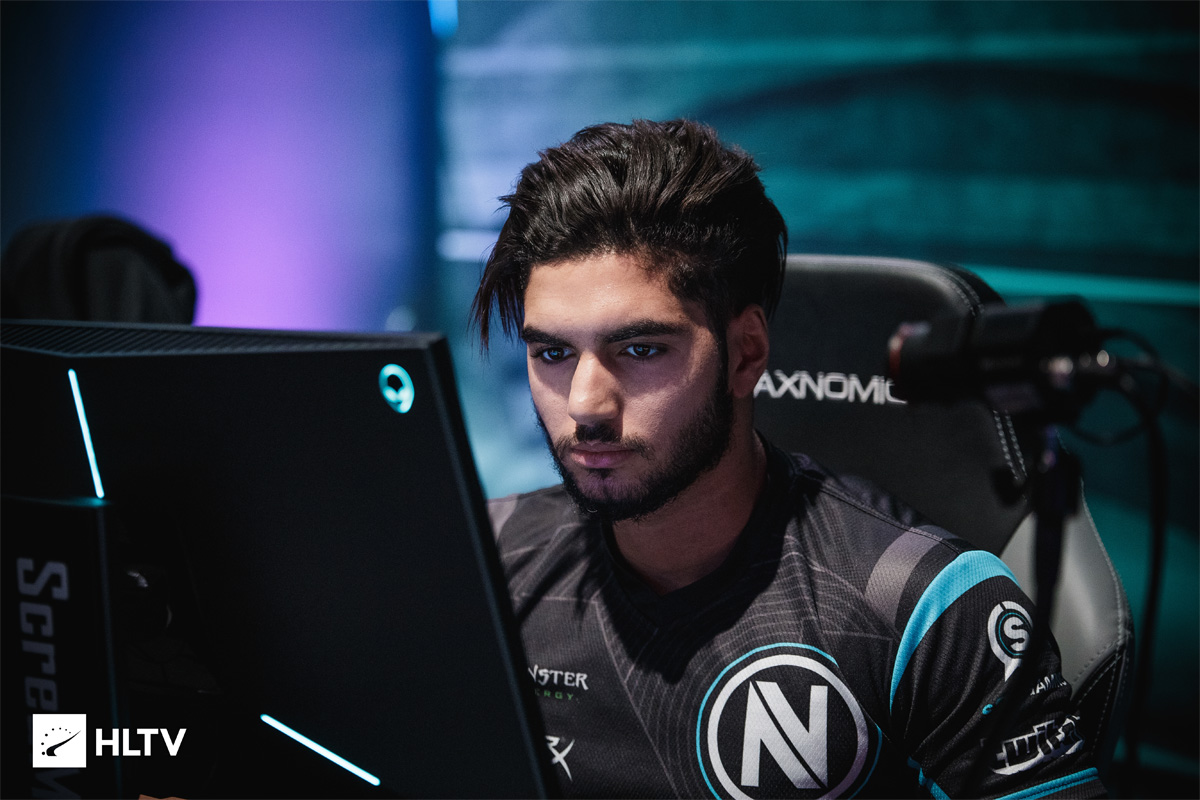
Former CS:GO pro ScreaM. Image by HLTV.
Honorable mention goes to the former CS:GO professional player Adil “ScreaM” Benrlitom, as he was famous for exactly that kind of affinity in his former discipline. Relying heavily on the mechanical aim that has earned him the title of “‘eadshot machine,” ScreaM rallied Team Liquid to victory in VALORANT Champions Tour 2021: EMEA Last Chance Qualifier and was named the MVP of the event. Team Liquid looked formidable as they entered VCT 2021: Stage 2 Masters – Reykjavík.

A stepping stone on the VALORANT competitive ladder, VCT 2021: Stage 2 Masters is an international S-tier event where ten teams from all around the world settle their differences in a test of skills. Featuring $600 000 in prize pool, the double-elimination format tournament is the time to bust out new strategies.
A storm of change
Unfortunately for Team Liquid, a storm was brewing. A storm big enough to shake up the competitive meta completely, going from aggressive, aim-dependant playfield to a slow, calculated and cautious area denial. Facing off against Version1 in the first round of the upper bracket, Team Liquid was considered the team to take the series.
The first game went entirely the expected way: although Version1 did put up a valiant fight taking the game into overtime, Team Liquid was eventually victorious on V1’s pick, Ascent. Then, V1 decided it was time to unleash their full power, exchanging their Sage pick to Sova. After this move, their lineup looked like this: Sova, Viper, Jett, Astra, and Killjoy.
Although most VALORANT players are intimately familiar with this comp by now, for the uninitiated: 4 out of 5 Agents on this list are experts in area denial. Nowadays, Viper is the poster girl of that concept, with all her abilities aimed at denying her opponents areas of the map with her deadly smoke.
Funnily enough, at the time of the game’s release, Viper was considered one of the worst Agents in the game. With her abilities too slow to fit in the game’s aggressive, raw-aim meta, Viper sported bottom-of-the-barrel pick and win rates in professional games. Unlike CS:GO, where you pull out your smoke grenade, throw it in half a second and forget about it, Viper’s animations and activation timers on her abilities were painfully slow. The community practically pleaded with the developers to finally buff Viper.
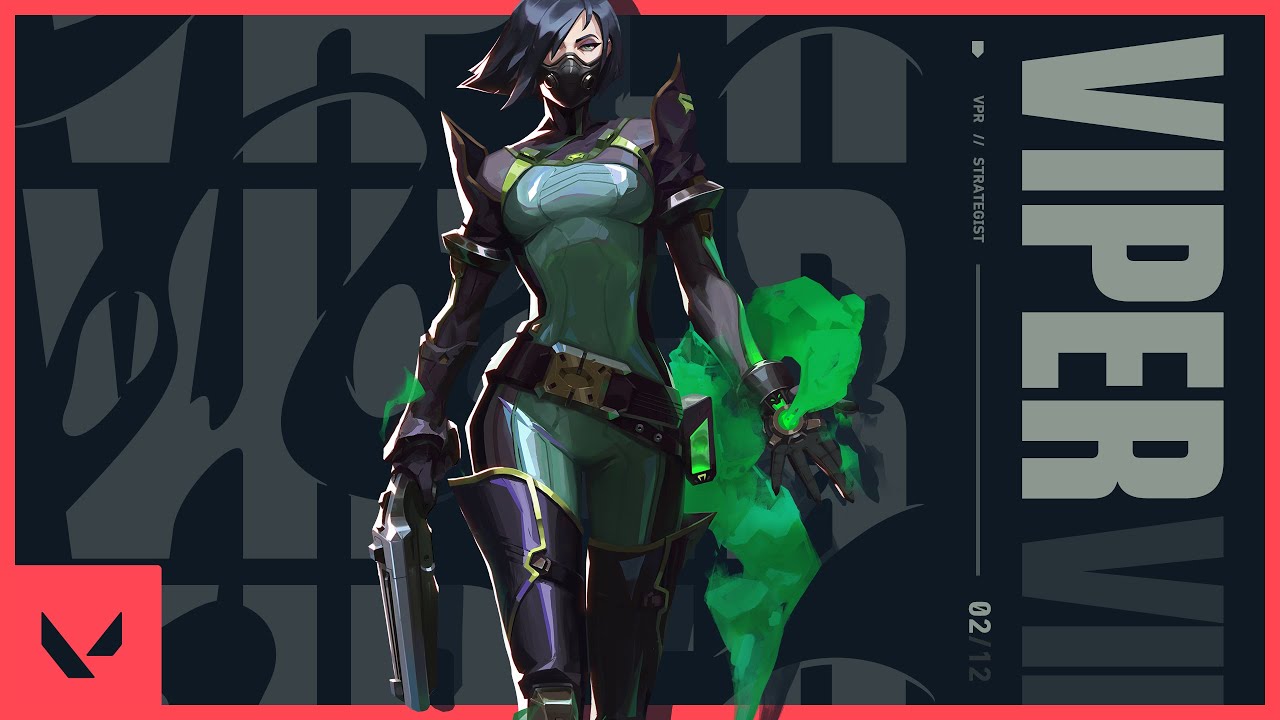
She needs a redesign honestly. Bottom up.
Acknowledging these numbers, Riot launched a campaign to bring the character up in priority. Starting since patch 2.06 and all the way through 2.09, Viper would receive multiple buffs, tunings, and bug fixes for her abilities. Keep in mind that 2.09 was the patch VCT 2021: Stage 2 Masters – Reykjavík was played on.
Of course, this wasn’t all about Viper – to make matters worse, the abilities like Sova’s Shock Darts, Killjoy’s Nanoswarm, and Astra’s Gravity Well are as good for area denial. If one falls, another takes its place – and good luck eliminating any of them with that strat.
Of course, everyone is familiar with how the bomb site takes on the professional scene look. Multiple nades used in conjunction is pretty much the industry standard if you want a chance at winning – but this time, the utility was used in a different way. Instead of spending the main bulk of utility at the beginning to isolate and neutralize the defenders, Version1 went the opposite way.
Instead, the team would play around opening picks. Having Jett find an opening pick would enable the rest of the team to converge on the bomb site, quickly overwhelm their opposition, and dig in deeply. So deeply in fact that they’re no longer at the bomb site at all – but sitting safely behind the cover of thick walls.
Although inklings of such a strategy were appearing all the way back in VALORANT beta, V1 weaponized it to its fullest extent. Picture this – you score three quick kills as you barge in on the retake and find that the bombsite is empty and the Spike undefended. As you are already mentally celebrating an easy victory, cheers turn sour as soon as you realize you’re fighting an enemy you can’t see and can’t beat.
The realization that the enemy’s Viper and Sova are tucked in some distant corner and can simply throw their utility to stop any attempt at defusal must’ve been the most frustrating thing in the world. For sure, all CS:GO players know the good old strategy of saving your last Molotov to throw at your planted bomb – but in Counter-Strike, that little stratagem has its limitations. For starters, Molotovs have a set distance they can travel before they simply evaporate without achieving anything. And, to top it off, even if the Molotov or an Incendiary do land, they can be quickly extinguished by merely dropping a smoke grenade on them. By the way, you can do so even as you’re defusing if you anticipate your opponent and pull out and ready your smoke before you start the defuse timer!
In Valorant’s case, however, there are no such limitations. Character’s unique skill projectiles that serve as grenades can fly for as long as they want… And there is currently no way to actually remove their areas of effect once they hit the ground. Your only bet to counter this strategy was to eliminate the offending character (which could prove hard to impossible). Riot would partially acknowledge this issue in patch 3.0 by adding a new Agent, KAY/O, whose abilities were aimed at suppressing the enemy, rendering them unable to use their skills. Yet even this proves extremely difficult to pull off due to the projectiles’ range and the fact that it’s just one KAY/O against four or even ашму area denial Agents.
At any rate, the strategy’s effectiveness was demonstrated that day as Version1 dismantled Team Liquid 13 to 4 in the last match of the series. The community’s reaction was amazement at a novel idea back then.
But, over time, seeing the same kind of lineup, playing by the same rules in every match, even in matchmaking, got old. Ever since V1 demonstrated just how effective this strategy could be, it has seeped into even amateur games, causing a storm of frustration within the community.
A prominent CS:GO YouTuber and streamer WarOwl recently claimed that CS:GO’s in-game music giving the players a heads up when the bomb timer reaches 10 seconds is the dumbest meta in any competitive game.
10 second defuse music warning needs to be removed, it's the DUMBEST meta in all of esports. If you don't know: to play CS:GO you need to keep your music on, but really really low so you hear when it starts during afterplant to tell you when you have 10 sec left on bomb.
— WarOwl (@TheWarOwl) December 17, 2021
I’m sure that most Valorant players would give this claim a hard disagree, as skimming through community forums revealed pretty starch levels of disliking this facet of the game.
the only way to get rid of post-plant meta is to abuse it in pro games enough till riot notices. then they’ll probably add a counter.
In the meantime, the community kept theory-crafting Riot’s possible solutions for this issue. Perhaps an anti-Molotov Agent was in the works, or a change to map skyboxes to disallow any kind of long-range grenade throws. Riot’s stance on this issue was deafening, however.
The aftermath
Although the way Riot would eventually deal with this issue wasn’t that surprising. Considering Riot’s initial stance on treating the title as the competitive esports playground from day one, the developers didn’t heavy-hand their nerfs.
Instead of completely obliterating this strategy by reworking how projectiles work from the ground up, Riot has decided to opt for a more timid approach. After all, as the strategy emerged, so did the ways to counter it: counter-flanks, more aggressive pushes past the bombsite, anti-lineups, and even stuff like body-blocking the projectiles or using Sage’s walls to guide them away from the intended targets were discovered by the community and the pros in the meantime.
Some players doubted that Riot’s approach would solve the problem as the measures taken were “way too lukewarm,” but this approach turned out to be just enough to guide the game into its intended FPS niche again – clearly demonstrated by the crown event of competitive VALORANT – Champions 2021.

The esports centerpiece of VALORANT and the highest stage for the competitors. Sixteen teams clash for a prize pool of $1 000 000 and the immortal title of the World Champions. It’s not the time to hold back in this S-tier offline series!
But the changes aimed at the pro scene kind of failed to reach the lower brackets of Valorant’s matchmaking. It’s still not uncommon to see players rag on it – and, for sure, it must be a frustrating and unintuitive experience for those just starting out.
In an ironic twist of fate, VALORANT’s lower ranks are now defined by their overuse and overreliance on utility. In CS:GO, these same ranks are known for underutilizing it, not realizing the true power of these non-lethal gadgets. Although the two games are designed to attract the same kind of core audience, this shows how seemingly tiny differences may steer gameplay in opposite directions.