 Frokat
“How do I improve” has always been the most frequently asked question among the fans of any competitive title. And, oftentimes asked, there have been thousands of different ways to answer it.
When approaching this question from a video game angle, most knowledgeable players would instinctively give answers solely within the scope of the game itself. MOBA players will tell you to look at the minimap more and get better at last hitting; FPS players will tell you to practice your aim with bots more; MMO players will tell you to review your combat logs, and so on and on.
And they’d all be right – after all, getting better at these activities does improve your skill level in that particular genre. However, there’s another thing often overlooked – which, with hindsight, seems like an absurdity. Humans aren’t yet at the level of plugging our consciousness directly into their computers to live out the gaming experiences first hand – which is why taking care of your mental and physical states is the foundation of excelling at – and enjoying – any activity.
Inhuman reactions!
Any Counter-Strike player worth their salt will know this phrase. The golden standard of spatial awareness and reaction time, Hiko’s incredible flick has become the most common catchphrase to spam in-game (and in Twitch chats) any time something semi-relevant happens. Ironically, the play itself wasn’t about the raw reaction time, but the combination of incredible game sense and muscle memory, but we’re not letting it get in the way of the classic copypasta.
However, the obsession with reaction times has been going on long before this flick. Debates on whether superior reaction time is what makes a good CS:GO player into a pro have been going on forever. And while there were multiple pros hailed for their raw mechanical aim – a big part of which is reaction time – the skeptics claim that very few of these players actually made it big relying on all brawn no brain.
Nevertheless, that’s not to say that reaction time is unimportant. It absolutely is, and there’s a good reason most players would want to improve it. Luckily, there are ways to go around here.
Let’s leave out the 500 FPS supporting GPUs and 240Hz screens out of this discussion, however. While having your setup at the level when it can support your full gaming potential is essential, this subject is pretty self-explanatory. If you’re still having doubts whether a better screen is actually better, check out this 2kliksphilip’s video just on this subject!
Anyway, back on the topic. The first step to improving your reaction times isn’t hopping on aim_botz or 1v1 community servers. It starts way before that – if you want to succeed in a game, you’ll need to be healthy in real life. And the first step to being healthy is establishing a solid sleep schedule.
Sleepers
Perhaps your parents telling you not to stay up all night gaming were actually trying to tell you that you’d climb the ranked ladder more easily that way. A peer-reviewed study’s results were quite shocking in this regard: a single sleepless night increased the participant’s choice reaction time by almost 100 milliseconds. And if you don’t think it’s noticeable enough, imagine adding 100 to your latency and playing a fast-paced competitive game with it.


When it comes to measuring your reaction time, it is often a subject to a huge misunderstanding. Sure, getting a good score at humanbenchmark.com is a good cause for bragging rights, but it only measures your reaction when it comes to a single, expected stimulus. Most video games are nothing like that – they are full of different situations, outcomes, and the element of unexpectedness.
This sort of “brain lag” severely affects your performance – and, perhaps even more importantly, your ability to actually enjoy the gameplay. Everyone knows that having a super high latency is one of the most frustrating things in gaming, yet still most players neglect the source of this “natural” lag.
This is precisely the reason why most professional teams pay utmost attention to their players’ sleeping habits, and why jetlag is so feared and fought against. When you see the likes ofValerii “b1t” Vakhovskyi, Natus Vincere’s star rookie, impress the community with his incredible accuracy and lowest time-to-damage on the scene, you can be sure that a healthy sleeping schedule contributed to it no less than his hard work at practice and innate talent.

Since the stat of time-to-damage is a combination of the pros reaction time, muscle memory, crosshair placement, and even weapon of choice, it will always be much higher than the average single choice reaction time of around 250 milliseconds. So don’t be fooled by the seemingly high number – 447 milliseconds is lightning fast in this context.
@Maniac_CSGO's analysis matches the numbers! @B1tcs has one of the lowest time to damage in the scene at 447ms!
To find out more check out his profile on the Leetify Esports Center!https://t.co/f4XyUDD5ea#BLASTPremier #CSGO #ESPORTS https://t.co/d8RjULbPCY pic.twitter.com/rTpT0vMNcT
— Leetify (@leetify) November 25, 2021
Stay hydrated!
Water intake is extremely important if you wish to stay sharp. Years of advertising sugary beverages like Mountain Dew left its footprint on the gaming landscape, but did you know that sugary and caffeinated drinks actually dehydrate you? That’s right, these flashy ads about “Gamer Fuel” were – to the surprise of no one – false advertisement.
Sure, you might receive a short-term reaction speed increase if you consume the energetic drink. But, over time, its effects will be less and less, while the effects of it dehydrating your organism within a few hours will be more and more. That’s not even mentioning the horrific damage sugary and caffeinated drinks may incur on your body if you drink them too much!
At any rate, water is a consistent and healthy solution. And we all know that consistency is what matters the most when it comes to competitive play, with real money at stake or just for fun.
Stay active!
Now that’s the one. It’s a tough pill to swallow, but physical activity is actually that important. And since we’re all living in a time where physical activity is severely limited – with worldwide lockdowns and all that jazz – why not take another route to get an edge over your competition?
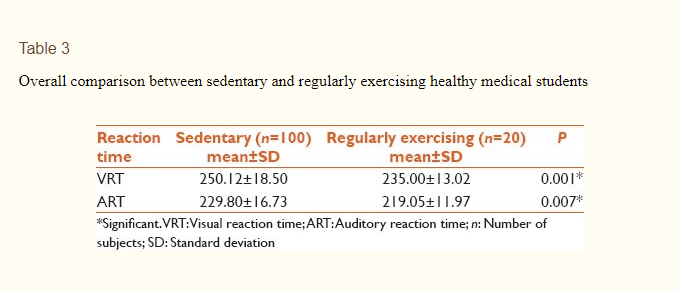
These numbers don’t seem all that important, but if you multiple any of the factors, the pileup becomes impossible to ignore when combined.
The actually important part
Besides, reaction time is kind of a meme at this point. Sure, it’s measurable and more or less constant, which makes it a pretty effective metric when measuring performance, but it’s not the thing that separates a good player from a great one.
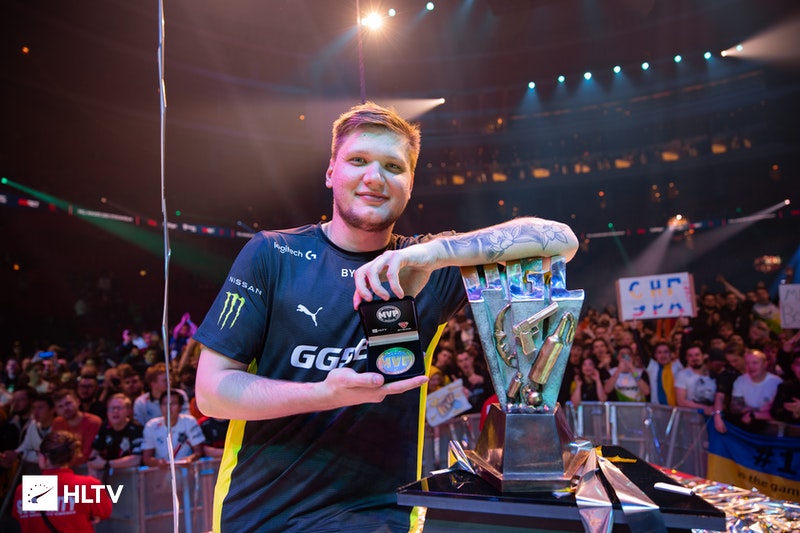
Isn’t that weird that the greatest player of perhaps all time in CS:GO, Oleksandr “s1mple” Kostyliev, measures a pretty much average reaction time? Perhaps what most players should focus on is something entirely different.
Well, we seem to be in luck, as all the things I’ve listed before also immensely help with this secret ingredient to greatness – your mental state – or just mental, as most players call it for short. If any of you guys remember s1mple at the beginning of his career, he was an exceptional character. It’s hard to believe that one of the beloved members of the community used to be known for exactly the opposite of his current behavior – toxicity. Man even got a VAC ban on his account before!
Yet, s1mple’s also known for his strong mental. He was always an amazing player, but wasn’t fortunate enough to get a team that he could consistently lead to victory pre-2021. He didn’t let this get to his head, and never gave up – and look where it got him!
Back to the things we’ve mentioned – sleep, hydration, and exercise have all been scientifically proven to improve your mood and cognitive abilities ages ago. The last part is particularly important for RTS and MOBA players – never let yourself auto-pilot your games to defeat in a title where strategic thinking is required of every participant.
Conclusion
I suppose that was one way to answer the eternal question “how do I improve at [X] game?” without actually delving into the game’s mechanics. Not even a thousand of incredibly detailed guides written by the absolute best will make you improve as a player if you keep neglecting the most important part – yourself. So, fix that sleep schedule, measure that healthy amount of water for you to drink, and don’t let yourself to sit on your butt for hours at an end – and you’ll get that shiny rank.
Just be patient.