
| Prefer us on Google — see Tips.gg in Top Stories & Discover | Add on Google |
The last Masters before the US Open has lost both of the men who were supposed to win it: Jannik Sinner withdrew on 9 August with a right knee problem, Carlos Alcaraz days earlier with the wrist injury that has kept him off court since April. Montreal then stripped the field further — Alexander Zverev, Alex de Minaur, Taylor Fritz, Daniil Medvedev and Flavio Cobolli were all beaten inside three rounds — while in Toronto top seed Aryna Sabalenka went out in the fourth round to world No. 19 Ekaterina Alexandrova. Bookmakers have redistributed that probability slowly and by reputation, anchoring new lines to familiar names rather than to what the last fortnight showed. One caveat before the cases below: Montreal is still running, and its final falls on Thursday, the same day Cincinnati’s first round begins. All three men here are still in that draw.
Men’s Draw
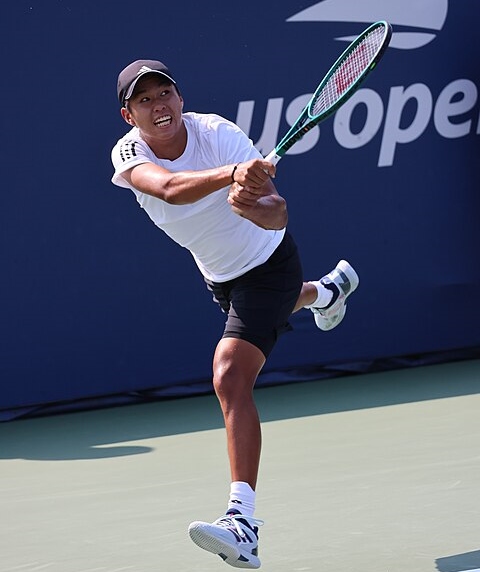
Learner Tien
https://x.com/TennisReporters
- World No. 19, 2,155 ATP points, 20 years old. Projected around the 15th to 17th seed in Cincinnati.
- Beat Gaël Monfils 6-3, 0-6, 6-3 in Montreal in the Frenchman’s farewell appearance at the event.
- Beat 17th seed Tommy Paul 6-3, 6-2.
- Beat Tirante 6-4, 6-4 in the round of 16, converting his fifth match point after four were saved.
- Reigning Next Gen ATP Finals champion. Still alive in Montreal — quarter-final tonight.
Tien has spent this fortnight quietly matching the best week of his career. He came through a strange, swinging three-setter against Monfils, losing a 6-0 middle set and finding the match again in the decider. Then he took apart Tommy Paul, a compatriot ranked two places below him, without ever letting the scoreline get interesting.
The Tirante match is the one worth studying. It reads 6-4, 6-4, which undersells it badly: the Argentine, fresh from knocking out Fritz, saved four match points before Tien converted the fifth. Tien won 92 percent of the points he came forward on and took four of twelve break points in wind that had the ball moving in every rally. That is a 20-year-old closing a match he was allowed to lose.
This is his second Masters 1000 quarter-final of the season after Indian Wells, his 50th tour-level win on hard courts, and the first time an American this young has made the last eight in Canada since Andy Roddick in 2002. The market has largely filed him under prospect rather than threat.
The caveat is the calendar. His projected seeding gives him a friendly section, but he could also be playing into Thursday in Montreal. Take a price with that in it, not around it.
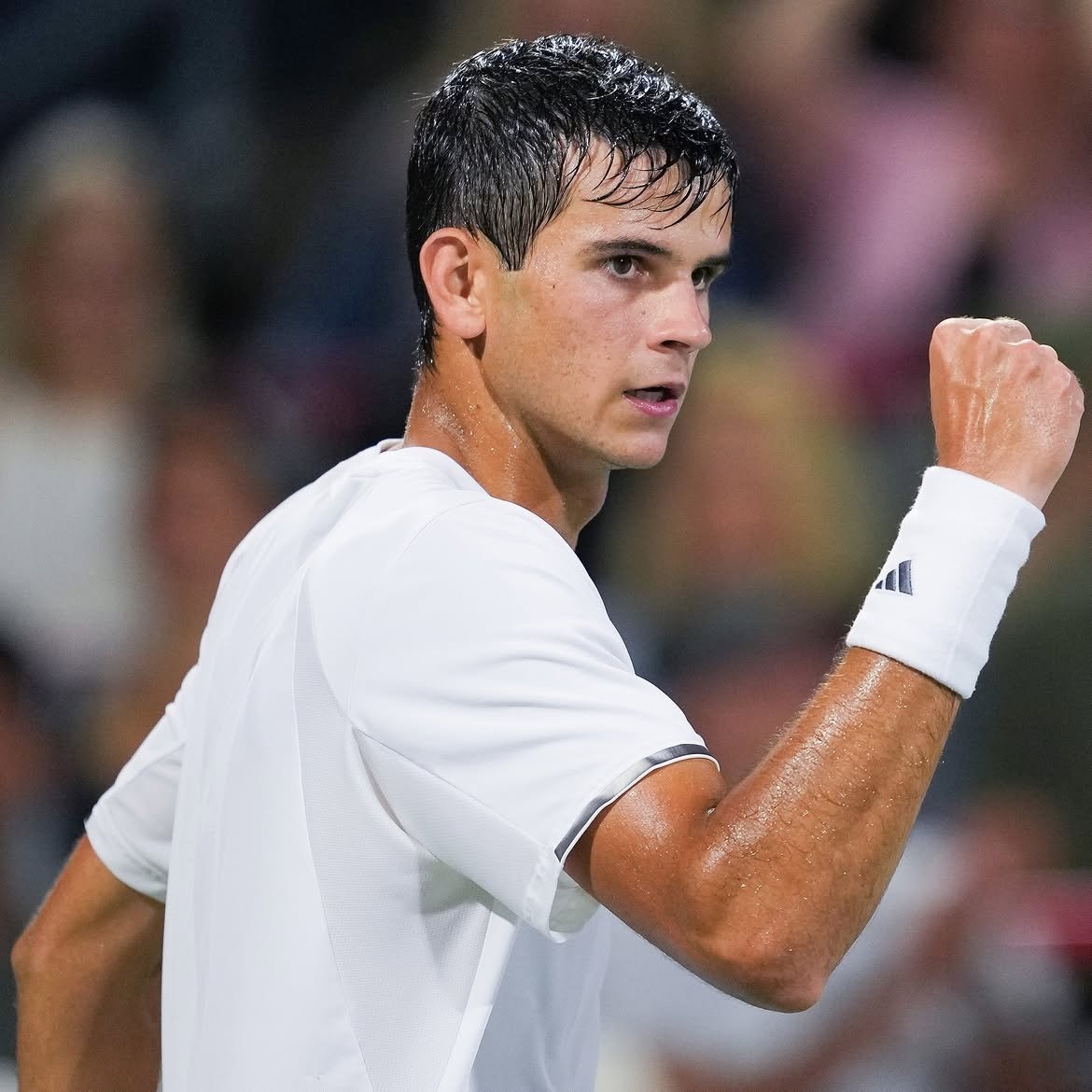
Rafael Jódar
https://x.com/AllAboutNextGen
- World No. 15, a career high, with 2,243 ATP points. 19 years old.
- 19-4 on clay in 2026, closer to 12-7 on hard courts. Has won 28 of his last 34 matches.
- Lost the Washington final to Taylor Fritz 7-6(2), 6-4, saving four match points.
- Beat 11th seed Lorenzo Musetti 6-4, 6-3 and eighth seed Jiří Lehečka 6-3, 6-3 in Montreal — his first Masters 1000 quarter-final on a hard court.
- Chasing Boris Becker’s 1985 record for the fastest climb from the top 100 to the top 10. Becker has publicly backed him to break it.
Nobody in tennis has had a stranger twelve months. Jódar was outside the top 500 this time last year and outside the top 100 in March. He is now the highest-ranked teenager in the world, closing on a mark of roughly 210 days that has stood untroubled for four decades.
It is worth being precise about what kind of player he has been so far, because the two halves of his season look nothing alike. On clay: a title in Marrakech, a Barcelona semi-final, quarter-finals in Madrid and Rome, a quarter-final at Roland Garros on debut. On hard courts the record is far thinner, and Montreal is his first Masters 1000 quarter-final on the surface. That does not make the hard-court form a mirage. It makes it new, which is a more interesting thing to bet on and a harder thing for a model to price.
The wrist is the angle. Jódar fell in the ninth game of the second set of the Washington final, took a medical timeout on his left hand, and still saved four match points before Fritz got over the line. He hits a two-handed backhand, so that wrist matters. He then went to Montreal and beat Musetti and Lehečka in straight sets. Whatever the injury was, it is not limiting him now. If a price still carries the flag, the flag is out of date.
He also turned professional in December, which means he has almost nothing to defend for the rest of the season. Every round from here is upward movement with no downside pressure, a genuinely unusual position for a player this high in the rankings.
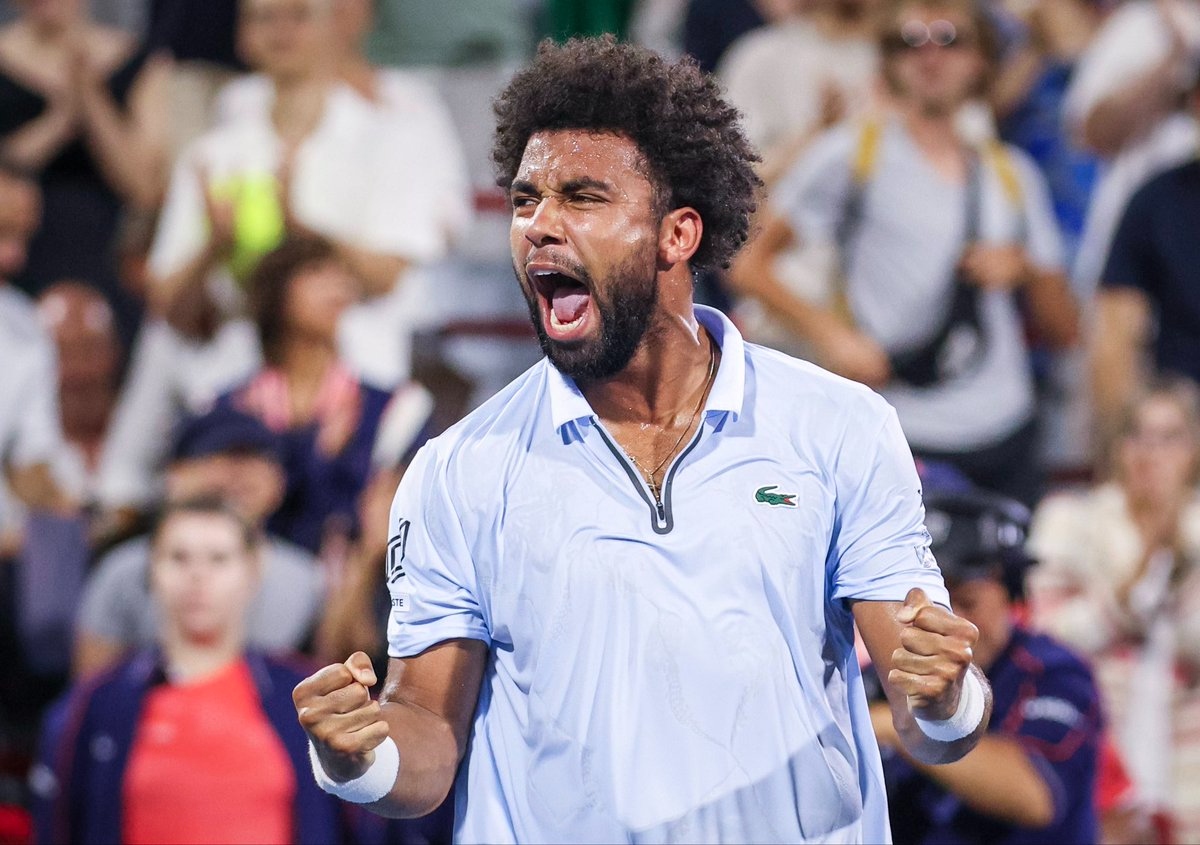
Arthur Fils
https://x.com/NSNCyclingTeam
- World No. 24 with 1,940 ATP points. 22 years old.
- Quarter-finals at Indian Wells, Miami and Madrid this season. Montreal is his fourth Masters 1000 last eight of the year.
- Won the Barcelona Open in April, beating Andrey Rublev 6-2, 7-6(2) — his first title after an eight-month absence with a back injury.
- Beat Cameron Norrie 6-2, 7-6(8) in the Montreal round of 16, saving two set points.
Fils is the most straightforwardly underrated name in the field, and the reason is a gap in the record rather than anything he has done wrong. He lost eight months to a back injury, came back, and won Barcelona in April. Models that weight twelve-month form still see a hole where his 2025 should be.
The 2026 evidence is consistent and specific. The Sunshine Double is one of the better leading indicators for Cincinnati, and he went deep at both legs. Indian Wells asks you to absorb high, heavy bounces without losing patience. Miami asks you to hit through thick air. Doing both says something real about range.
One correction to a common assumption about the venue: Cincinnati is not a middle-of-the-road court. The Lindner Family Tennis Center’s surfaces are rated at an ITF Court Pace Rating of 4.0 — medium-fast, quicker than either Indian Wells or Miami. That suits Fils for a simple reason. A heavy, high-RPM forehand and elite lateral coverage are worth more when points are shorter and the draw has lost its two best returners.
He survived two set points against Norrie, a man who had beaten de Minaur from match point down two days earlier. That is not a soft quarter-final. “The forehand is back,” Fils said afterwards, which is about as clear a statement of intent as a player recovering from a long layoff can make.
Women’s Draw
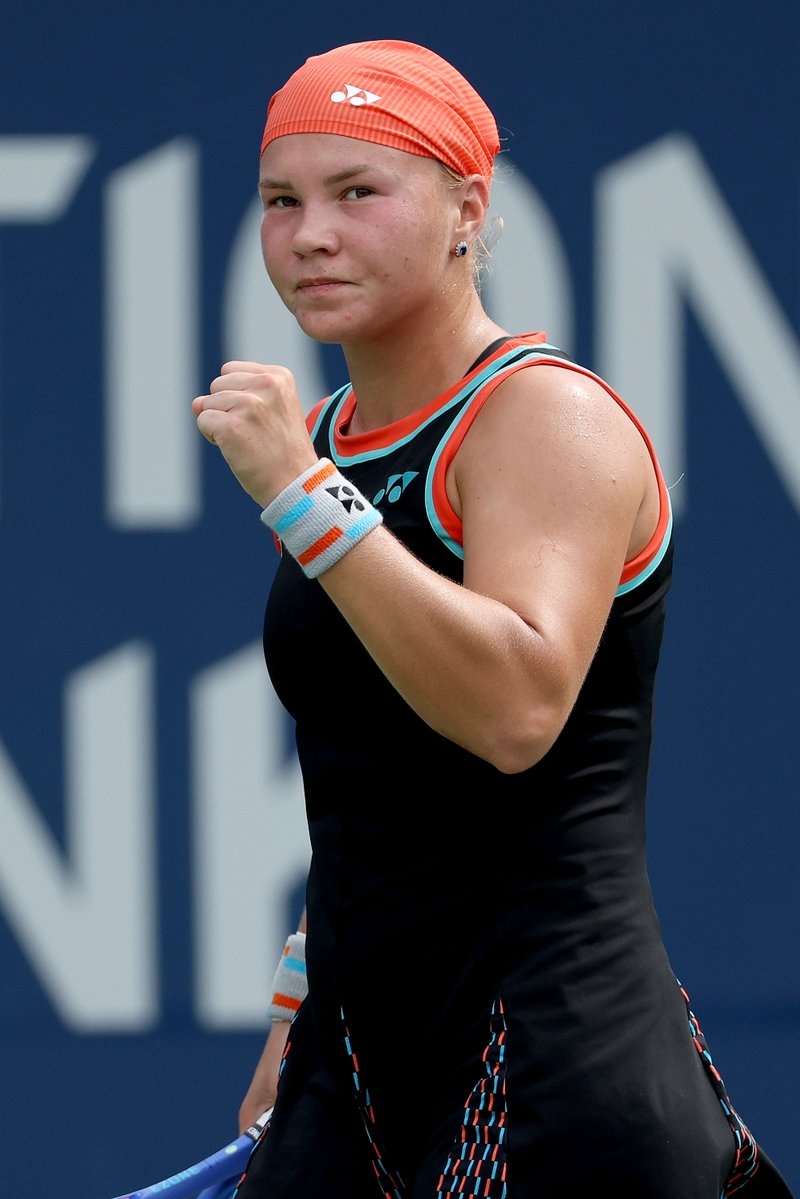
Diana Shnaider
https://x.com/WeAreTennisTR
- World No. 17, 22 years old, left-handed. Projected around the 14th seed in Cincinnati.
- Reached the semi-finals at Roland Garros this year and the semi-finals in Washington last week.
- Beat third seed Jessica Pegula 6-3, 6-3 in the Toronto round of 16 — her third career top-10 win, and her first in five attempts against Pegula.
- Lost to Iga Świątek 6-2, 6-1 in the Toronto quarter-finals.
- Partnering Elise Mertens, the reigning Australian Open doubles champion, in the Cincinnati doubles draw.
Shnaider will go to Cincinnati carrying a 6-2, 6-1 scoreline against Świątek, and that is what her price will be built on. It is the wrong number to build on. Twenty-four hours earlier she had beaten Pegula, the world No. 3 and the top-ranked American, one of the hardest players on tour to hit through, in 73 minutes in wind, having lost to the same opponent in Washington the week before.
The Świątek match deserves a straight reading rather than a flattering one. Shnaider did not lose it by over-hitting. She never earned a single break point, won 51 percent of her first-serve points to Świątek’s 88, and was beaten in 64 minutes by an opponent who made eight unforced errors, her lowest total of the season. That is not a gameplan misfiring. That is a six-time major champion having her best afternoon in a year.
Which is a reason to discount the result, not the player. The left-handed serve still drags right-handers off the court on the ad side, opening angles most of the field has no practice model for. A Roland Garros semi-final and a Washington semi-final in the same season say the level is not a one-week spike. The doubles run with Mertens keeps her sharp without the physical cost of extra singles.
Alexandra Eala
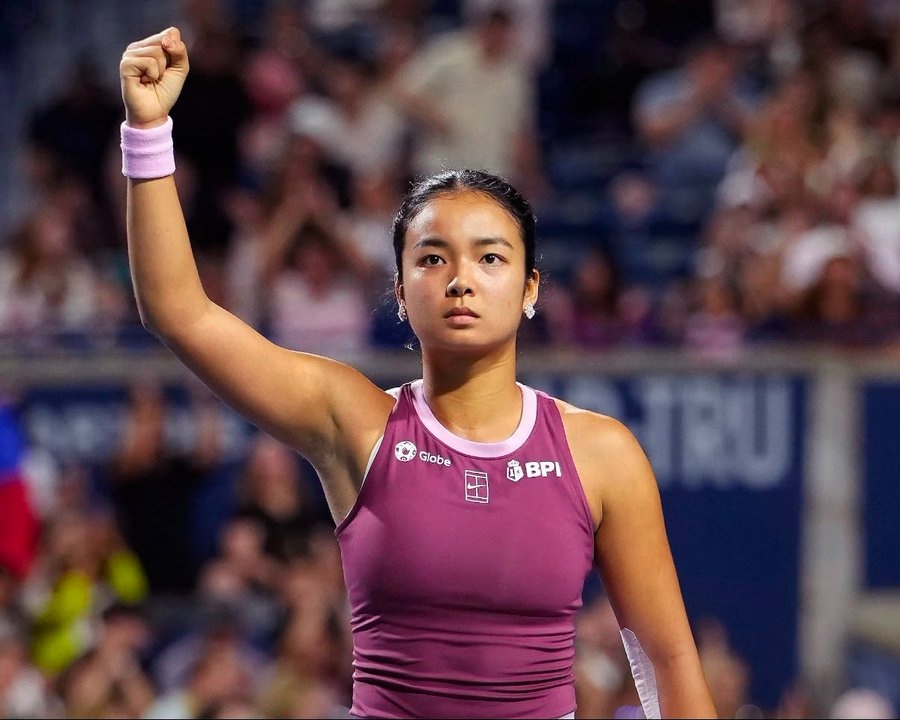
https://x.com/asian_tennis
- World No. 20, 21 years old, left-handed. Projected 17th seed in the 96-player draw, which earns a first-round bye.
- Won the WTA 500 Mubadala DC Open, beating top seed Jessica Pegula 4-6, 6-4, 6-0 — the first WTA title won by a Filipina. Also beat Zheng Qinwen, Leylah Fernández, Elina Svitolina and Naomi Osaka that week.
- Beat defending champion Iga Świątek 7-6(9), 6-2 in the Wimbledon third round.
- Lost to 12th seed Belinda Bencic 6-4, 6-0 in the Toronto round of 16, ending a seven-match winning streak.
- Seven top-10 wins this season, level with Elena Rybakina and Elina Svitolina.
Eala’s last three weeks are the most compressed résumé-building stretch anyone in this field has had. She went through four seeded players to win in Washington, then came from a set down against Pegula in the final. A month before that, she had put out the defending champion at Wimbledon.
The Bencic scoreline is what will inflate her price, and the context is unusually clean. She lifted the Washington trophy on Monday 3 August, in a final spread across two days by rain and lightning, and was on court in Toronto on Thursday. She then came through a three-set win over Caty McNally before running into Bencic with nothing left. The match statistics show a serving problem as much as a tiredness problem — 46 percent of first-serve points won, ten break points faced — but the simplest explanation is the right one, and the schedule that caused it is behind her.
Her game does not depend on overpowering anyone. It is built on court coverage, depth and forcing errors through geometry, a style that holds up across a fortnight rather than burning out in the middle weekend. The first-round bye buys an extra day, which is exactly the currency she was short of in Toronto.
The bottom line
In a men’s draw missing Sinner and Alcaraz, Tien, Jódar and Fils are all credible on form, and all three are priced as if the last fortnight did not happen. The complication is that the last fortnight still has not happened. Montreal’s final lands on Cincinnati’s opening day, and every match one of them wins in Canada is a match they cannot recover from in Ohio. That is a real cost, and it is not in these prices yet. It will be by Friday.
On the women’s side, Shnaider and Eala are both being marked down on a single lopsided scoreline against a higher-ranked opponent. That is the classic shape of a value opportunity. It is also the classic shape of a player who is simply a tier below the favourites, and honest analysis has to admit the two look identical from the outside. What separates them is the draw, and the draw is now made.