 Liam Duckstein
Chelsea manager Enzo Maresca didn’t hide his frustration on Sunday — and it wasn’t the actual red card shown to Moises Caicedo that irritated him. It was the feeling that the Premier League still can’t deliver consistency in split-second decisions that swing top-flight matches. And when you compare Caicedo’s dismissal against Arsenal with Rodrigo Bentancur’s caution for a similar tackle on Reece James a month earlier, it’s easy to see why he’s asking questions.


“It’s a red card, yes. But why was Bentancur’s at Spurs not a red card?” Maresca said afterwards. His point was simple: the two challenges looked nearly identical in intensity and danger. One was upgraded to red by VAR, the other wasn’t even sent for review.
The Core Issue: VAR Isn’t One Person — It’s Many
This is where the heart of the inconsistency lies. Every Premier League weekend features different VAR officials, different interpretations, and slightly different thresholds for “excessive force.” No two tackles are carbon copies of one another, and small technical differences become massive in VAR terms.
So What Made Caicedo’s Challenge a Red?
Although the incidents looked similar in real time, the VAR room picked up on two crucial elements in Caicedo’s tackle on Mikel Merino:
1. Caicedo leaves the ground slightly.
That upward motion increases the perception of force — something VAR officials are trained to flag when assessing “endangering the safety of an opponent.”
2. The point of contact was higher.
Merino’s ankle clearly buckled on impact, and the replay shows his boot shifting on the turf — both strong visual indicators that excessive force was involved.
In Premier League officiating language, those visuals often push a tackle beyond “reckless” and into “serious foul play,” triggering the VAR’s intervention.
Why Bentancur Stayed on the Pitch
Bentancur’s challenge on Reece James, reviewed last month, was seen very differently by both the referee and the Key Match Incidents (KMI) Panel. According to the panel, the tackle was:
— low to the ground
— slightly late, but not forceful
— reckless, but not dangerous
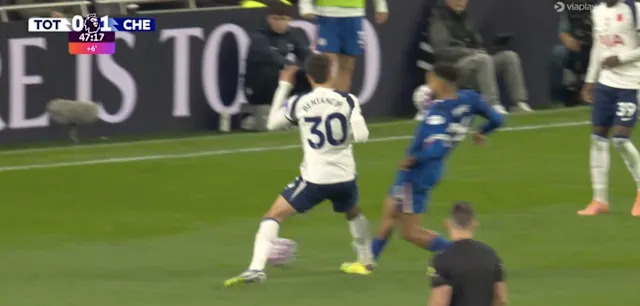
Bentancur foul. Source: Official Facebook
The KMI Panel supported the booking by a 4–1 vote and unanimously agreed that VAR was right not to recommend an upgrade. In their view, it simply didn’t cross the threshold required for serious foul play.
The Bigger Problem: Consistency Remains Impossible
Here’s the uncomfortable truth for managers and supporters: another challenge very similar to Caicedo’s will almost certainly receive just a yellow card at some point this season. It has already happened. Since the start of the 2023/24 campaign, the KMI Panel has logged 12 errors in serious-foul-play VAR reviews — a number that speaks for itself.
Maresca isn’t questioning the laws of the game. He’s questioning how they’re applied. And right now, too much depends on who’s in the VAR room, how the footage is interpreted, and the micro-details in each incident. Until those variables tighten, the debate around “consistency” will continue to dominate Premier League weekends.