
Speed is no longer just a flashy attribute—it’s the defining edge in modern football. Whether it’s a winger carving open a defence or a centre-back sprinting back to extinguish danger, top-end pace separates elite players from the rest. In today’s game, where high pressing and counterattacks dominate tactics, having speedsters in your squad is like wielding a cheat code.
This updated 2025 deep dive ranks the fastest footballers in the world based on verified sprint data, official match tracking, and tactical usage. More than just a list, it’s a celebration of football’s fastest minds and legs—those who shape outcomes not just with skill but sheer acceleration.
Other rankings by tips.gg:
- The 10 Best Left-Backs in the World
- The Best Goalkeeper in the World
- The Best Midfielders in the World 2025
- The Best Right-Backs in the World
Why Speed Reigns Supreme in Modern Football
Gone are the days when only forwards needed pace. In the era of gegenpressing and transition-based play, every position on the pitch now requires some level of sprinting ability. Defenders must recover in seconds, midfielders shuttle up and down to support transitions, and wingers thrive on vertical surges.
Speed adds unpredictability. It unlocks space, stretches defences, and turns half-chances into goals. It’s not surprising that eight of the ten fastest recorded sprints in football history have happened in the Premier League—arguably the most intense football ecosystem on the planet. Additionally, Germany’s Bundesliga also ranks high due to its high-octane playing style and use of optical tracking technology.
The World’s Fastest Footballers (2025 Rankings)
Kylian Mbappé – 38.00 km/h

Source: x.com/FansTribeHQ
Mbappé isn’t just fast—he’s terrifyingly efficient. His sprint against Monaco in 2019 remains unmatched. His ability to break the defensive line, maintain pace while dribbling, and finish with clinical precision sets him apart. Real Madrid’s newest galáctico not only boasts World Cup and UEFA Super cup medals, but he also holds the crown as football’s fastest player ever in a verified match scenario.
Micky van de Ven – 37.38 km/h

Source: x.com/Football__Tweet
Traditionally, centre-backs weren’t expected to be speed demons—but Van de Ven has rewritten the script. Spurs’ high defensive line would be suicidal without his recovery pace. Clocked at 37.38 km/h against Brentford, the Dutchman blends top-end velocity with strong positioning, making him one of the most unique defenders in world football.
Kyle Walker – 37.31 km/h

Source: x.com/Squawka
Even at 34, Walker defies biology. He’s been a fixture in City’s system thanks to his blistering speed and ability to neutralise counterattacks. His chase-downs, especially in one-on-one duels, have become legendary. Whether at Manchester City or on loan at AC Milan, Walker’s elite sprinting metrics remain indispensable.
Jean-Mattéo Bahoya – 37.16 km/h

Source: x.com/ballorientiertj
A breakout Bundesliga talent, Bahoya’s record-breaking run against Bochum stunned fans and analysts alike. Still only 20, the Frankfurt forward has immense upside. His direct style, combined with elite pace, positions him as one of Europe’s most exciting prospects.
Alphonso Davies – 37.10 km/h

Source: x.com/DemetriusXVII
The “Road Runner” moniker isn’t a media gimmick—Davies’ pace is a tactical cornerstone at Bayern Munich. Whether overlapping on the flank or tracking back, he’s essential in high-speed transitions. His speed record during a Champions League clash with Inter Milan underscored his unique athleticism and stamina.
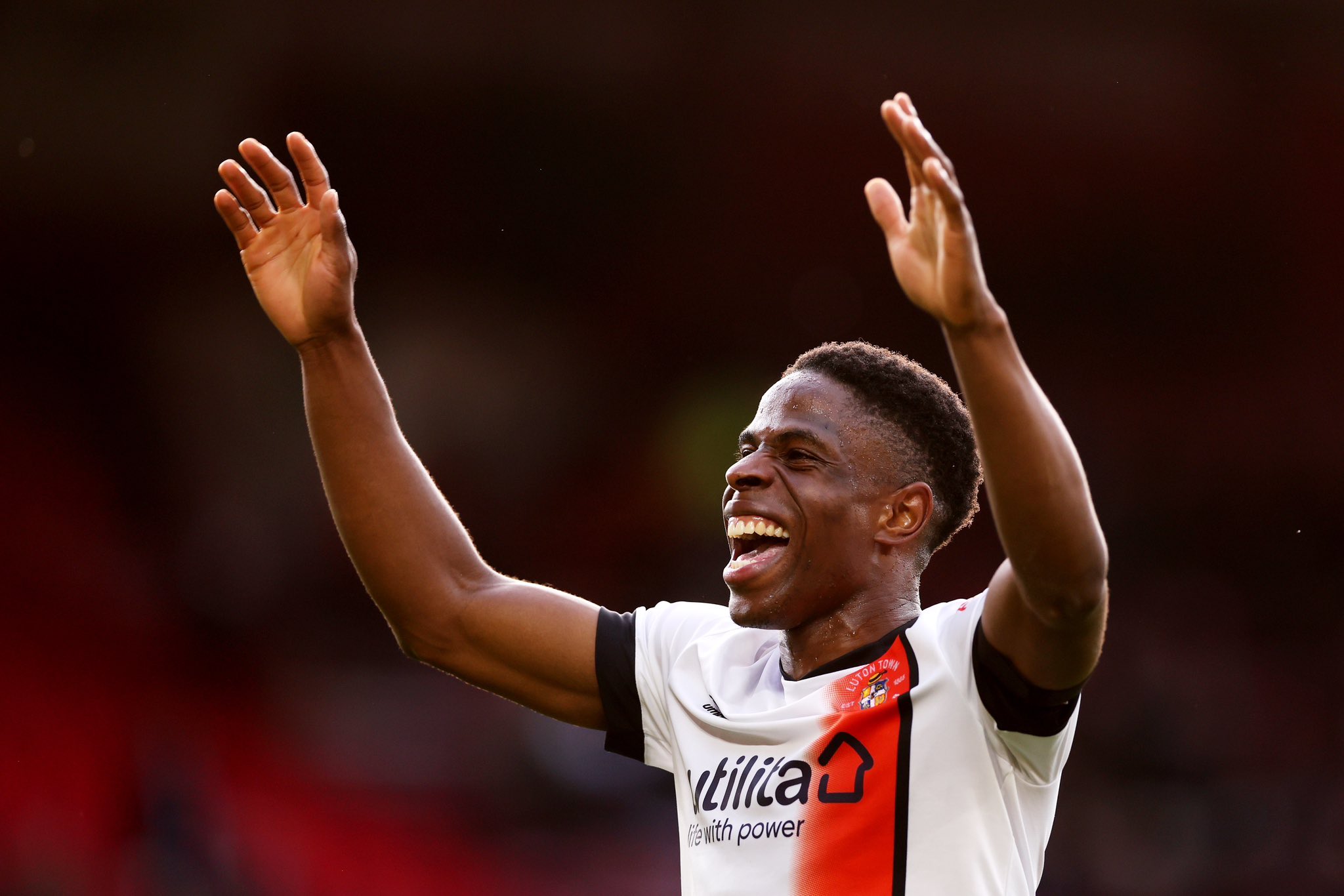
Chiedozie Ogbene – 36.93 km/h
Source: x.com/SportsPeteO
Ogbene’s story is as thrilling as his sprint. From Gaelic football to Luton Town heroics, his explosive speed turned him into a Premier League mainstay. His 36.93 km/h run against Fulham signalled that he’s more than just a pace merchant—he’s a transition expert with a unique background.
Anthony Elanga – 36.91 km/h

Source: x.com/TouchlineX
Nottingham Forest’s Swedish flyer has consistently tortured full-backs. His pace, showcased in a standout performance vs Chelsea, offers his team a sharp counter-attacking threat. Elanga thrives on running into space, exploiting defensive lapses with bursts that few can match.
Pedro Neto – 36.86 km/h

Source: x.com/Mohxmmad
Chelsea’s new wide threat, Neto uses his sprinting ability not just for dribbling but also for defensive recoveries. Formerly a fan-favorite at Wolves, Neto combines vertical pace with sharp agility, allowing him to break tight lines or press aggressively in the final third.
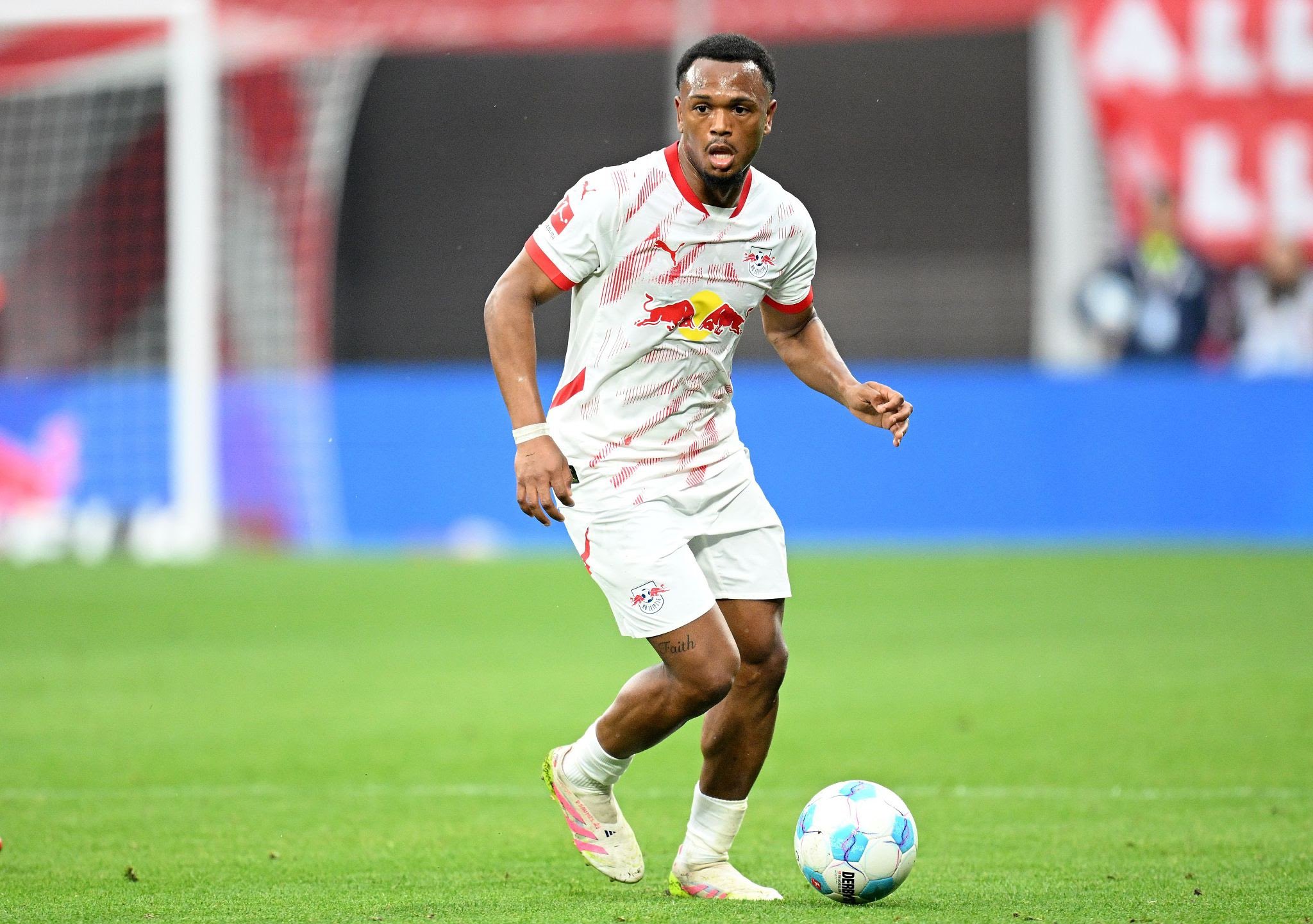
Loïs Openda – 36.86 km/h
Source: x.com/sachatavolieri
Nicknamed the “Lightning Killer,” Openda embodies Red Bull Leipzig’s philosophy. He excels in chaos: quick breaks, vertical passing, and explosive overlaps. His top speed against Freiburg came during a seamless counter, underlining his synergy with Leipzig’s system.
Jakub Moder – 36.84 km/h

Source: x.com/kasjanek7
A midfielder with defender-chasing speed? Moder is rare. Brighton’s all-action box-to-box presence clocks in faster than most wingers. His sprinting stats are reshaping the idea of what a central midfielder can offer—making him a valuable asset in end-to-end Premier League matchups.
Sirlord Conteh – 36.82 km/h

Source: x.com/XxAdamKhanxX
Heidenheim may be fighting relegation, but Conteh’s pace is elite-tier. As an impact sub, he’s torn through defences, and his record against Bayern showcased a player who can shift momentum with a single run.
Dominik Szoboszlai – 36.76 km/h

Source: x.com/_SZD10
Liverpool’s midfield dynamo is a true box-to-box specimen. His sprint vs Wolves, while defending a counter, was as impactful as a goal. Szoboszlai’s mixture of distance-running endurance and top-end bursts makes him one of Slot’s most trusted assets.
Gerrit Holtmann – 36.74 km/h

Source: x.com/VfLBochum1848EN
Despite a 7-2 loss to Frankfurt, Holtmann stole headlines. Dubbed the “Filipino Typhoon,” his acceleration and dribbling help stretch teams vertically—an asset in any direct offensive setup.
Dara O’Shea – 36.73 km/h

Source: x.com/ThatsJpToYou
Usually pigeonholed as a traditional defender, O’Shea’s blistering speed lets Ipswich press higher without fear. He’s a classic example of a player using raw pace to amplify tactical flexibility in both penalty areas.
Karim Adeyemi – 36.65 km/h

Source: x.com/TMtalksball
Adeyemi is a rocket out of the blocks. His acceleration from a standing start makes him deadly in Dortmund’s pressing system. Though his top-end speed lags slightly behind the leaders, his short-burst explosion is arguably the best in Europe.
Honourable Mentions and Historical Icons
- Thierry Henry – unofficial 39.2 km/h in 1998. Technology was less accurate, but his speed is legendary.
- Ronaldo Nazário – revolutionized forward play in the ’90s with quick bursts and unmatched footwork.
- Gareth Bale – his run past Bartra in the 2014 Copa del Rey final remains one of football’s most iconic speed moments.
- Arjen Robben – measured at 38 km/h during the 2014 World Cup. Still unmatched for top speed with the ball at feet.
How Speed Is Measured in Football
Modern football uses EPTS (Electronic Performance & Tracking Systems), combining GPS, optical, and motion tracking to quantify player metrics. Speed is typically recorded during peak in-game moments—counters, recovery sprints, or breakaways.
Metrics can differ between leagues. For example, the Premier League and Bundesliga publicly release player sprint data. This transparency, however, is not universal—Serie A and La Liga rarely share these figures officially, which explains the Premier League’s dominance in recorded data.

Source: fifa.com
Speed as a Tactical Asset
Pace isn’t just about hitting high km/h. It’s how that speed is applied. Mbappé’s tactical intelligence lets him exploit blind spots. Van de Ven’s positioning and timing elevate his recovery runs. Szoboszlai’s sprinting allows Liverpool to maintain press intensity deep into matches.
Managers like Pep Guardiola and Ange Postecoglou design systems where player pace becomes an integral part of positional play. Whether it’s overlapping full-backs, counter-pressing midfielders, or transition-focused strikers—elite pace shifts team tactics, offering more flexibility and dynamism.
Why Speed Still Rules
From Mbappé’s world-class acceleration to Van de Ven’s defensive rocket launches, elite speed reshapes the dynamics of football. It’s the bridge between tactical theory and execution. In the coming seasons, expect new names to rise, metrics to break, and systems to evolve to capitalize on what has become football’s most critical athletic attribute.
Whether you’re a fan building a fantasy team or a scout identifying next-gen talent, the message is clear: Speed wins games. Period.