
There is a strange fascination with the underdogs and recurrent losers in the glory-filled world of sports. Imagine the stage for football’s most tragic actors – a dilapidated stadium with rusty gates that show empty stands and a worn-out field.
The idea of the “worst team” goes beyond simple statistics. It’s evidence of how unpredictable the sport is and how quickly hopes may be dashed. These notorious teams serve as a reminder that every dominant team has a Dribbling Disasters FC that stumbles through games and makes inadvertent jokes. Their tragicomic performances captivate spectators all around the world, embodying the brutal nature of the sport where triumph and tragedy coexist.
Criteria for determining the ‘worst’
To find the worst football teams, you have to carefully look at a lot of different factors. Even though win percentage seems simple, it can be wrong when comparing teams from different levels of play. Goal difference shows how bad losses are, while long winless runs show how hard things have been for a long time. Using resources well adds context, because teams that don’t do well even though they have a lot of money get tougher criticism.
Because football is always changing, it’s hard to be objective in this study. There are a lot of problems with comparing teams from different times, leagues, and tournament structures. When a semi-professional club fails in local competition, it’s very different from when a national team fails on the world stage.
Statistical standards are affected by changes in rules and strategies, so the historical background is very important. Differences between leagues make it hard to compare, and the level of competition varies a lot. Inequality in money affects performance standards, which makes it hard to make direct comparisons. Different areas set different goals for football because of their culture, which affects the game’s long-term growth. A full review is also made harder by the fact that there isn’t a lot of data for older or lower-tier teams.
Ultimately, determining the weakest team depends on the metrics used for assessment. In addition to numbers, knowing the historical background is important for gaining a useful perspective.
- Also read: The Best Goalkeeper in the World – 2025 Rank
National Team Candidates
In the realm of international football, certain national teams have etched their names in history for all the wrong reasons. Four squads stand out for their extraordinary struggles on the global stage, each grappling with unique challenges that have led to consistent underperformance.
San Marino
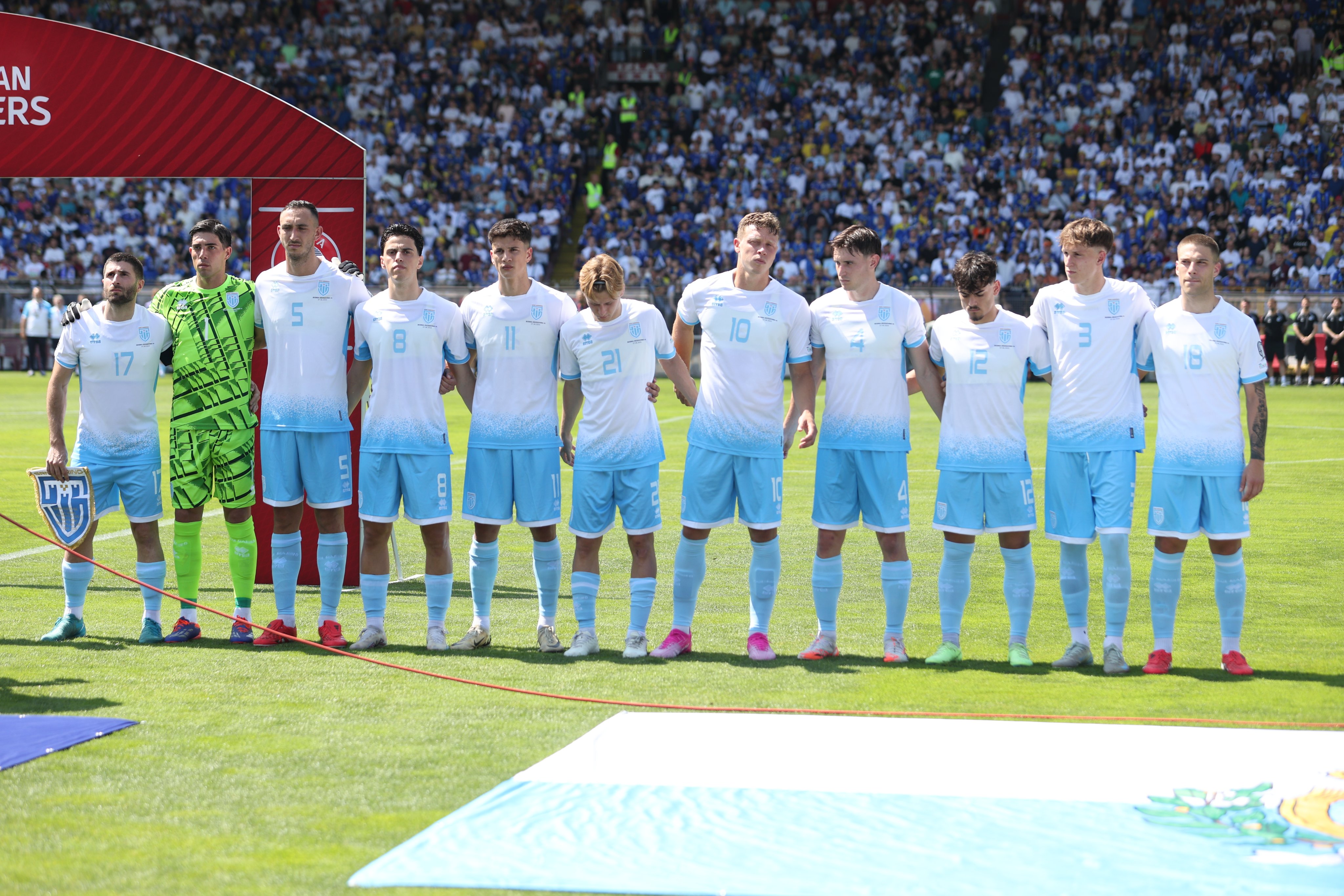
A small country surrounded by Italy has come to mean pointless sport. They have only won two games in their history and have gone 129 games without a win, which has solidified their place at the bottom of the FIFA ranks. The difference in goals between them is very clear: 23 goals were made and 653 goals were given up, showing how far behind their competitors they are. This ongoing problem is caused by a small population and few resources, which make it hard to put together successful teams.
Source: FSGC | official
American Samoa
When American Samoa lost badly to Australia 31-0 in 2001, it was the lowest point in their football career. This is the most unfair result in the history of international football. It shows how different things can be between countries in the sport. They have trouble creating competitive players and teams because they are geographically isolated and don’t have enough professional infrastructure.
South Korea
The 1954 World Cup campaign for South Korea is still a painful memory in their football past. They gave up an unbelievable 16 goals in just two games, losing 9-0 to Hungary and 7-0 to Turkey. It was the worst goal difference ever seen in a single World Cup tournament because of this terrible showing. This team’s lack of experience and the fact that football was still new at the time made their debut on the world stage tough.
El Salvador
El Salvador’s World Cup appearances have been marked by crushing defeats. In 1970, they lost all three matches by a combined score of 0-9. Their 1982 campaign was even more brutal: three defeats with a total score of 1-13. Thus, two appearances in the final part of the tournament brought the country defeats in all matches and a staggering goal difference of 1-22. Socio-economic issues affecting player development played a significant role in their international performances.
Club contenders
In football’s rich tapestry, certain clubs stand out as cautionary tales of sporting misfortune. These teams, whose domestic dreams crumbled into nightmares, offer a fascinating glimpse into the sport’s unforgiving nature.
Darwen FC
That was one terrible football season for Darwen FC (1898–99). They lost 18 straight games and gave up an amazing 141 goals during that time. Their goal difference dropped so low that it reached -119, a number that still makes football historians cringe. They only played in the Football League once, and it was a terrible season, which was also their last game in the league.
This is still one of the worst crashes in English football history, a harsh reminder of how quickly things can go wrong in the beautiful game. It’s easy to see how Darwen’s fall shows how unstable finances and a lack of proper infrastructure could wreck even well-established football teams in the early days. It’s a lesson, but it’s also certainly one of the most interesting failures in sports history.
Derby County
Derby County’s 2007-08 Premier League campaign was a masterclass in how not to survive in the top flight. They managed just one win across the entire season, scraping together a dismal total of 11 points before their fate was sealed weeks before the final whistle. Their struggles were more than just a bad run – it was a brutal reality check for newly promoted sides, exposing the widening gap between Premier League regulars and those trying to break into the elite.
That season became the ultimate cautionary tale, a reminder of how unforgiving England’s top tier can be. No matter the effort, if a team isn’t prepared for the relentless competition, the Premier League will swallow them whole.
Bangkok Bank FC
Bangkok Bank’s 1999 season in Thailand was a disaster from start to finish, setting records for all the wrong reasons. Across 30 matches, they managed to scrape together just two points, a showing that cemented their place in football’s hall of infamy. Their struggles highlighted the challenges of corporate-owned clubs, where financial priorities often clash with the demands of sporting success. That season remains a glaring example of how business-driven football can backfire spectacularly when the balance between management and on-pitch performance isn’t right.
Brescia
The 1994–95 Serie A season for Brescia was rough from the beginning to the end. They only won two of the 34 games they played, which showed how tough Italy’s top league can be. Even for teams that have been in Serie A for a while, the level of competition can be too much, and Brescia’s problems were a stark reminder of that. Their season was another example of how narrow the gap between staying in the league and being relegated can be in one of Europe’s toughest games.
Íbis Sport Club
Íbis Sport Club’s notorious losing streak in the 1980s is the stuff of legend – an incredible 3 years, 11 months, and 26 days without a single victory. This earned them the infamous title of “Worst Team in the World,” a label they didn’t just accept, but fully embraced. Instead of letting their failures bury them in obscurity, Íbis turned their misfortune into a unique brand identity, making their struggles a defining feature of the club.
Their story proves that even prolonged failure can be spun into a strange kind of success. Featured in the Guinness Book of Records, their streak became a badge of honor, transforming them into cult favorites in the football world. It’s an unexpected lesson in marketing – sometimes, even being the worst can make you unforgettable.
What do all these clubs have in common?
These clubs’ struggles have become part of football folklore. Their stories serve as reminders that behind every triumphant narrative in football, there are tales of teams grappling with the harsh realities of competition, financial constraints, and the relentless pressure to perform. From Darwen’s 19th-century collapse to Íbis’ modern-day embrace of their unfortunate record, these teams illustrate the full spectrum of football’s capacity for both heartbreak and unexpected redemption.

Source: Kelly / pexels.com
Finally, which team is the worst in the history of football?
Crowning a singular “worst” team proves challenging. San Marino’s persistent international struggles and Darwen’s historic collapse represent different facets of football failure. However, Íbis Sport Club’s 3-year winless streak stands out as a uniquely prolonged period of futility. Their ability to embrace this notoriety demonstrates how failure can transform into a cultural phenomenon.
FAQ
What makes the ‘worst’ team in football history?
The ‘worst’ football team is determined by a number of factors. Important metrics include goal differentials, win-loss ratios, and extended winless streaks. The three-year drought at Íbis Sport Club is notable. Historical background, competition intensity, and resource use are also important factors. The unpleasant distinction of football’s least successful teams is shaped by this intricate dynamic.
Has a team ever failed to score a goal for the full season?
Some teams have come close, but no team has gone a whole season without scoring. Derby County only managed 20 goals in 38 Premier League games in 2008. These severe droughts serve as a reminder of how harsh football can be, as even the most ardent attempts can fail to achieve the most basic goal: scoring.
How do financial resources affect a team’s performance?
Team performance is greatly impacted by financial resources. Rich teams have a competitive edge because they draw elite talent, make investments in first-rate facilities, and use cutting-edge techniques. However, success is not always assured by financial strength. Regardless of budget size, team cohesion, efficient administration, and wise resource allocation are still essential for long-term success.
Are there any examples of teams succeeding in overcoming their “worst” status?
Numerous teams have successfully risen above their “worst” standing. Two seasons after barely escaping relegation, Leicester City’s incredible 2015–16 Premier League triumph stands out. Another striking comeback is Kaiserslautern’s 1997–98 Bundesliga victory, which came just after promotion. These tales demonstrate the unpredictability of football and its capacity for spectacular comebacks. These changes motivate struggling clubs around the world.
Why do fans love losers?
Football’s underdogs possess an undeniable appeal, captivating fans with their battles and resilience. The notion of the “worst team” highlights the sport’s unpredictability and the perseverance that defines human nature. These squads embody football’s emotional highs and lows, reinforcing the idea that every victory is born from adversity.