 Alex MacQuoid
The football itself is easy to overlook. Ninety minutes of football fills the screen with tactics, drama, and the occasional moment of genius, and the ball is just the object that connects all of it. Look closer at the FIFA World Cup balls history, and the story gets interesting. From hand-stitched leather panels in 1930 to aerodynamic synthetic constructions in 2022, every tournament ball tells you something about the era it came from.
This is the complete record, tournament by tournament.
FIFA World Cup 2026 on Tips.gg – Powered by SapphireBet
The Pre-Adidas Era: 1930 to 1962
1930: Tiento and T-Model
For the first World Cup in Uruguay, there was no official ball. In the final, Argentina and Uruguay could not agree on which ball to use, so they compromised: Argentina’s Tiento was used in the first half, while Uruguay’s heavier T-Model was introduced after the break. Argentina led 2-1 at half-time, but Uruguay scored three unanswered goals with their larger ball and won 4-2. Both teams later claimed the ball choice influenced the result. Leather balls of this era were hand-stitched, absorbed water easily and became significantly heavier in wet conditions.
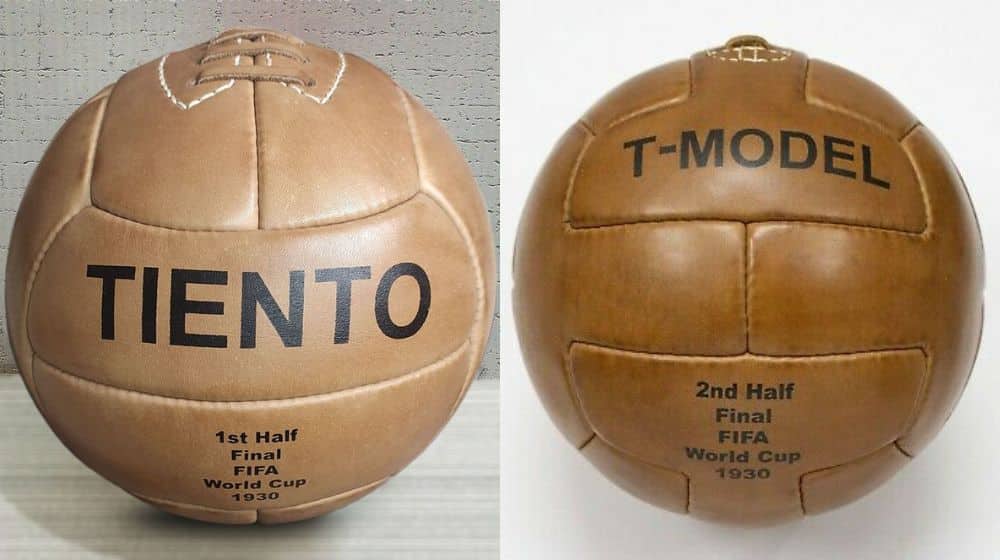
Tiento and T-Model
1934: Federale 102
Italy’s Federale 102 was produced under Mussolini’s government for the 1934 tournament. It replaced traditional leather laces with softer cotton ones, making it less painful for players heading the ball. However, like all balls of the period, it was handmade, which led to inconsistent quality and sphericity. Captains were often shown several balls before kick-off and allowed to choose. Ultimately, the final was played with an English ball rather than the Federale 102.
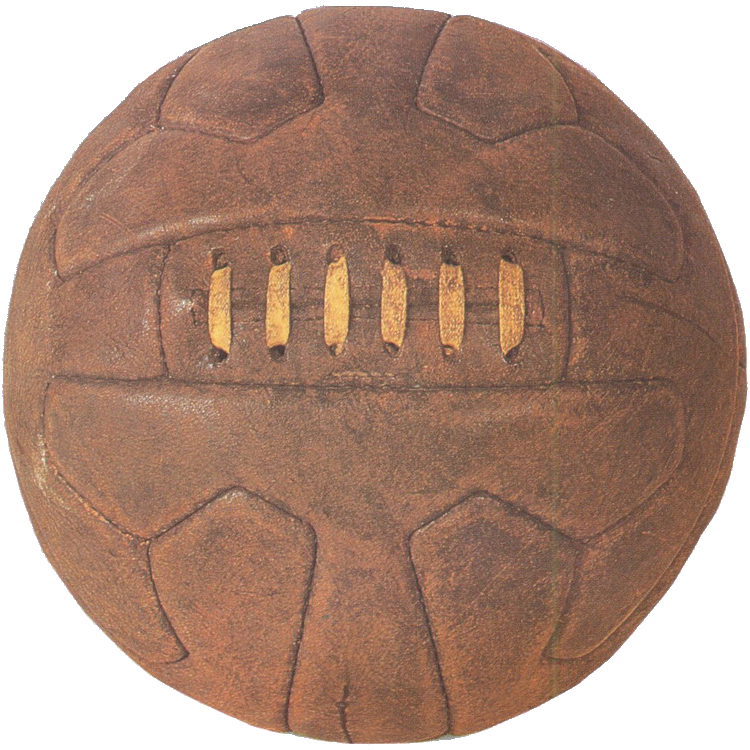
Federale 102
1938: Allen
France 1938 saw the Allen ball become the first World Cup ball to carry a manufacturer’s brand. Produced by a Paris-based company, it was similar to the Federale 102 but featured more rounded panel edges and a 13-panel construction. Despite being the official ball, other 12- and 18-panel models were also used during the tournament due to ongoing concerns about consistency and inflation.
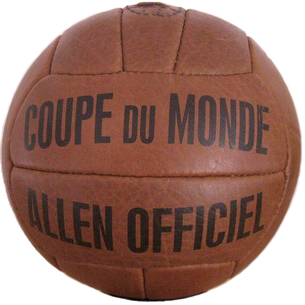
Allen
1950: Duplo T
After a 12-year absence caused by World War II, the 1950 World Cup in Brazil introduced a major innovation with the Duplo T (also known as Superball or Super Duplo T). This was the first ball at a World Cup to eliminate external laces entirely. It used a closed leather sphere inflated through a small valve with a needle, allowing far more consistent sphericity and pressure. As a result, the Duplo T became the first ball used uniformly across all matches of a single tournament.
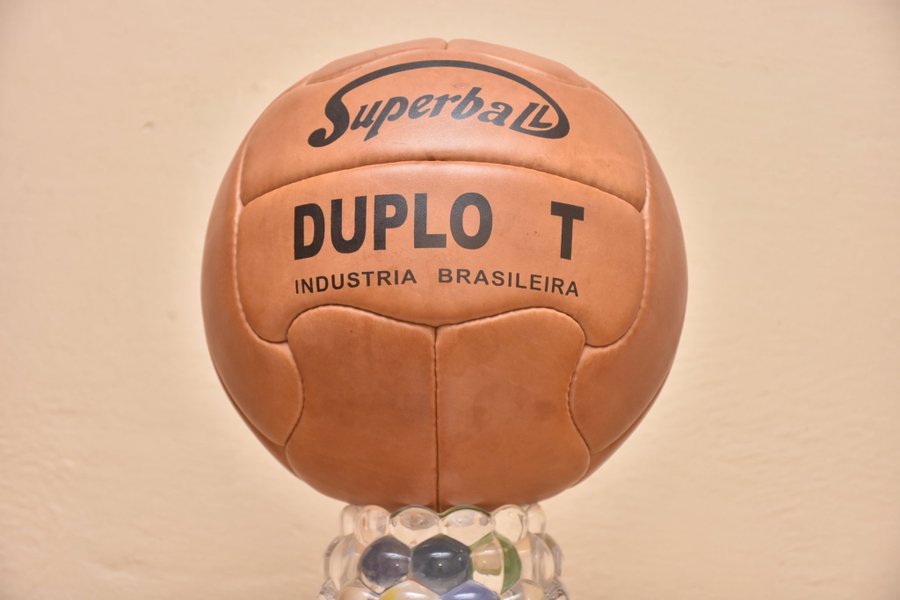
Duplo T
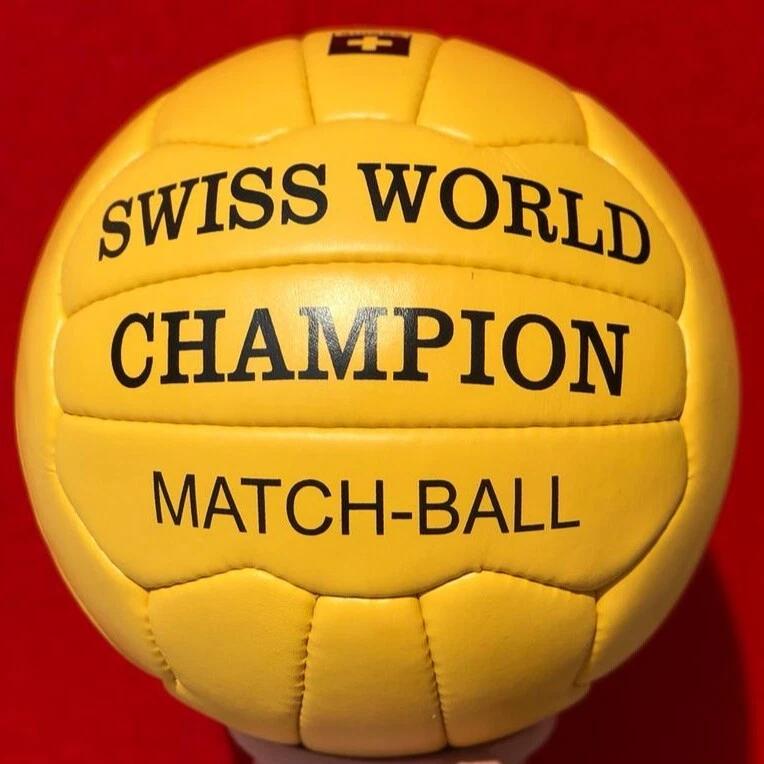
1954: Swiss World Champion
Switzerland’s Kost Sport produced the Swiss World Champion for the 1954 tournament. It introduced an 18-panel design with panels interlocking in a distinctive zig-zag pattern — a structure that would influence ball design for decades. The brighter colour and new panel layout made it somewhat easier to follow in flight, marking a modest but noticeable step forward in visibility and construction.
Swiss World Champion
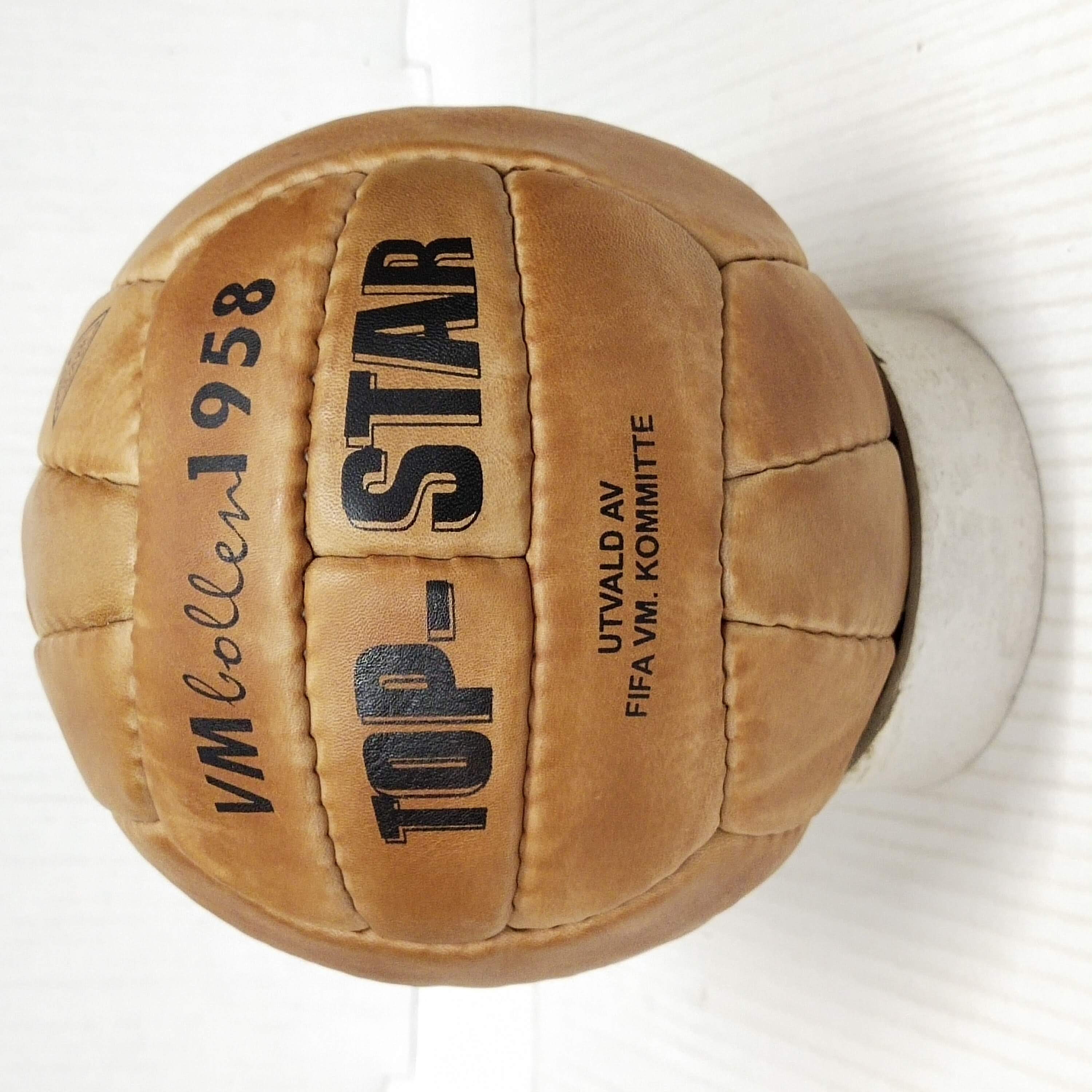
1958: Top Star
For the 1958 World Cup in Sweden, FIFA held a blind test, inviting manufacturers to submit unbranded balls. After careful evaluation by FIFA officials and Swedish representatives, the Top Star from Ängelholm was selected as the official ball. It was the first World Cup ball to feature 24 panels and was supplied to all teams. The Top Star proved so popular in Europe that it would later appear again in 1962 when local balls were deemed unsatisfactory.
Top Star
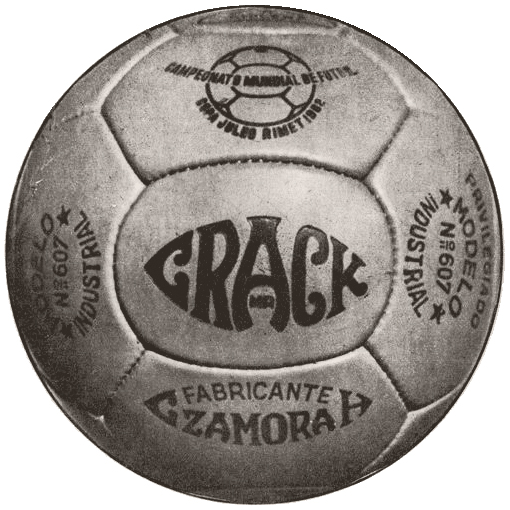
1962: Crack
The 1962 tournament in Chile introduced the Crack, produced by local manufacturer Custodio Zamora. Its 18 panels were irregularly shaped and hand-stitched, which drew criticism from several European teams who found it unreliable. In some matches, including the opening game, referees replaced it with the European Top Star from 1958. The Crack did, however, introduce a latex inflation valve — an innovation that would be widely adopted in later models.
Crack
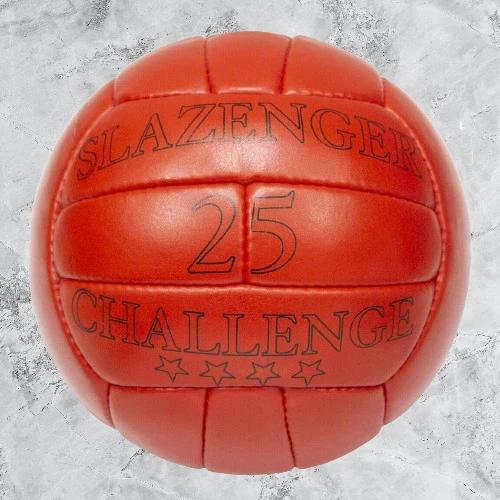
1966: The First Branded Ball
England’s tournament marked a turning point. Slazenger supplied the Challenge 4-Star, the first World Cup ball to carry a manufacturer’s brand. It was still leather, still 32 panels, still susceptible to rain, but the commercial relationship between football and equipment manufacturers had officially begun. Four years later, that relationship would define the visual identity of the sport.
Slazenger
The Adidas Era Begins: Telstar to Tango
1970: The Telstar
Mexico 1970 gave the world the Telstar, and the Telstar gave football its defining image. The 32-panel black-and-white design was created partly for television: the black pentagons stood out on monochrome screens and helped viewers track the ball. It worked. The Telstar became so synonymous with football that its pattern is still what most people draw when asked to sketch a ball. Pele’s tournament, Pele’s ball.
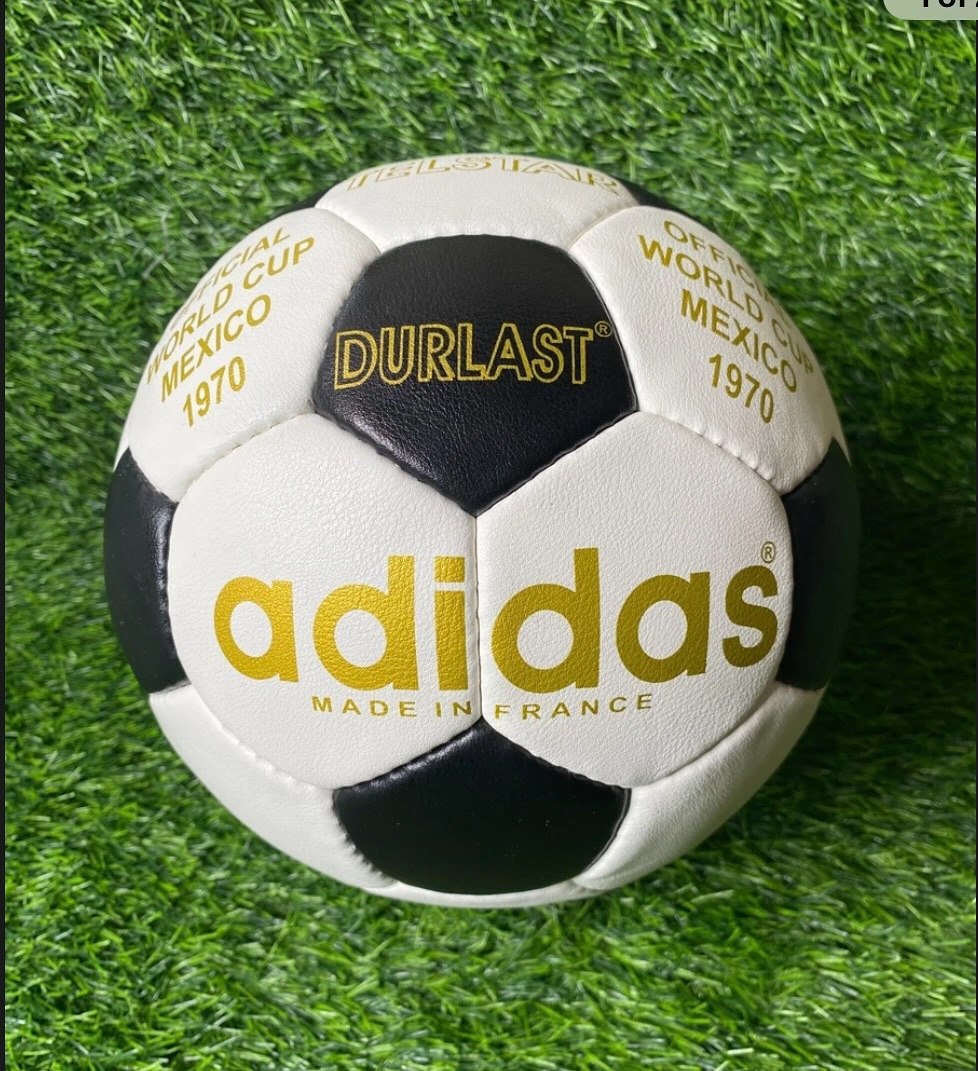
Telstar
1974 and 1978: Durability and the Tango
West Germany’s tournament saw the Telstar Durlast, a synthetic-coated version that handled wet conditions better than its predecessor.
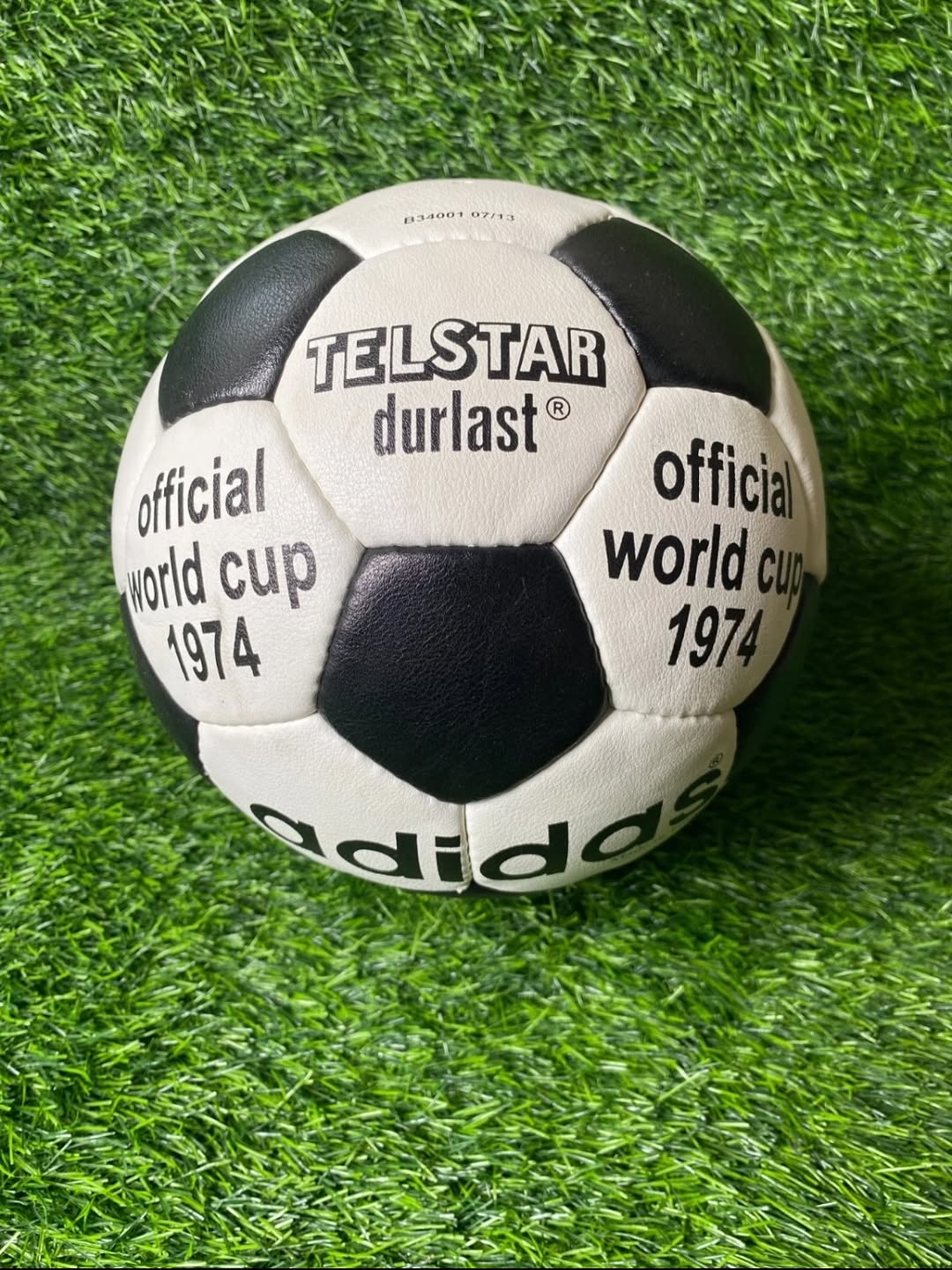
Telstar Durlast
The real leap came in 1978. Argentina hosted, and Adidas introduced the Tango. Twenty curved triads arranged across the surface created the illusion of a twelve-panel ball. The Tango’s design was clean, almost geometric, and it became one of the most replicated ball graphics in history. Adidas used variations of the Tango name and pattern through four consecutive tournaments.
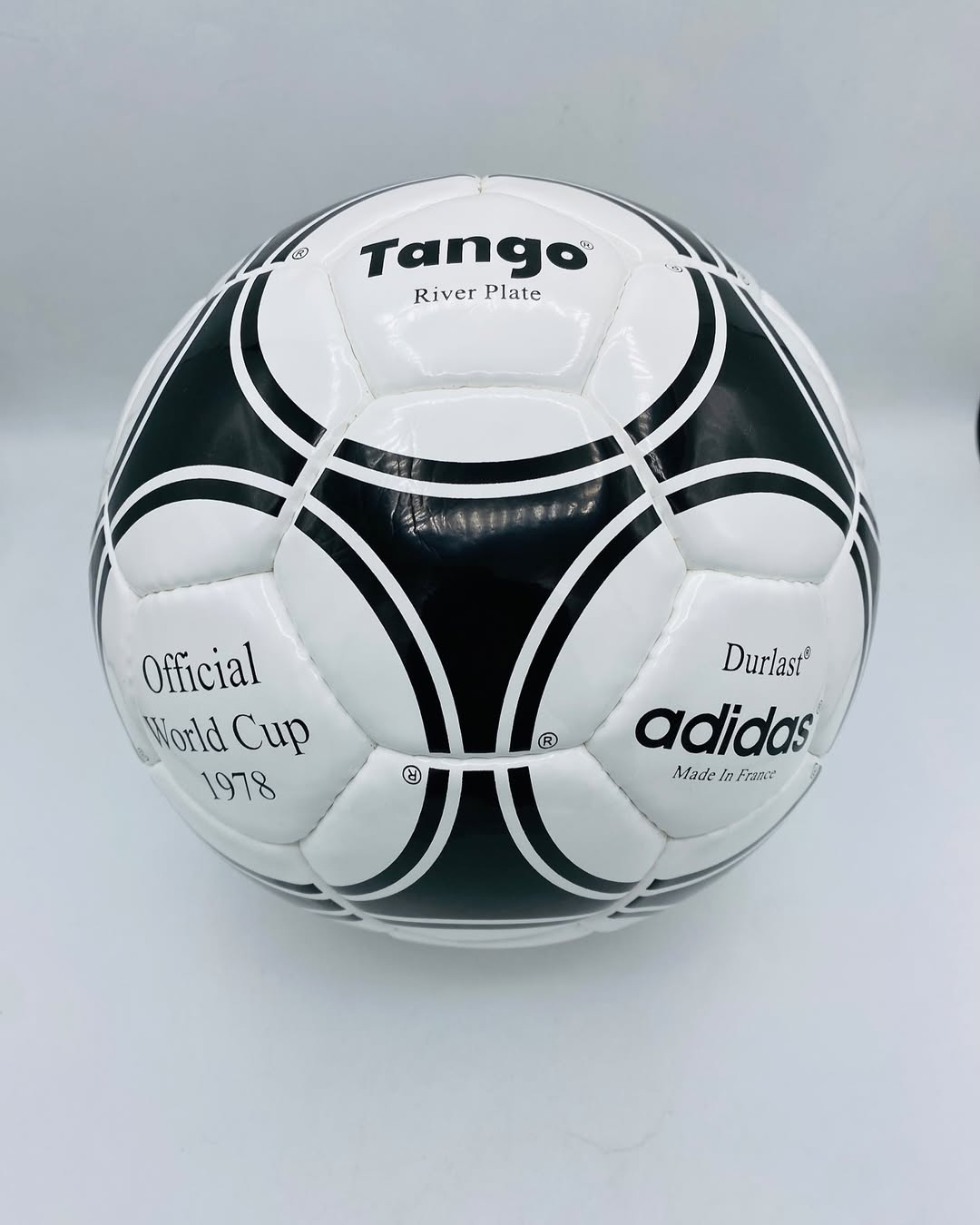
Tango
1982: Tango Espana
Spain’s Tango Espana added water-resistant synthetic panels to the classic Tango design. Damp conditions no longer guaranteed a waterlogged ball. For players and goalkeepers, that mattered.
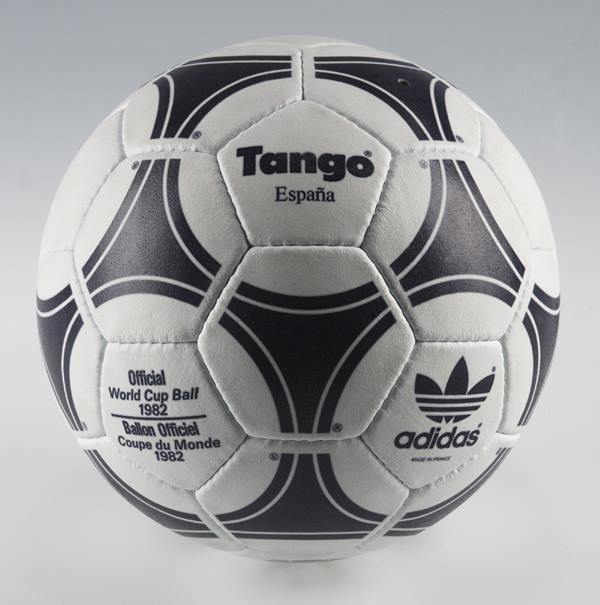
Tango Espana
Going Fully Synthetic: 1986 to 1998
1986: The Azteca
Mexico hosted its second World Cup and Adidas delivered the Azteca, the first entirely synthetic ball used at the tournament. The move away from leather was complete. The Azteca’s surface was more consistent, more water-resistant, and more predictable in flight. Maradona’s Hand of God and Goal of the Century were both scored with it. The ball performed reliably; the drama came from elsewhere.
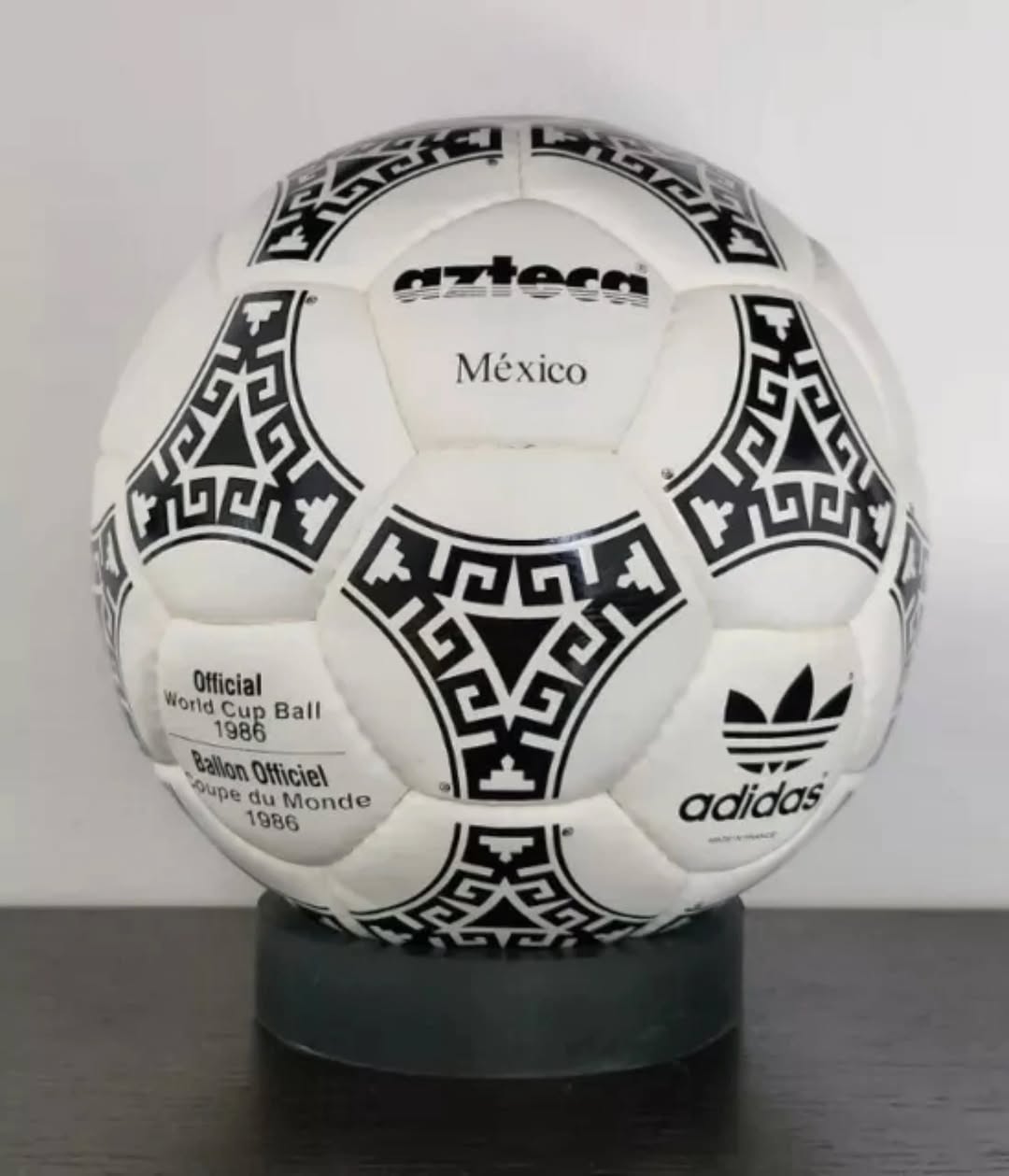
Azteca
1990 to 1994: Etrusco and Questra
Italy’s Etrusco Unico featured a synthetic outer with decorative Etruscan lion heads on each panel, a nod to the host nation’s heritage.
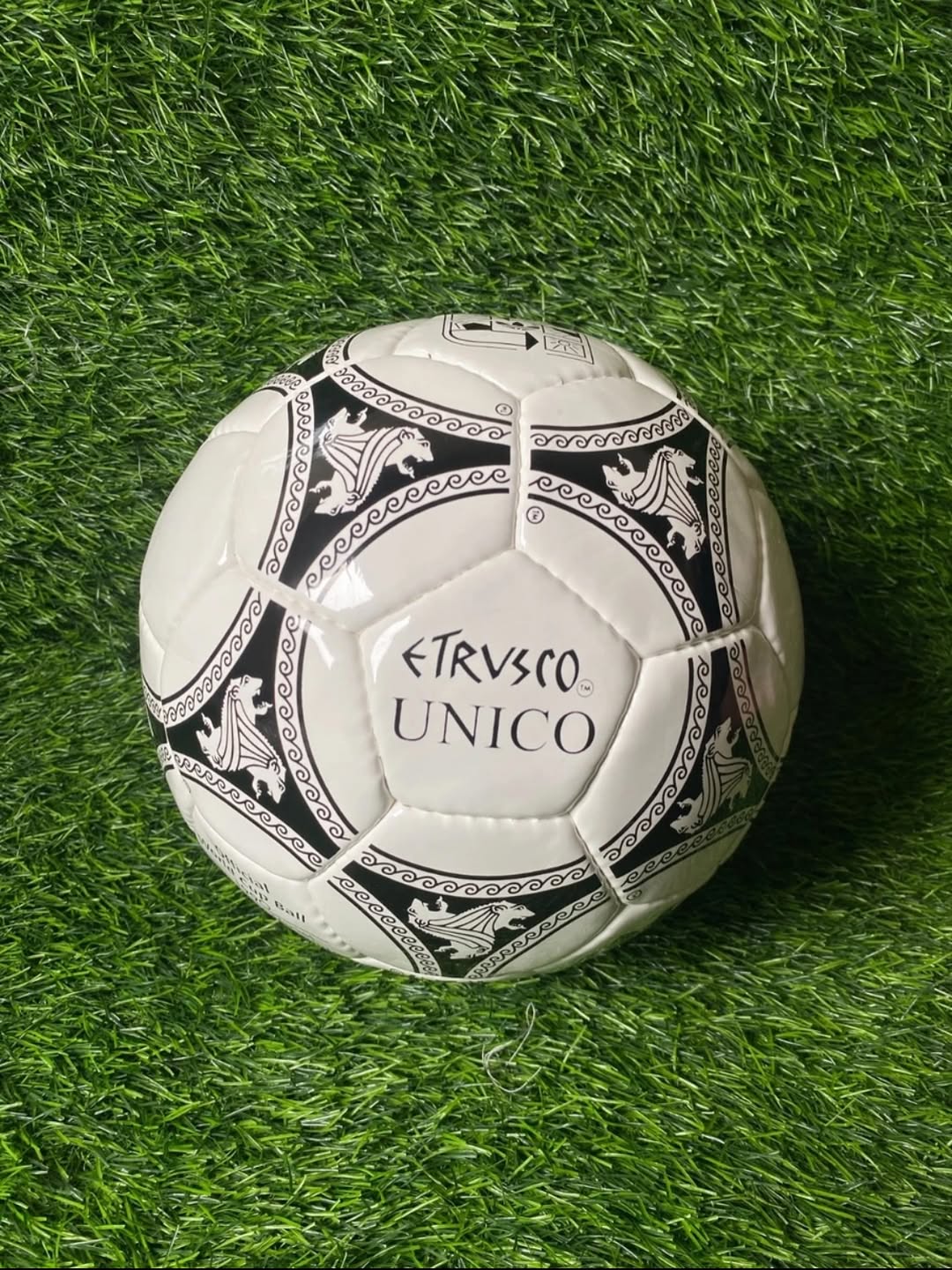
Etrusco
The USA’s Questra went further by adding a foam layer beneath the outer shell, which increased the ball’s responsiveness. These were incremental improvements, each building on the last.
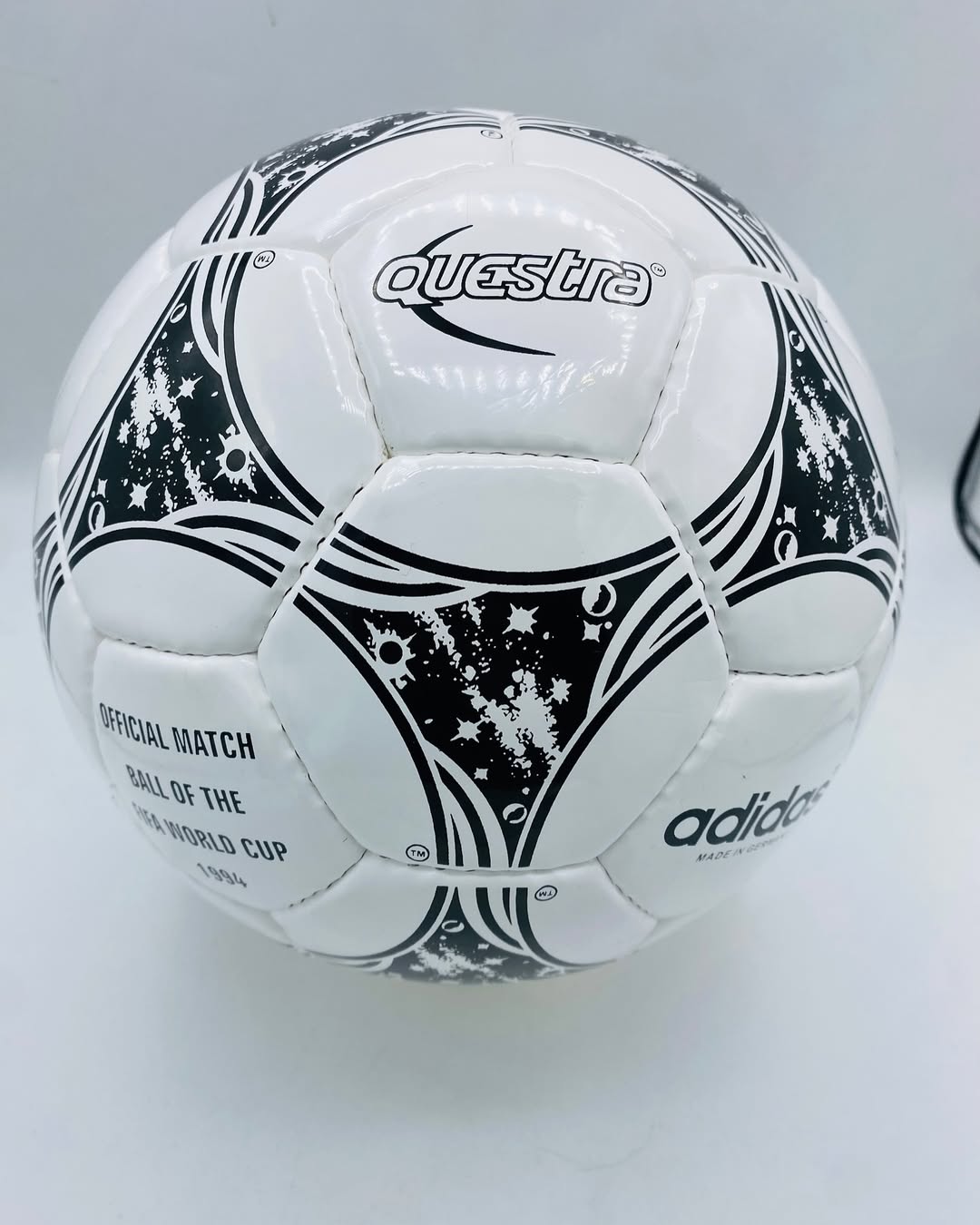
Questra
1998: Tricolore
France 1998 gave the world the Tricolore, the first World Cup ball to feature multiple colours. Red, gold, and blue panels reflected the host nation’s flag. It was a cosmetic shift as much as a technical one, but it signalled that design was becoming as important as performance in the brief.
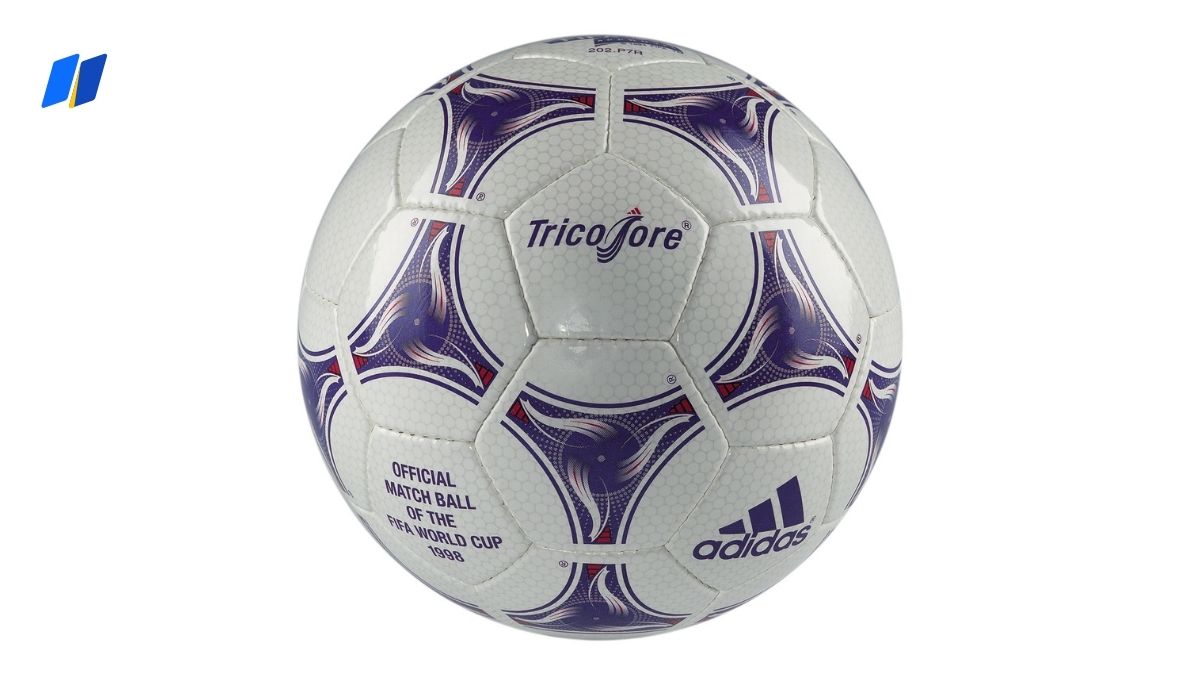
Tricolore
The Controversial Balls: 2002 to 2010
2002: Fevernova
Korea and Japan’s joint tournament produced the Fevernova, and the reaction from goalkeepers and players was immediate. The ball’s synthetic foam layers created unpredictable flight paths. Shots dipped and swerved in ways that looked wrong. Several goalkeepers publicly complained during the tournament. Adidas defended the design. The Fevernova remains one of the most debated balls in the FIFA World Cup balls history.
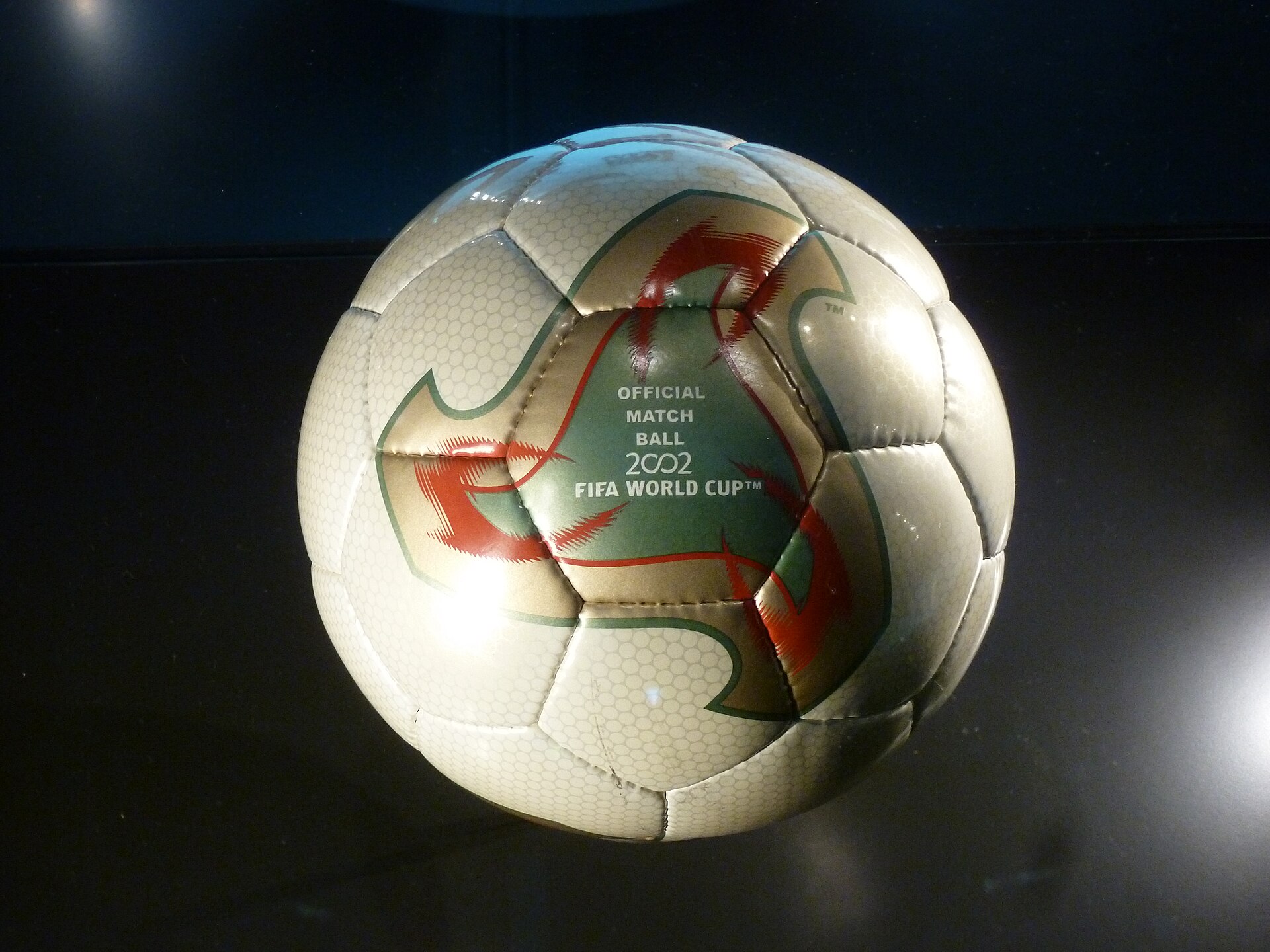
Fevernova
2006: Teamgeist
Germany’s Teamgeist was a significant engineering shift. Fourteen thermally bonded panels replaced the traditional stitched construction, producing a rounder ball with a smoother surface. The reduced panel count made it faster and more responsive. Some goalkeepers still found the flight unpredictable, but the Teamgeist was generally better received than its predecessor.
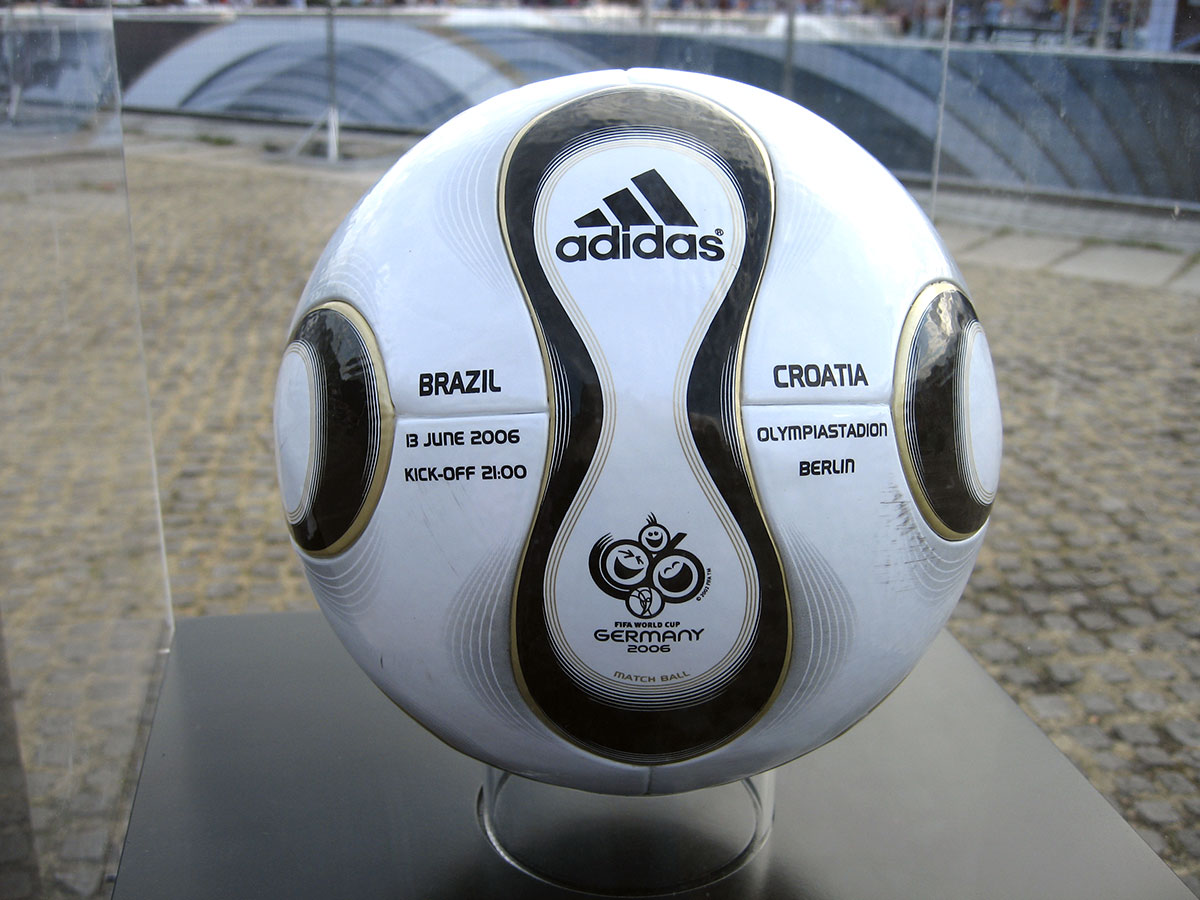
Teamgeist
2010: Jabulani
South Africa’s Jabulani became genuinely notorious. Eight synthetically bonded panels and a near-perfect sphere produced severe knuckling at high speeds. Goalkeepers hated it. Several high-profile errors in the tournament were attributed directly to the ball’s behaviour. Adidas’s testing data suggested the Jabulani was more accurate than previous balls; the goalkeepers who faced Robert Green’s howler in England’s opener against the USA had a different view.
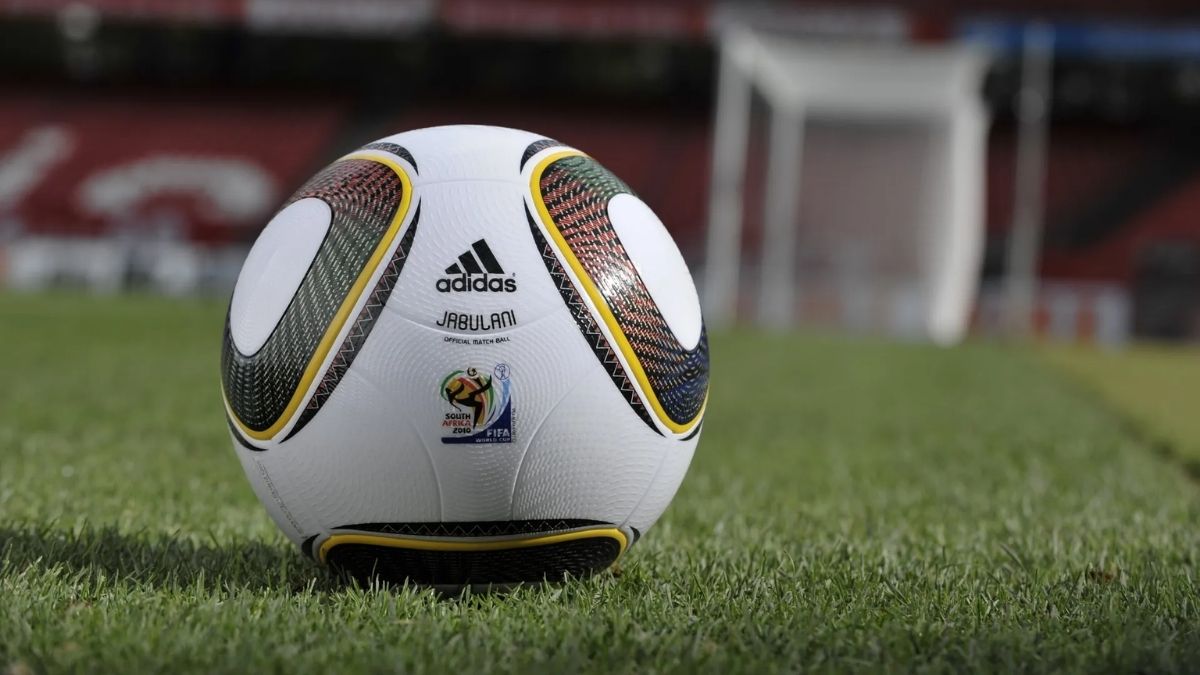
Jabulani
The Modern Era: 2014 to 2022
2014: Brazuca
Brazil’s Brazuca represented a direct response to the Jabulani backlash. Six symmetrical propeller-shaped panels, tested for over two and a half years with more than 600 players across 10 countries. The Brazuca was widely praised. Flight was consistent, control was improved, and the tournament produced excellent football. The name, chosen by Brazilian fans through a public vote, means Brazilian way of life.
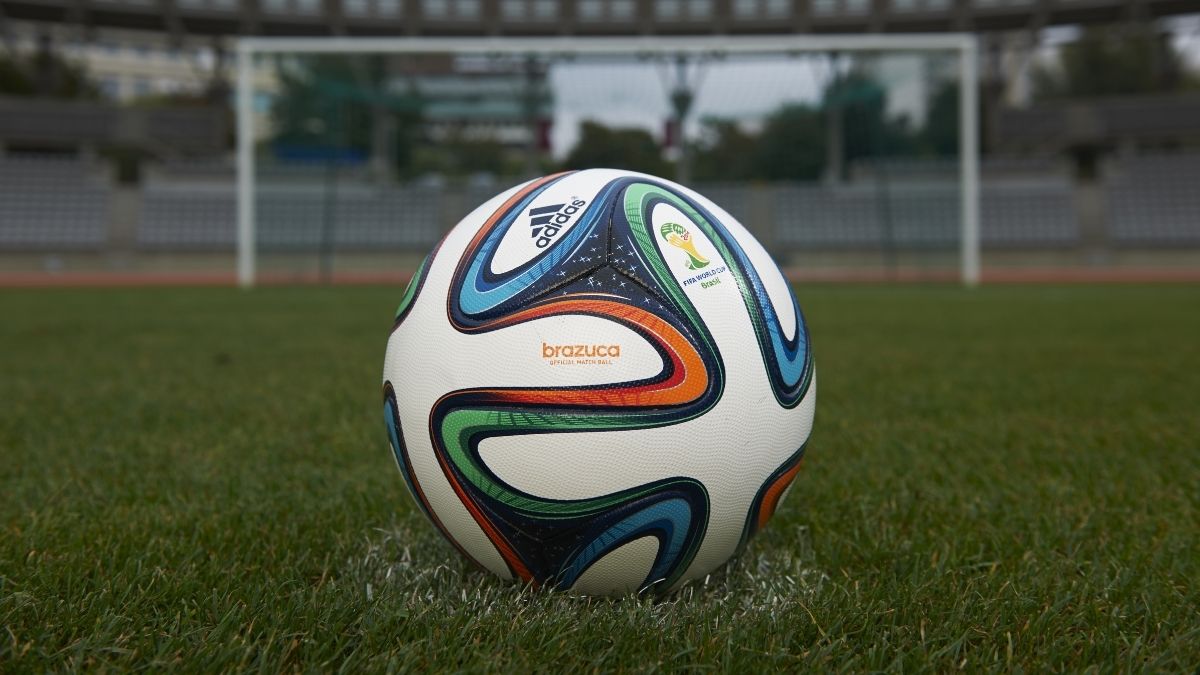
Brazuca
2018: Telstar 18
Russia’s ball brought the Telstar name back and added technology: an NFC chip embedded in the ball allowed fans to interact with exclusive content by tapping their phone against the panel. The pixelated black-and-white graphic design was a deliberate nod to the original 1970 Telstar. It played well and looked sharp.
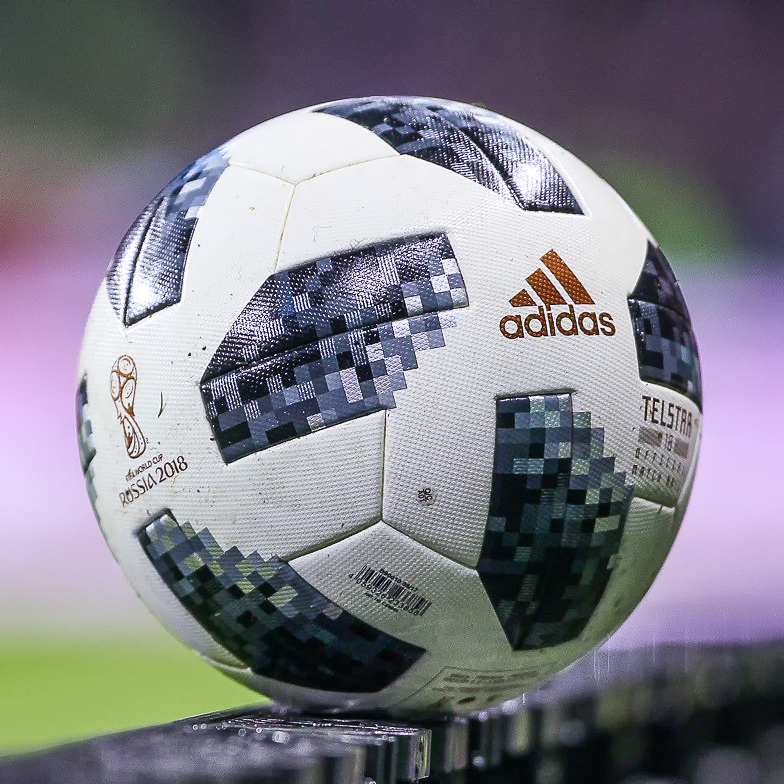
Telstar 18
2022: Al Rihla
Qatar’s Al Rihla, meaning ‘the journey’ in Arabic, was described by Adidas as the fastest World Cup ball ever produced. Twenty connected panels used a water-based ink system for the first time, reducing environmental impact. The ball’s aerodynamics were optimised for Qatar’s conditions: warm air, fast pitches, high-intensity play. Reviews from players were positive, and the tournament’s attacking output suggested the ball did its job.
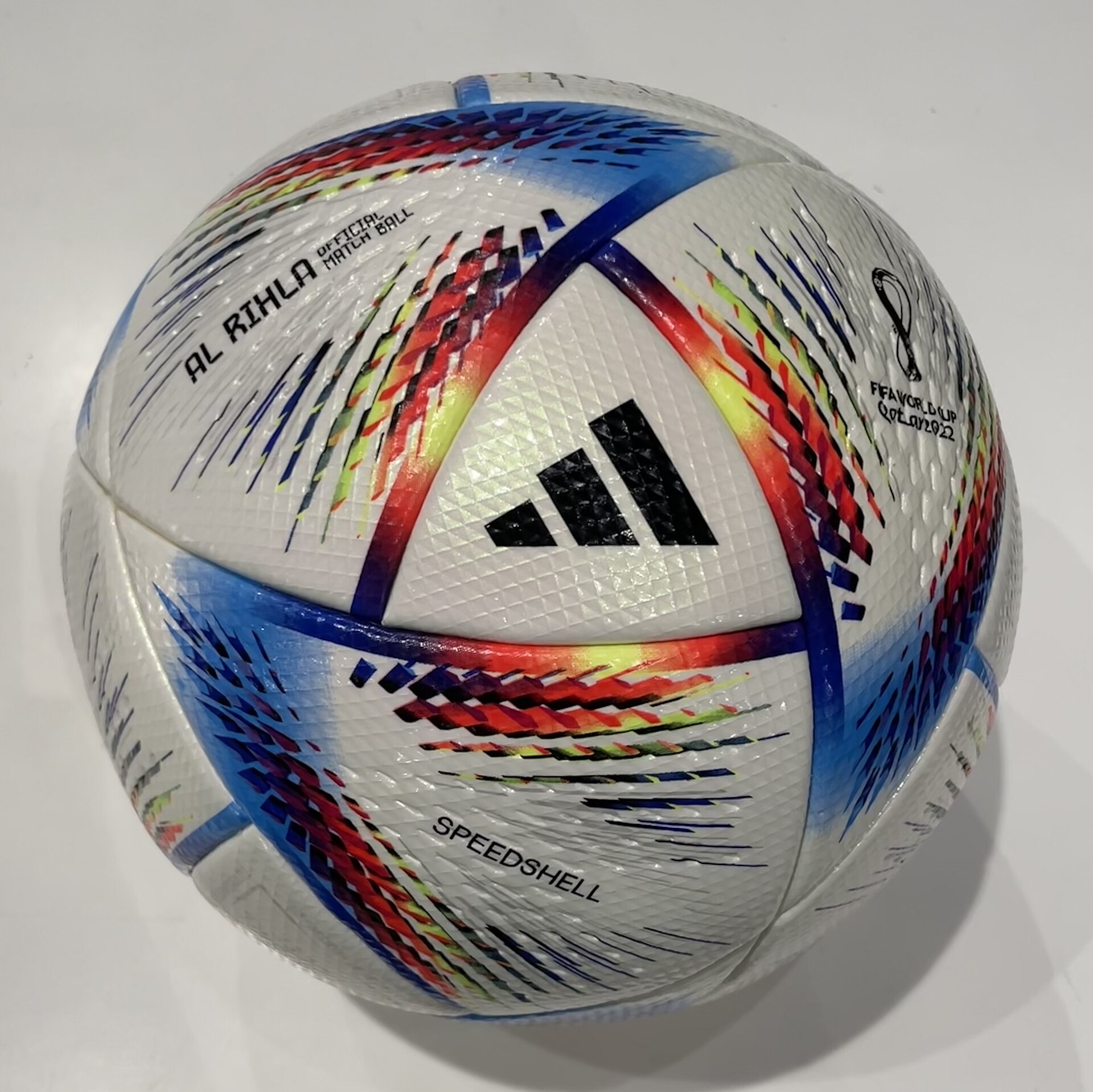
Al Rihla
2026: TRIONDA
For the 2026 FIFA World Cup, co-hosted by Canada, the USA and Mexico, adidas unveiled the TRIONDA. The ball features red, green and blue waves symbolising the three host nations, along with embossed icons – a star, maple leaf and eagle – representing each country. It introduces a four-panel construction for better flight stability and includes a 500 Hz motion sensor that delivers real-time data to the VAR system for quicker decisions.
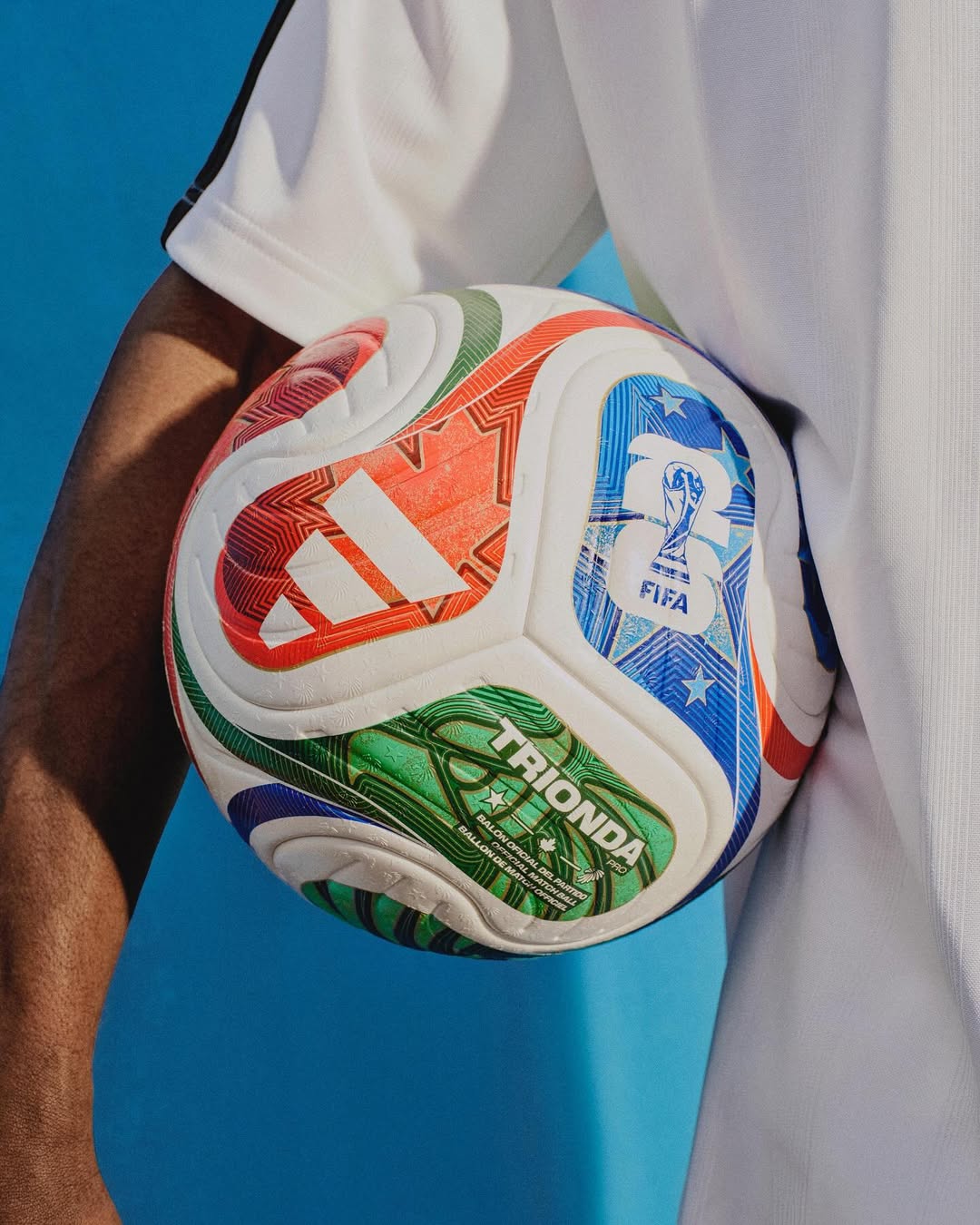
TRIONDA
Complete List: All Official FIFA World Cup Balls 1930 to 2026
The table below covers every official match ball across all 23 tournaments, including the expected 2026 edition.
| Year | Ball Name | Manufacturer | Host Country | Key Feature |
|---|---|---|---|---|
| 1930 | T-Model | None (local) | Uruguay | Leather, two halves, lace |
| 1934 | Federale 102 | None (local) | Italy | 13-panel leather |
| 1938 | Allen | None (local) | France | Leather with lace closure |
| 1950 | Super Duplo T | None (local) | Brazil | 18-panel leather |
| 1954 | Swiss World Champion | None (local) | Switzerland | 18-panel, two-tone |
| 1958 | Top Star | None (local) | Sweden | 18-panel leather |
| 1962 | Crack | None (local) | Chile | 18-panel leather |
| 1966 | Challenge 4-Star | Slazenger | England | First branded official ball |
| 1970 | Telstar | Adidas | Mexico | Iconic black-and-white 32-panel |
| 1974 | Telstar Durlast | Adidas | West Germany | 32-panel, synthetic coating |
| 1978 | Tango | Adidas | Argentina | 20 curved triads, iconic design |
| 1982 | Tango Espana | Adidas | Spain | Tango with waterproofing |
| 1986 | Azteca | Adidas | Mexico | First fully synthetic ball |
| 1990 | Etrusco Unico | Adidas | Italy | Synthetic, Etruscan lion motif |
| 1994 | Questra | Adidas | USA | Foam layer added for first time |
| 1998 | Tricolore | Adidas | France | First multicolour World Cup ball |
| 2002 | Fevernova | Adidas | Korea/Japan | Controversial flight unpredictability |
| 2006 | Teamgeist | Adidas | Germany | 14 thermally bonded panels |
| 2010 | Jabulani | Adidas | South Africa | 8 panels, infamous knuckling |
| 2014 | Brazuca | Adidas | Brazil | 6 propeller-shaped panels |
| 2018 | Telstar 18 | Adidas | Russia | NFC chip, retro Telstar look |
| 2022 | Al Rihla | Adidas | Qatar | Fastest World Cup ball ever |
| 2026 | Trionda | Adidas | USA/Canada/Mexico | New four-panel construction |
What the Evolution Actually Tells Us
The progression from 1930 to 2022 follows a clear line: from heavy leather that absorbed water and posed injury risks, to light synthetic constructions engineered in wind tunnels. But the story is not only technical. Each ball also reflects where football was culturally at the time.
The Telstar’s black-and-white design was a television decision as much as a design one. The Tricolore’s colours were nationalism made physical. The Brazuca’s panels were a PR correction after years of goalkeeper complaints. The Al Rihla’s water-based ink was environmental positioning. The ball has always carried meaning beyond its function.
What Makes an Official World Cup Ball
Not every football can be used at a World Cup. FIFA’s approval process covers a specific set of criteria, and each ball must meet all of them before it can appear in a match.
- Circumference: 68 to 70 centimetres.
- Weight: 410 to 450 grams at the start of a match.
- Pressure: 0.6 to 1.1 atmospheres, tested at sea level.
- Roundness: the ball must remain spherical under standard inflation and testing conditions.
- Water absorption: the ball cannot gain more than 10 percent of its weight after being submerged for 30 minutes.
- Rebound consistency: tested with standardised drop tests on a steel surface.
These standards have tightened over the decades. The leather balls of the 1950s would fail modern FIFA testing on water absorption alone. The gap between a 1950 World Cup ball and a 2022 one is larger than most fans realise.
Looking Ahead: The 2026 Ball
The 2026 FIFA World Cup takes place across the United States, Canada, and Mexico, the largest tournament ever staged by team count and geographic spread. Adidas has supplied every official ball since 1970 and holds the contract through 2030.
Given the trajectory from Al Rihla, expect continued refinement of panel geometry, further sustainability credentials in the manufacturing process, and a design that references the three host nations in some visible way. Whether it generates controversy the way Jabulani did or earns the praise Brazuca received is a question only the goalkeepers will answer once the group stage begins.
FAQ
What was the first official FIFA World Cup ball?
There was no single official ball for the 1930 World Cup. The host nation Uruguay sourced balls locally, and famously, the 1930 final used different balls in each half after Argentina and Uruguay could not agree on one. The first branded official ball was the Slazenger Challenge 4-Star, used at England 1966.
When did Adidas start making World Cup balls?
Adidas has supplied the official match ball for every FIFA World Cup since 1970 in Mexico, starting with the iconic Telstar. The partnership has continued through every tournament since.
Which World Cup ball was most controversial?
The 2010 Jabulani is widely considered the most controversial ball in World Cup history. Its eight-panel construction and near-perfect spherical shape caused severe knuckling in flight, which led to unpredictable goalkeeper errors and widespread criticism from players throughout the tournament.
How many panels does a modern World Cup ball have?
Panel counts have dropped sharply over time. The classic 32-panel leather ball gave way to 14 panels with the 2006 Teamgeist, then 8 with the 2010 Jabulani, then 6 with the 2014 Brazuca. The 2022 Al Rihla used 20 connected panels. Fewer panels generally means a smoother surface and more consistent aerodynamics.