
Seventeen World Cup goals. No woman has scored more than Marta — and for seven years, no man had either. Her mark stood above both games from 2019 until the summer of 2026, when it finally took Lionel Messi and Kylian Mbappé to pass it. That single number explains why ranking the best female soccer players of all time is both irresistible and genuinely difficult — the women’s game has produced careers whose numbers stand comparison with anything on the men’s side. This ranking spans four decades, from Michelle Akers dragging the United States through the inaugural 1991 World Cup to Aitana Bonmatí collecting a third straight Ballon d’Or in Paris. It weighs six-time world player of the year awards against 184-goal international careers, and Olympic gold against Champions League dynasties.
Criteria for Ranking the Best Female Soccer Players of All Time
Comparing a 1990s striker to a 2020s midfielder requires a framework, not a gut feeling. Eras differ wildly: Akers played in front of a few thousand people, while Bonmatí has played in front of 91,000 at Camp Nou. Raw goal totals alone would badly distort the picture.
Our primary metric is peak dominance — how long a player was the undisputed best in the world, measured by FIFA World Player of the Year and Ballon d’Or Féminin voting. Secondary metrics cover major tournament impact, longevity of elite output, and club-level dominance in the strongest league available to them.
Data sources include FIFA and UEFA official records, national federation appearance and goal registers, and tournament award histories from the World Cup, Olympic Games and continental championships. Where figures are contested between sources, we default to the federation’s own records.
| Criterion | Description | Weight |
|---|---|---|
| Peak dominance | Years spent as the recognised best player in the world; individual award count | High |
| Tournament impact | Decisive output at World Cups, Olympics and continental finals | High |
| Longevity and output | Caps, goals and sustained elite performance across multiple cycles | Medium |
| Club success | Champions League, league titles and dominance in a top-tier league | Medium |
| Influence on the game | Whether the career changed how the sport is played, watched or funded | Medium |
A player who peaked brilliantly for two seasons ranks below one who set the standard for a decade. That weighting is why this list of famous female soccer players looks different from a straight trophy count.
The Top 10 Best Female Soccer Players of All Time
Ten names, five decades, eight nations. What follows is a countdown from position ten to position one, with each entry judged against the criteria above rather than reputation alone.
Two of these players were named FIFA Female Player of the Century. Three have won the Ballon d’Or Féminin. One holds a World Cup scoring record that may never be broken. Between them they account for more than a dozen world player of the year awards and over 900 international goals.
Here is the full ranking of the top female soccer players in history, counting down:
- Hege Riise — Norway, Midfielder
- Abby Wambach — USA, Forward
- Sun Wen — China, Forward
- Alexia Putellas — Spain, Midfielder
- Homare Sawa — Japan, Midfielder
- Michelle Akers — USA, Forward/Midfielder
- Aitana Bonmatí — Spain, Midfielder
- Birgit Prinz — Germany, Forward
- Mia Hamm — USA, Forward
- Marta — Brazil, Forward
Now let’s work through each of them, starting at number ten.
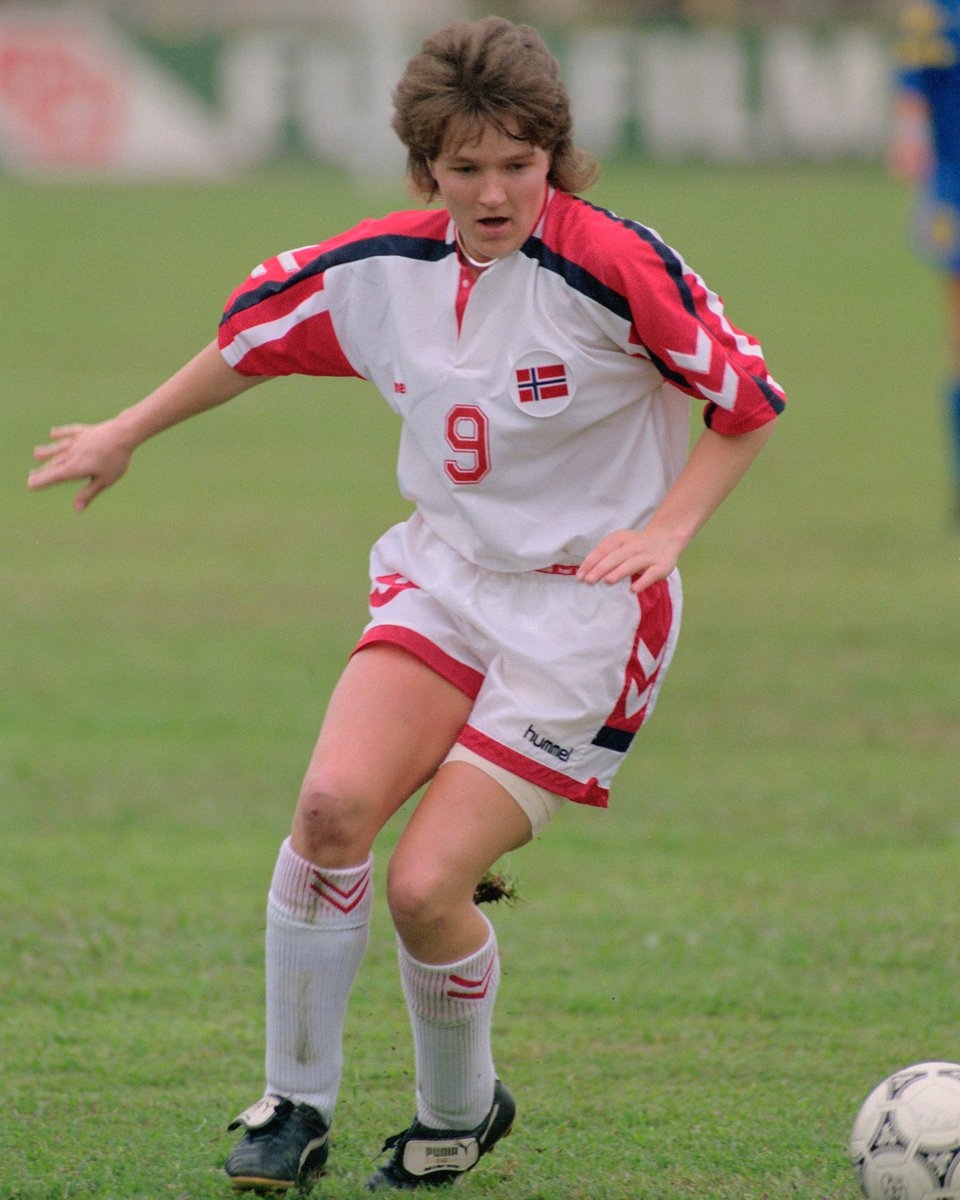
#10 Hege Riise — Norway | Midfielder
https://x.com/FIFAWWC
Hege Riise is the most under-discussed great in the history of the women’s game, largely because Norway’s golden generation peaked before the sport had global broadcast reach. She was the outstanding player at the 1995 World Cup, winning the Golden Ball and scoring the opener in the final as Norway conceded just one goal across the entire tournament. Five years later in Sydney she supplied the pass that led to the golden goal against the United States, completing a set of honours only two other players have matched.
- Golden Ball winner at the 1995 World Cup, scoring in the 2-0 final win over Germany
- Olympic gold medallist in 2000, assisting Dagny Mellgren’s golden goal in the 3-2 extra-time win over the USA
- European champion with Norway at Euro 1993
- One of only three women — all Norwegian — to win the World Cup, the Olympics and the European Championship
- 188 caps and 58 goals across a 14-year international career, 1990 to 2004
- Won the 2002 WUSA Founders Cup with Carolina Courage, scoring in the final, before playing on in Norway until 2006 and moving into coaching
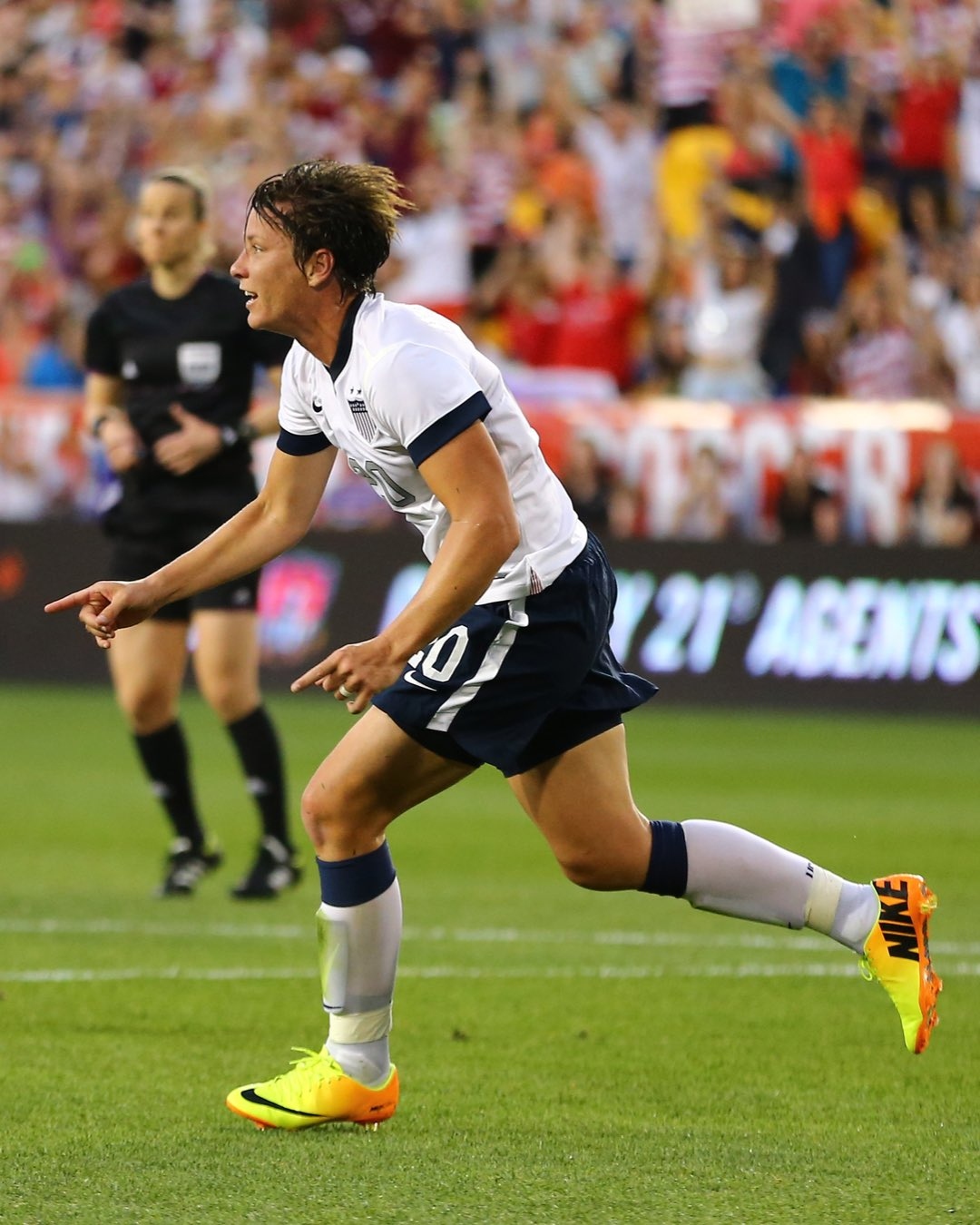
#9 Abby Wambach — USA | Forward
https://x.com/USWNT
Abby Wambach scored 184 international goals — a world record for any footballer, male or female, when she retired in 2015. What separates her from other volume scorers is the timing: her 122nd-minute header against Brazil in the 2011 World Cup quarter-final, with the United States seconds from elimination, is arguably the single most famous goal in the tournament’s history. It forced penalties, which the Americans won. Seven years earlier she had beaten Brazil in extra time of the Olympic final — also with her head.
- 184 international goals, the world record at the time of her retirement, since passed by Christine Sinclair
- FIFA World Player of the Year in 2012
- Olympic gold in both Games she played, 2004 and 2012, missing 2008 through injury
- World Cup winner in 2015, at the fourth attempt
- Scored 77 headed goals for the USA — a tally that on its own would rank among the country’s leading scorers
- Four World Cup squads across a 14-year international career, 2001 to 2015
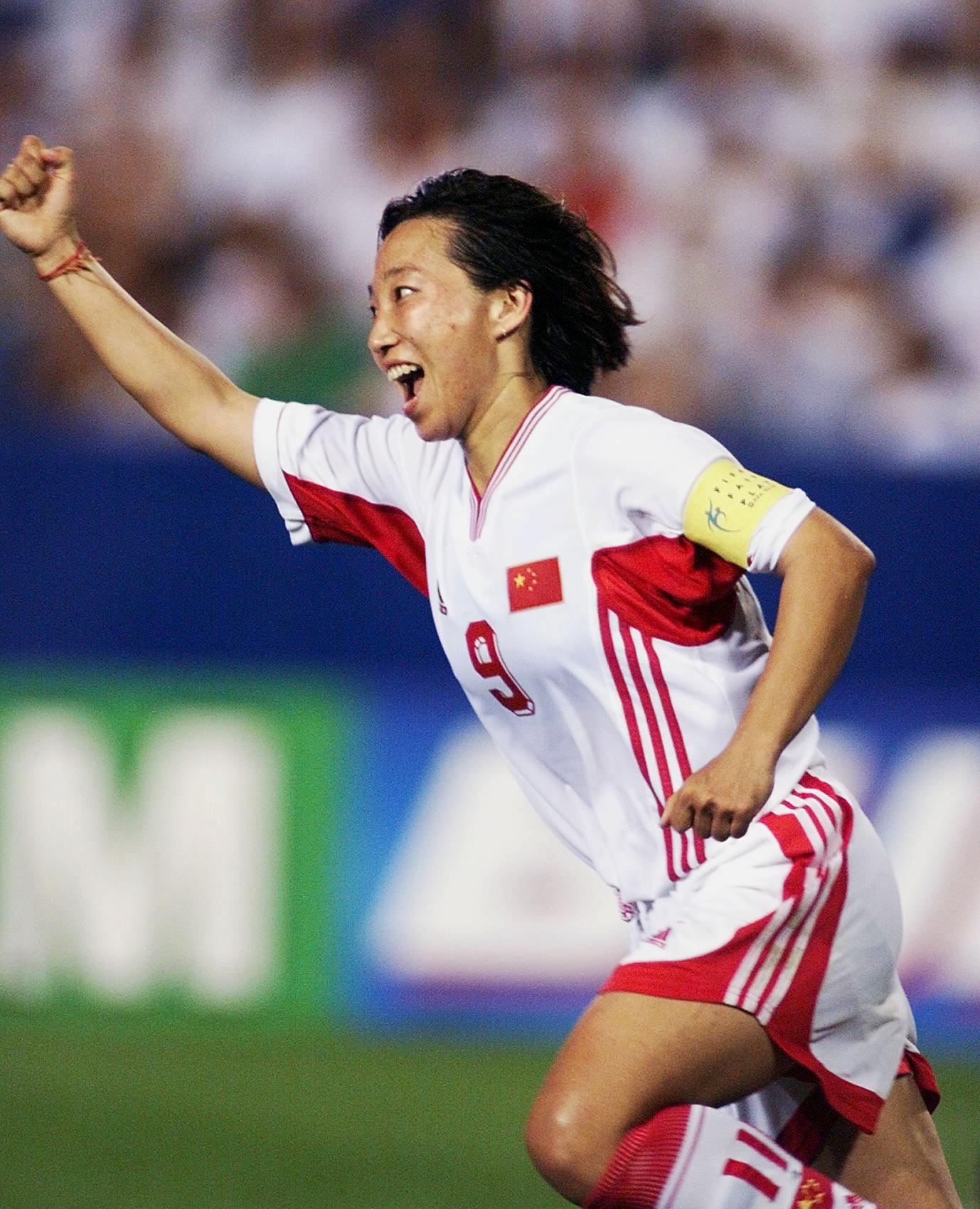
#8 Sun Wen — China | Forward
https://x.com/USWNT
Sun Wen was named FIFA Female Player of the Century alongside Michelle Akers, and the 1999 World Cup is the reason why. She won both the Golden Ball and the Golden Boot at that tournament, scoring seven goals as China reached a final they lost to the United States only on penalties. For a decade she was the best player outside North America and Europe, and the standard-bearer for a Chinese side that has never since matched that peak.
- FIFA Female Player of the Century, shared with Michelle Akers
- Golden Ball and Golden Boot winner at the 1999 World Cup
- 106 international goals for China across more than 150 appearances
- Olympic silver medallist in 1996 and World Cup runner-up in 1999
- Captained China through their most successful era and later served as a senior football administrator
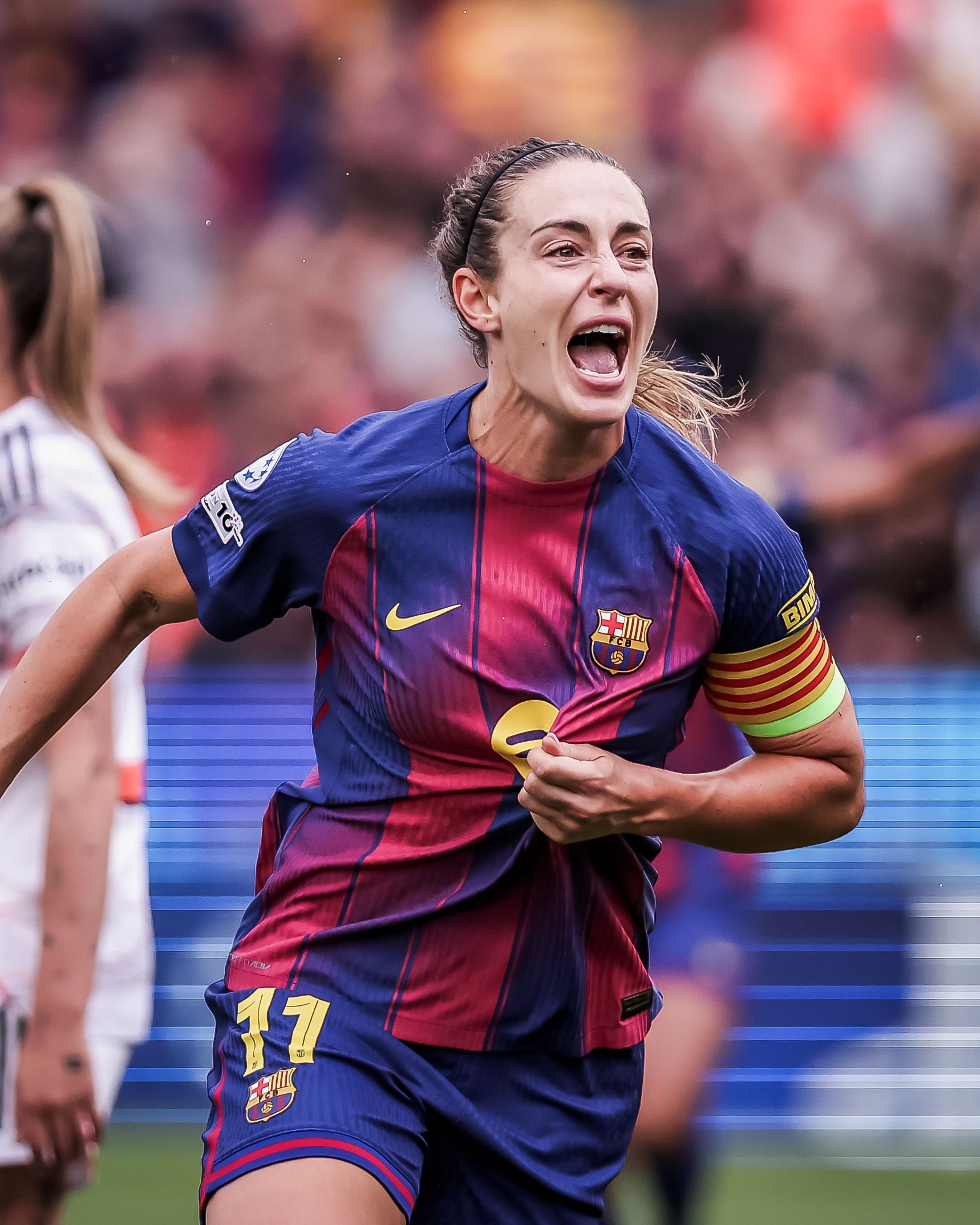
#7 Alexia Putellas — Spain | Midfielder
https://x.com/brfootball
Alexia Putellas won back-to-back Ballon d’Or awards in 2021 and 2022, then tore her ACL on the eve of Euro 2022 and had to rebuild everything. That she came back to win a World Cup in 2023, and captained Barcelona to a fourth Champions League title in 2026 — days before announcing her departure — is the strongest argument for her place among the best women’s players in the sport’s history. She left after 14 years, 38 trophies and 232 goals in 507 appearances.
- Ballon d’Or Féminin winner in 2021 and 2022
- Four UEFA Women’s Champions League titles and ten Liga F titles with Barcelona, and Champions League Player of the Season twice
- World Cup winner with Spain in 2023; a record 146 caps and 40 international goals, second-most in Spanish history
- 232 goals in 507 Barcelona appearances — the club’s all-time record for the women’s team
- Joined London City Lionesses in July 2026 on a three-year deal reported at over €1.7m a year, making her the highest-paid female footballer in the world
#6 Homare Sawa — Japan | Midfielder
https://x.com/FIFAWWC
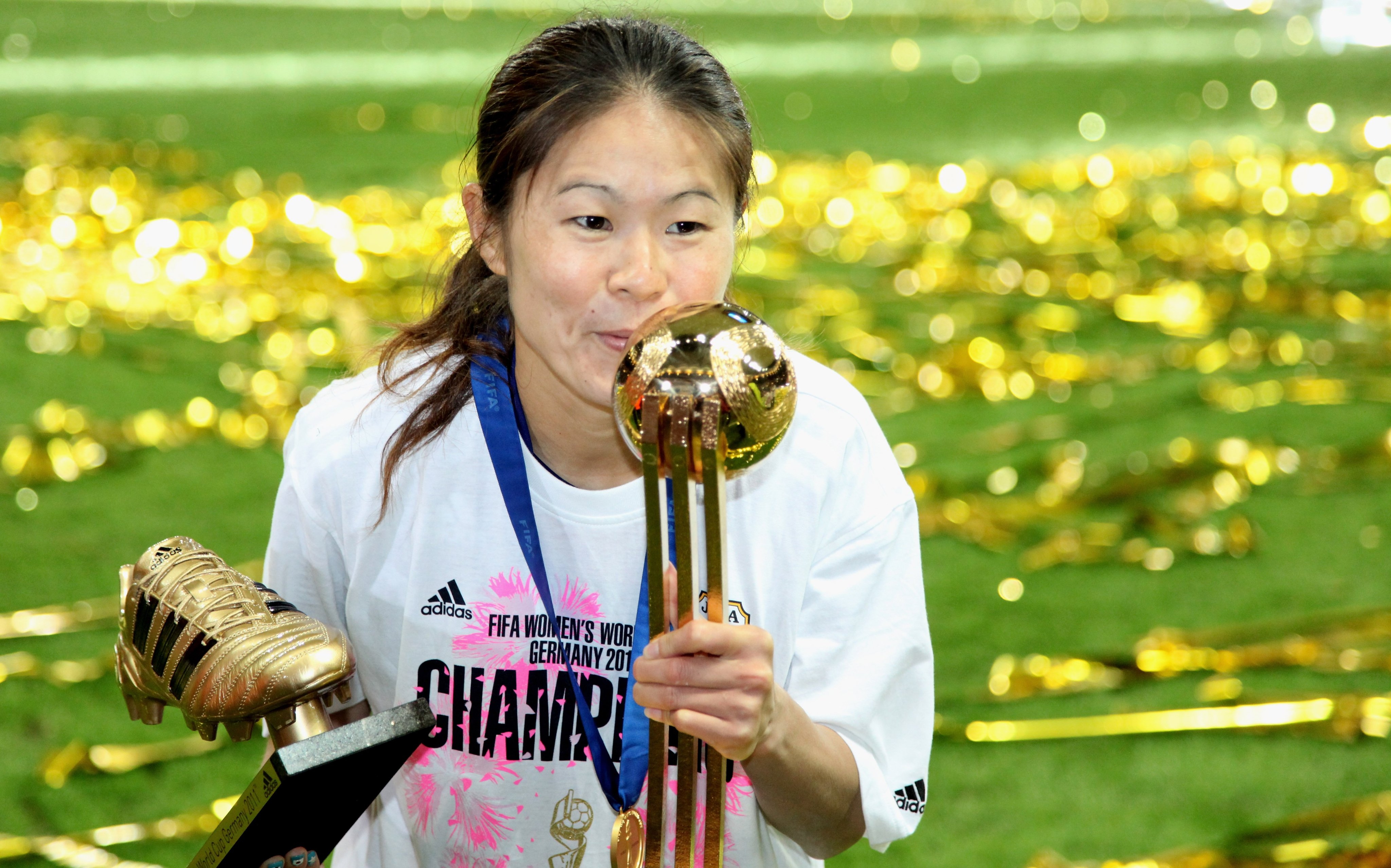
Homare Sawa produced the most consequential individual tournament in the modern history of the sport. At the 2011 World Cup, played months after the Tōhoku earthquake and tsunami, she won both the Golden Ball and the Golden Boot, and her near-post flick from a corner in the 117th minute of the final against the United States forced the penalty shootout Japan went on to win, making them the first Asian nation to lift the trophy. She was 32, playing in her fifth World Cup, and Japan had never beaten the USA in 25 previous attempts.
- FIFA World Player of the Year in 2011
- Golden Ball and Golden Boot winner at the 2011 World Cup, scoring five goals
- Scored Japan’s 117th-minute equaliser in the World Cup final, flicked in at the near post
- 205 caps and 83 goals for Japan, national records in both, across six World Cups from 1995 to 2015
- Came out of international retirement to win the Asian Cup in 2014, aged 35, before a final World Cup in 2015 — a record-tying sixth — where Japan finished runners-up
#5 Michelle Akers — USA | Forward/Midfielder
https://x.com/FIFAWWC
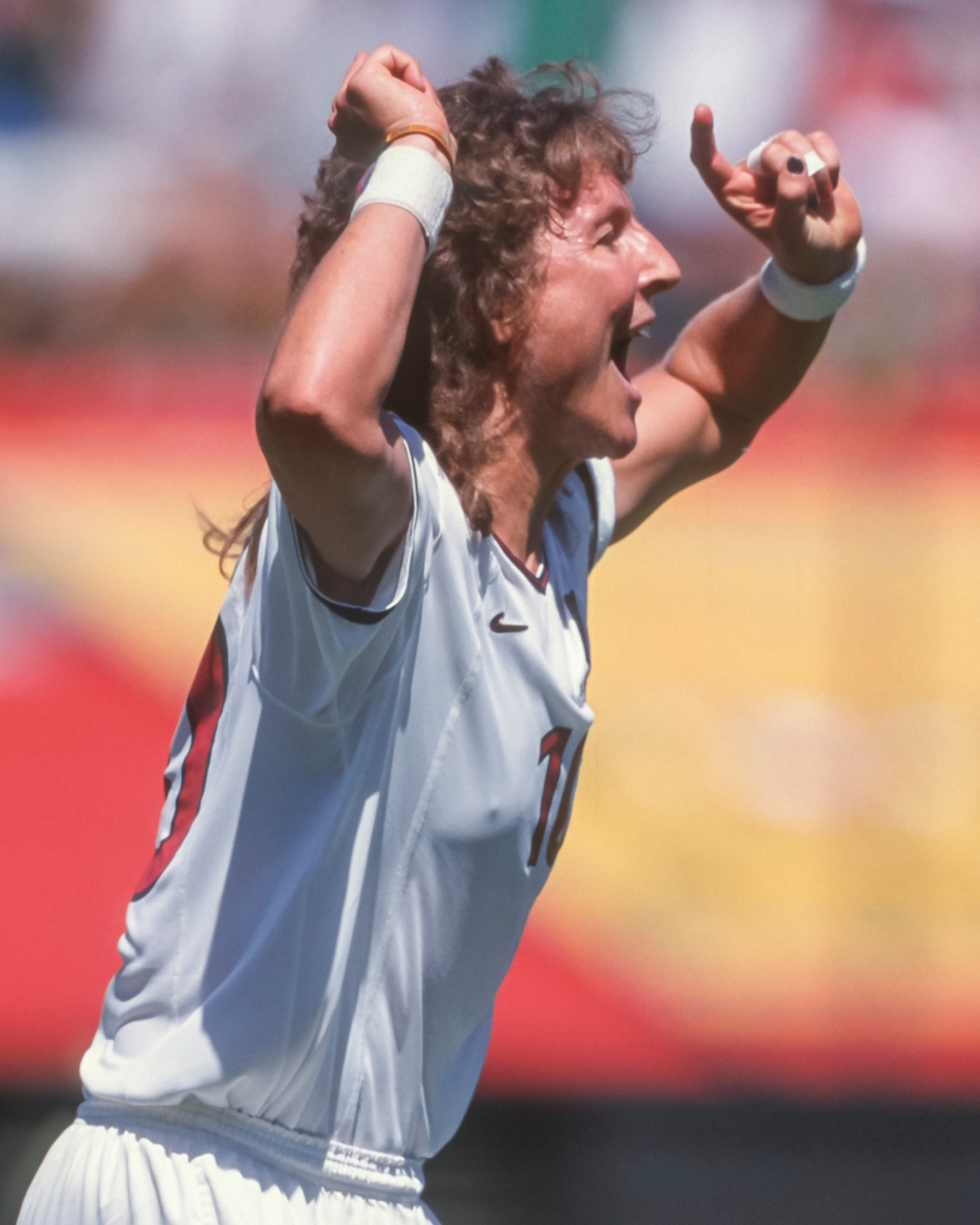
Michelle Akers was the sport’s first genuinely dominant physical presence, and the 1991 World Cup was effectively a solo demonstration: ten goals in six matches, including both in the 2-1 final against Norway. She dropped back into central midfield afterwards — initially to reduce the punishment she was absorbing as a target forward — and remade herself there while battling chronic fatigue syndrome for the rest of the decade. She played the whole of the 1999 final and was in the locker room on an IV by the time it went to penalties. FIFA named her Female Player of the Century.
- Golden Boot winner at the inaugural 1991 World Cup with ten goals in six games
- Scored both goals in the 1991 World Cup final against Norway
- Set a long-standing US record of 39 goals in 25 games during 1991
- FIFA Female Player of the Century, shared with Sun Wen
- World Cup winner in 1991 and 1999; Olympic gold medallist in 1996
- Played through chronic fatigue syndrome for most of the 1990s, retiring in 2000 with 105 international goals
#4 Aitana Bonmatí — Spain | Midfielder
https://x.com/brfootball
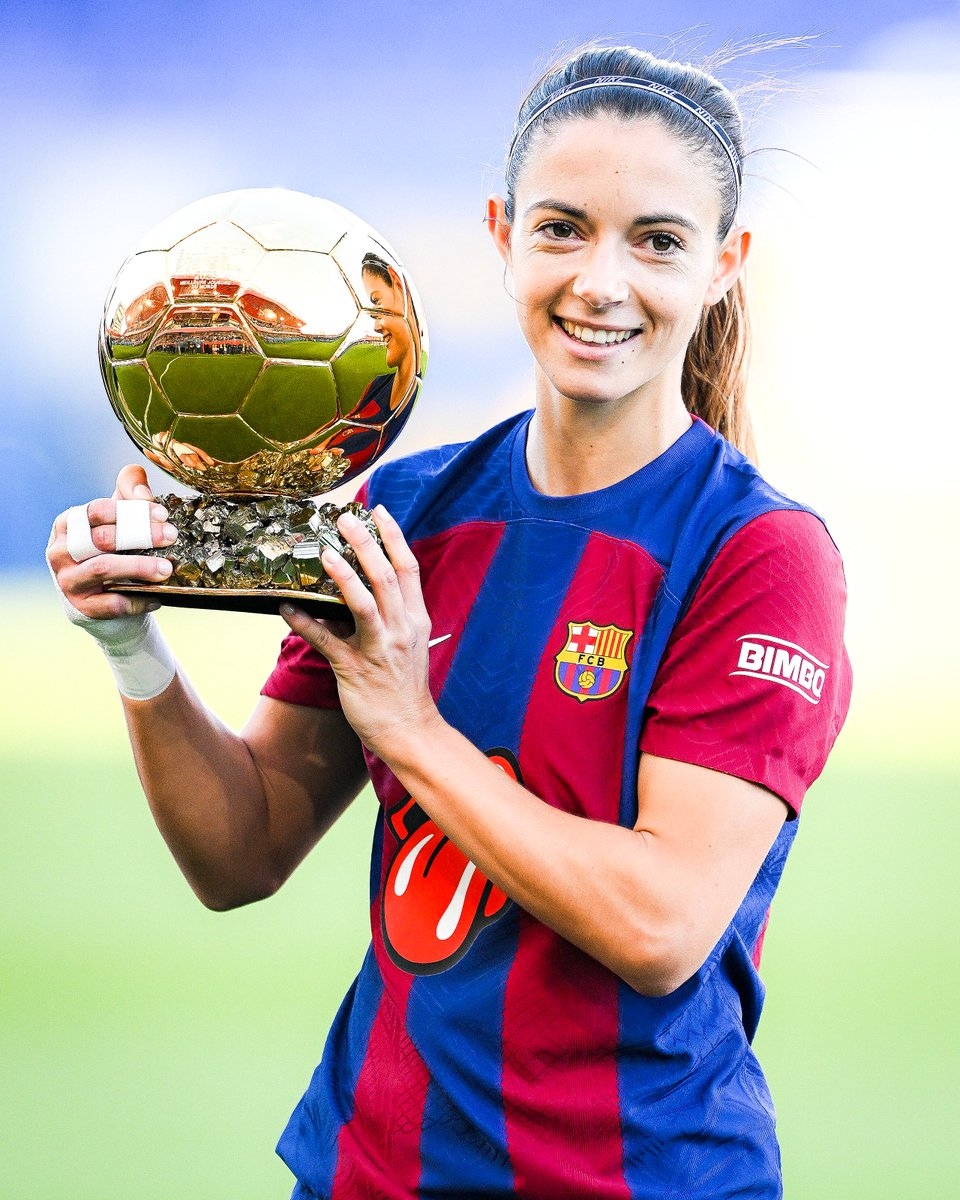
Aitana Bonmatí is the first footballer of any gender other than Michel Platini and Lionel Messi to win three consecutive Ballon d’Or awards, and she did it while playing the most technically demanding position on the pitch. Her 2023 was close to a perfect year: a Champions League and Liga F double with Barcelona, then the Golden Ball as Spain won their first World Cup. Her 2025 was arguably more impressive — she was in hospital with viral meningitis days before Euro 2025 and still finished it as Player of the Tournament. She turns 29 in January, which is the uncomfortable part for everyone else on this list.
- Ballon d’Or Féminin winner in 2023, 2024 and 2025 — the first woman to win it three times, and only the third player ever to win three in a row
- Player of the Tournament at the 2023 World Cup, which Spain won
- Four UEFA Women’s Champions League titles with Barcelona, scoring in the 2021 final
- UEFA Nations League winner with Spain in 2024
- Runner-up at Euro 2025, losing the final to England on penalties — and named Player of the Tournament anyway
#3 Birgit Prinz — Germany | Forward
https://x.com/FIFAWWC
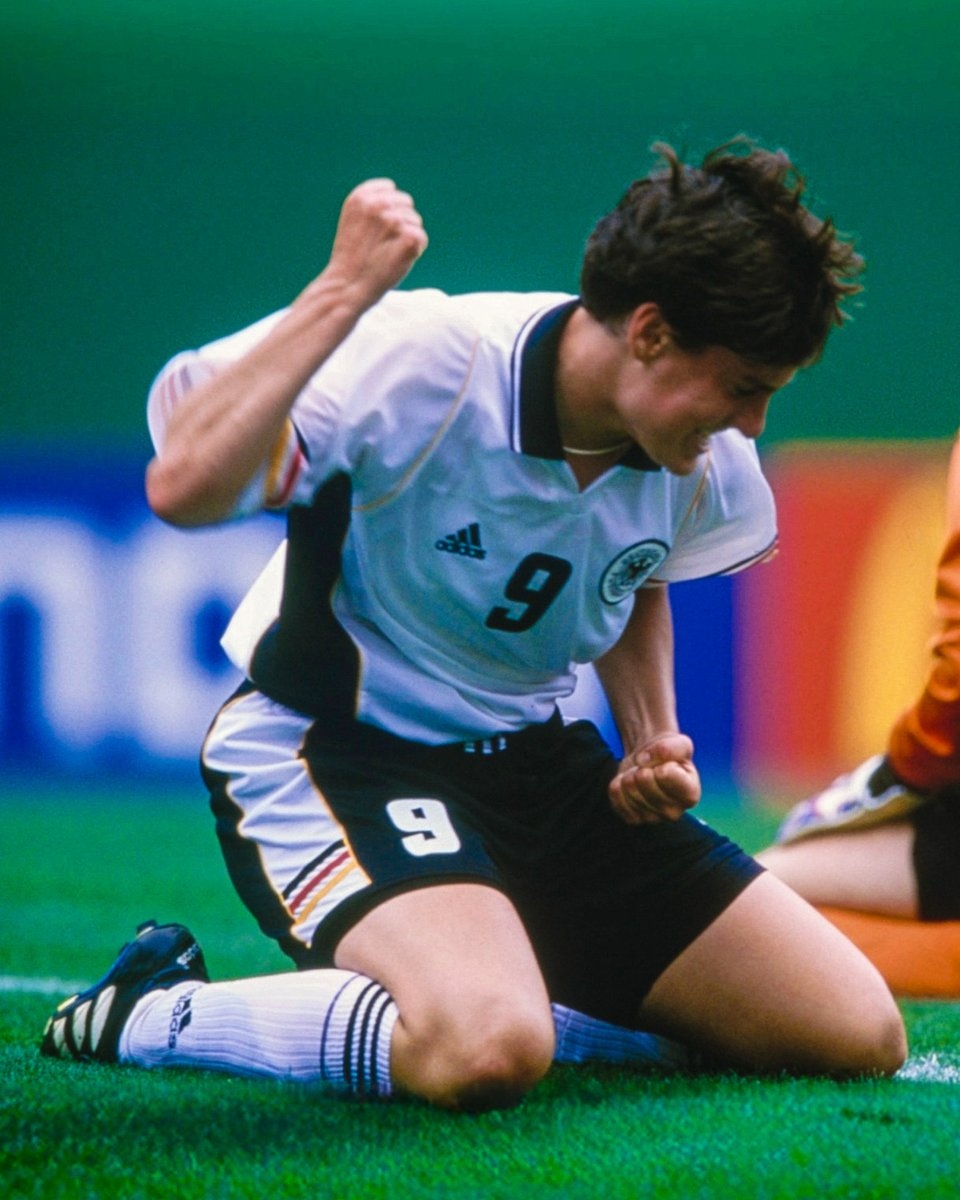
Birgit Prinz won three consecutive FIFA World Player of the Year awards between 2003 and 2005, a run only Marta has bettered. She anchored the Germany side that won back-to-back World Cups in 2003 and 2007, taking both the Golden Ball and the Golden Boot in the first of them, and captaining the second — where her opening goal in the final against Brazil was the record-setting 14th World Cup goal of her career. Prinz played her first World Cup at 17 and her last at 33, and was the first woman to appear in three World Cup finals.
- Three straight FIFA World Player of the Year awards, 2003–2005, with five further runner-up finishes
- World Cup winner in 2003 and 2007, taking the Golden Ball and Golden Boot in 2003 with seven goals
- 128 goals in 214 appearances for Germany, national records in both
- 14 career World Cup goals, joint second all-time alongside Abby Wambach and behind only Marta
- Five European titles with Germany and three Olympic bronze medals, in 2000, 2004 and 2008
- Won the WUSA championship with Carolina Courage in 2002
#2 Mia Hamm — USA | Forward
https://x.com/FIFAWWC
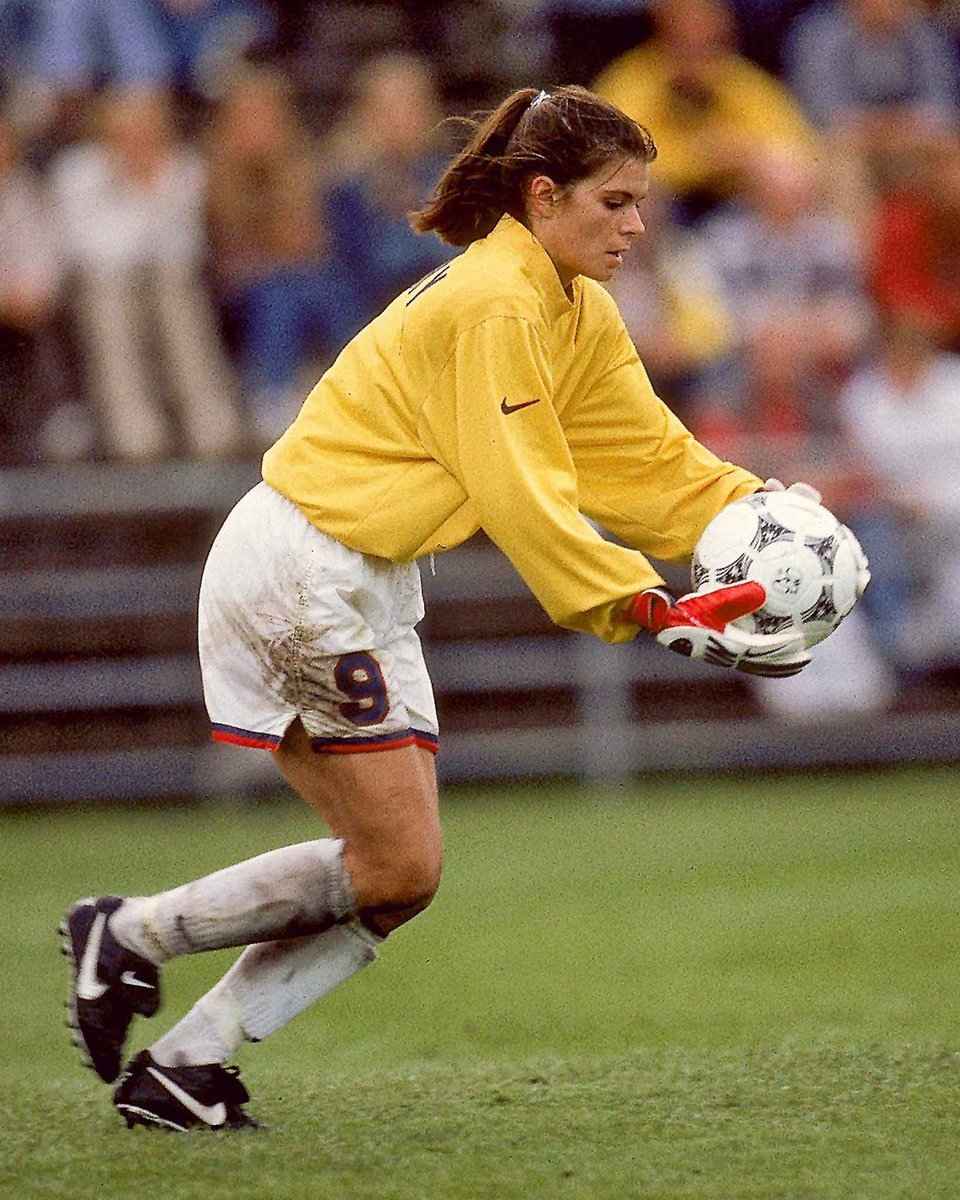
Mia Hamm held the world scoring record for fourteen years, from 1999 until Abby Wambach passed her in 2013, but her ranking here rests on something harder to quantify. The 1999 World Cup — Hamm on the cover of every magazine, 90,185 people in the Rose Bowl — is the moment women’s football became commercially viable in the United States, and she was the face of it. She also won the first two FIFA World Player of the Year awards, in 2001 and 2002.
158 international goals in more than 270 appearances for the USA, a world record for any footballer from 1999 to 2013
- Still holds the US national team record with 144 assists
- Winner of the first two FIFA Women’s World Player of the Year awards, 2001 and 2002
- World Cup winner in 1991 and 1999; Olympic gold in 1996 and 2004
- Central figure in the 1999 World Cup final, whose 90,185 crowd stood as the world record for a women’s football match until 2022 and remains the largest for an international women’s match
- Won the 2003 WUSA championship with Washington Freedom
#1 Marta — Brazil | Forward
https://x.com/BBCSport
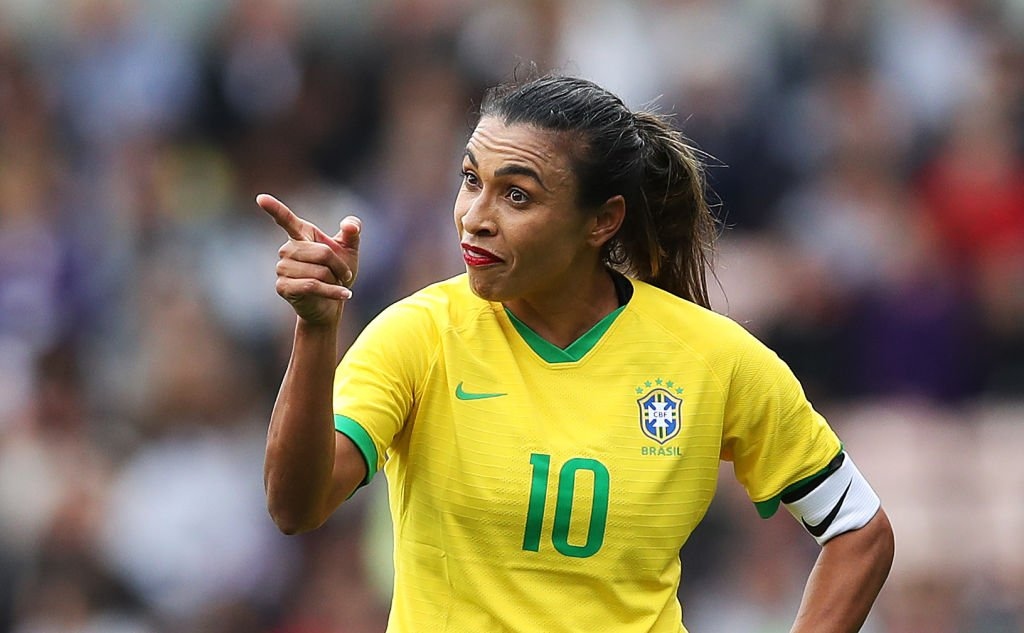
Marta is the greatest female soccer player of all time by the widest margin of any position on this list. Six FIFA World Player of the Year awards — five of them consecutive, from 2006 to 2010 — are three more than any other woman has won. She scored 17 World Cup goals across six tournaments, more than any player in the competition’s history, men’s or women’s, and in 2019 became the first footballer of either gender to score at five World Cups.
She did all of it without a global title. Brazil lost the 2007 World Cup final and took Olympic silver in 2004, 2008 and 2024, and for most of her career the federation invested almost nothing in the women’s programme. That context is the argument, not a caveat: no player in the history of the sport has carried a weaker structure further. She came out of international retirement at 39 to win a fourth Copa América in 2025, scoring twice off the bench in the final.
- Six FIFA World Player of the Year awards, including five in a row from 2006 to 2010 — no other woman has won it more than three times
- 17 World Cup goals — the all-time record across the men’s and women’s game
- First player of either gender to score at five World Cups
- Brazil’s all-time leading scorer across both the men’s and women’s teams, with 122 international goals
- Golden Ball and Golden Boot winner at the 2007 World Cup; three Olympic silver medals
- Four Copa América Femenina titles, the last in 2025 as Player of the Tournament, aged 39
Honourable Mentions
The gap between tenth and eleventh on this list is narrow enough that a different set of weightings would reshuffle it entirely.
- Christine Sinclair (Canada) holds the outright international goalscoring record with 190 goals — more than Wambach, more than Hamm — and won Olympic gold in Tokyo. She misses out because Canada’s tournament ceiling limited her share of decisive moments at World Cups.
- Nadine Angerer (Germany) is the only goalkeeper ever to win FIFA World Player of the Year, taking the 2013 award after saving two penalties in the Euro final against Norway. At the 2007 World Cup she went all six matches without conceding, including a saved penalty from Marta in the final.
- Wendie Renard (France) won eight Champions League titles at Lyon and is among the highest-scoring defenders in the sport’s history, though France never reached a major final in her time there — the tournament moments this ranking rewards.
- Ada Hegerberg (Norway) won the inaugural Ballon d’Or Féminin in 2018 and is the all-time leading scorer in the Champions League. A five-year boycott over the treatment of Norway’s women’s team cost her the 2019 World Cup, and an ACL rupture in January 2020 took another 20 months out of the same window.
- Formiga (Brazil) appeared at seven World Cups and seven Olympic Games, playing international football into her forties — a longevity record no footballer of any gender has matched.
Legacy and the Future of the Greatest Female Footballers
The shape of this list tells its own story. The top ten is dominated by forwards from the 1990s and 2000s, when individual brilliance could decide tournaments outright. The most recent entries — Bonmatí and Putellas — are both midfielders, produced by a Barcelona system built on positional play rather than raw athleticism. That shift reflects how much the tactical floor has risen.
It also means the criteria for greatness are tightening. Akers could win a World Cup with ten goals in six games; that is no longer possible against defences that are professionally coached and fully funded. Future entrants will need sustained excellence across multiple cycles rather than one transcendent tournament.
Two names to watch: Vicky López, the Barcelona forward who won the inaugural Kopa Trophy in 2025 at 19, and Michelle Agyemang, the England forward whose Euro 2025 substitute appearances earned her a top-five Ballon d’Or finish before her twentieth birthday. Both will be in their prime for the 2027 World Cup in Brazil — Marta’s home tournament, and a fitting place for the next generation of female footballers to start rewriting this ranking.
Frequently Asked Questions
Who is the best female soccer player of all time?
Marta of Brazil. She won six FIFA World Player of the Year awards and scored 17 World Cup goals, more than any footballer in the tournament’s history.
What criteria determine this ranking?
Peak dominance and tournament impact carry the highest weight, followed by longevity, club success and influence on the sport’s development.
How is greatness measured in women’s football?
Through individual awards, international goals and caps, decisive tournament performances, and club trophies weighted against the strength of each player’s era.
Does goalscoring alone define a great player?
No. Christine Sinclair holds the international goal record at 190 but ranks outside our top ten, while midfielders like Bonmatí and Sawa place highly.
Which country dominates the rankings?
The United States, with three entries — Mia Hamm, Michelle Akers and Abby Wambach — reflecting their four World Cup titles and five Olympic golds.
Has any player broken a major record recently?
Yes. Aitana Bonmatí became the first woman to win three consecutive Ballon d’Or awards in September 2025, joining Platini and Messi in achieving the feat.
What makes Marta stand out from the rest?
She reached the sport’s summit with almost no federation backing, winning six world player awards while Brazil invested minimally in the women’s game.