 Frokat
It seems that the release of Riot Games’ new competitive FPS title, Valorant, was strikingly similar to what already happened in another genre way before at hands of the same developers. Another title means a rift in the community, and, obviously marketed towards Counter-Strike veterans with strikingly similar mechanics and game flow, Valorant not only divided the regular players into two camps but the pros, as well.
And, just like with the eternal Dota 2 vs League of Legends debate, we now have two camps endlessly bickering among each other. It’s not unusual to hear the former camp talk about people “enjoying ripoffs”, and for the latter, the most common saying I’ve seen was calling the other camp boomers. Either way, things can – and do – get heated quite commonly.
It obviously doesn’t have to be this way. After all, our tactical competitive FPS community is big enough to share multiple titles – and don’t forget Rainbow 6: Siege on that list! Playing favorites and stanning brands doesn’t actually get the gaming industry anywhere. You know what does, however? Competition. An absolute leader in their field is prone to stagnation when lacking competitors, while fierce – and fair – competition improves all of its participants.
It is clear that Riot developer team was intimately familiar with what makes Counter-Strike so great. Having to market your project for such a hardcore audience is no easy task, and it requires a close understanding of the game process, of what makes ranked enjoyable, and the appeal of esports. And, while there are clearly some things where CS:GO dominates Valorant by the numbers, there’s still quite a large amount of factors that Valorant gets oh so right compared to Counter-Strike.
The ranking system
Let’s start with an elephant in the room. It’s not uncommon to hear CS:GO veterans – both pro and amateur alike – trash on the current MM Ranking system. Relatively unchanged since the game’s release after receiving only a minute adjustment in late 2015, CS:GO’s ranks seem awfully archaic compared to the rest of the competitive gaming world. Let’s face it – when a third-party app (pun absolutely intended, by the way) does the job way better than one of the most popular game developers in the world, it’s getting silly.
CS:GO’s current ranking system is plagued with a myriad of flaws. Some seem innocent at first glance, while others pretty much drive most talent away. Let’s take, for example, the ranks themselves, since these lil’ fellers are what you’ll be basing on your entire self-esteem in the game.

Sure, these stylized insignias do look stylish (just like this handy graph by Leetify), let’s give some credit to the artists. The problem arises when you attempt to get some deeper meaning out of them. Because the fancy imagery is all you’ll ever get – there are no visible numbers accessible in-game, no sub-divisions, no promotion series, no telling that you’re about to rank up or down. There’s nothing! Some players report that even not losing 20+ games in a row isn’t enough to impress the ranking algorithm to give you that sweet rank up dopamine. Curiously, this issue seems to affect entire regions, as for some strange reason NA and OCE take way more games to affect your rank compared to EU.
“Just won 7 games in a row, was hoping for promote to supreme soon, lost 1 and demoted to LE, feels great 10/10.”
This strange rank behavior has spawned numerous theories about what actually contributes to your ranked success. One thing is clear – Valve’s system clearly values your individual performance and not just your team’s win-loss ratio. Everything else is completely hazy. The deliberate silence from Valve on the topic has even spawned the cultists of “time survived = more MMR gains” church, so you better get ready for it to always be Jame time when you get one in your games.
But sure, that’s a pretty minor issue. Better players would rise to the top regardless if it takes 100 or 1000 games, right? Well, maybe, but your and the game’s definition of “the top” might differ drastically. One thing about the MM algorithm is clear – it is a “positive leak” system. This means the following – if you happen to have a 50% winrate with a KDA of 1, you will not just stay in one place forever (or until you get better). You will, in fact, eventually rank up. Assists, bomb plants, bomb defusals, and so on will tip the scales in favor of going up.
This peculiarity about ranks means that, eventually, people will always end up in the ranks they do not belong in. For sure, some of them will use it as a learning experience. But those who don’t will contribute to the fact that the official crown jewel of CS:GO, Global Elite, is actually made up of completely different calibers of players. Back when I took this game seriously sometime in 2014-2016, I was GE. But I can say without a shadow of a doubt: it’s laughable to suggest that I was even 10% of a player that s1mple is. Hell, I would definitely bottom frag against most mediocre players in Tier-2 teams.
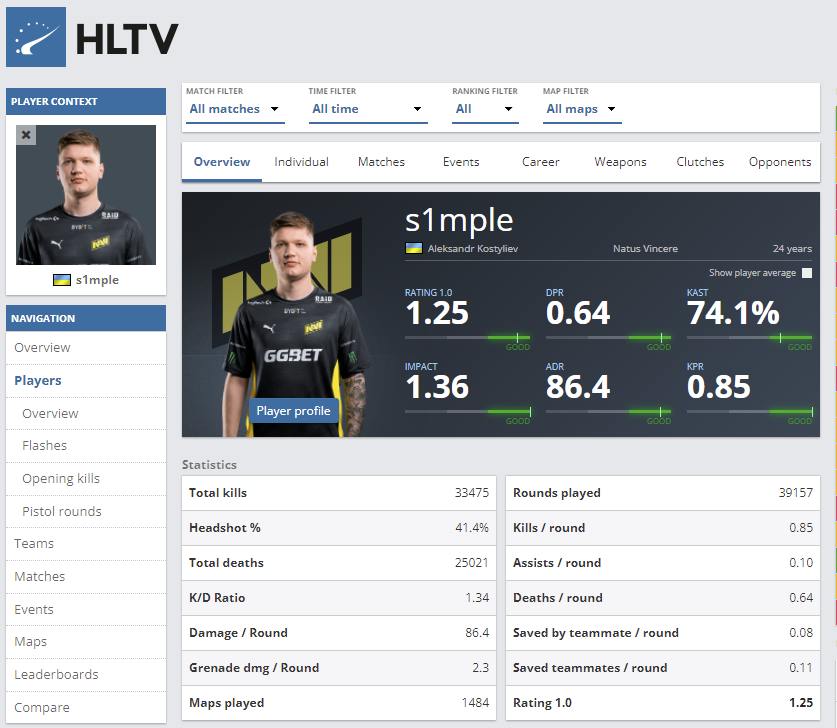
Yet, Valve makes no effort to create a special rank that only the best of the best would ever dream about getting into – something that Valorant and its ranking model League of Legends have had for years now. Well, I guess Valve believes that I’m s1mple’s equal. Thanks, Gabe.
But for real – facts are always preferable, no matter how harsh. These things combined are eating away at both the pro’s and amateurs’ engagement in the MM systems. It’s not uncommon for the pros to actually never touch the official matchmaking – for instance, if you watch s1mple’s streams right now you can clearly see that he’s unranked there.
Server architecture
The pro athletes’ decision to leave the official matchmaking doesn’t stem solely from the issues with the ranked system. For sure, it might not be the greatest indicator of your skill level, and can result in unbalanced games where there’s NiKo on one team and a “barely-made-it-in-here” bro on the other. But, after all, the pros get paid to play the game, right? They can stomach some MM, right?
Well, no. Most professionals live and breathe the game, that’s true, but it’s obviously not just leisure for them. When you’re not practicing, your opponents are, so you better quit slacking and tryhard… wait, what’s that? Your smoke lineups don’t work anymore? Well, tough luck buddy, because CS:GO’s official matchmaking runs on 64-tick, which means: different grenade trajectories, different player movement feel, and, as some players have found out, even weapon spray patterns are affected.
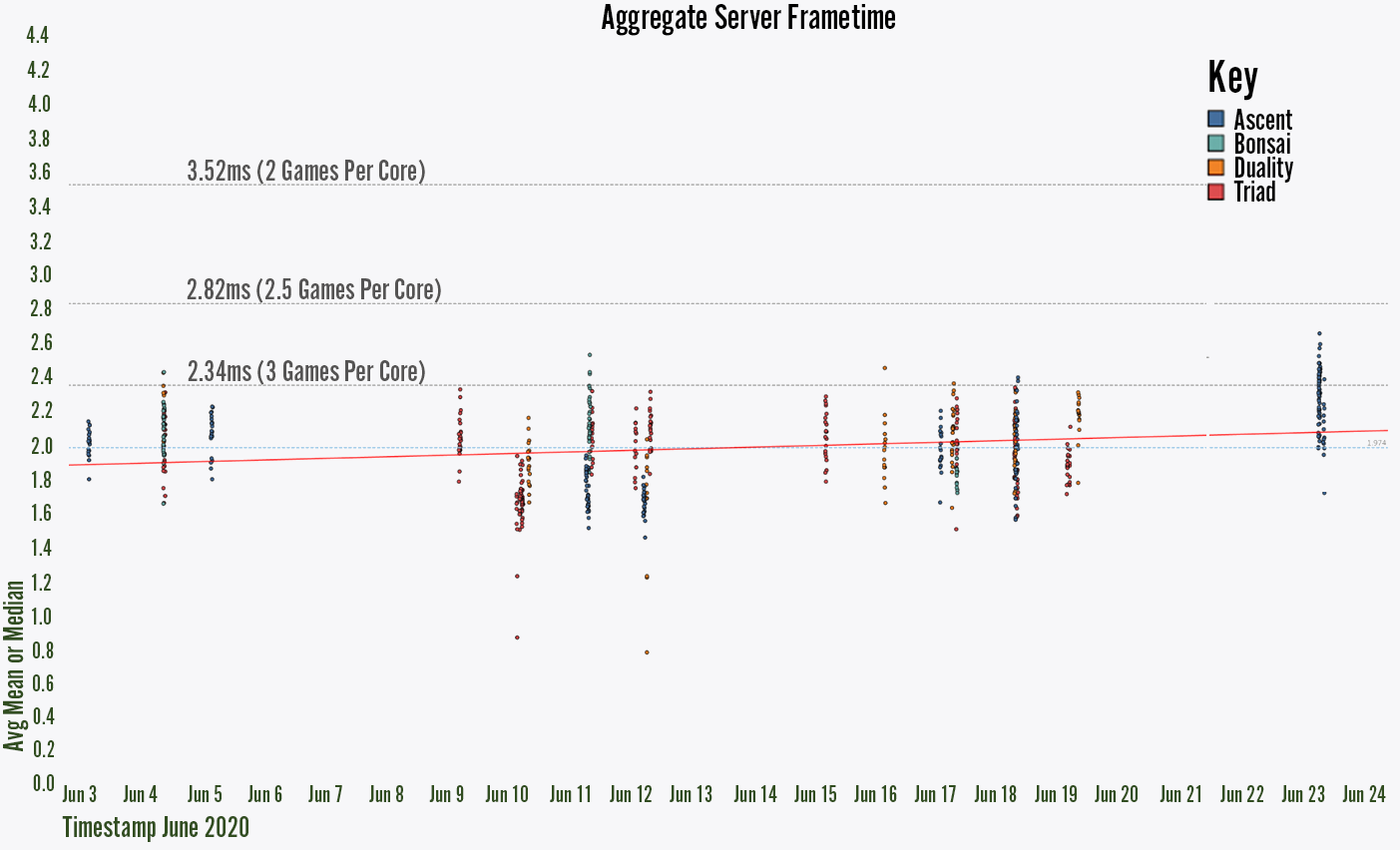
I’m going to be completely real with you – I have no idea what this means, but the graph looks cool, so.
All this obviously raises a question – what’s even the point of playing the official MM? And it’s not like this issue affects solely the 0.0001% – even amateur league teams need to use their utility to win. Something you can’t do when, duh, it literally just doesn’t work and you need to learn multiple sets of lineups for 64-tick and 128-tick separately. Ain’t nobody got time for that!
And it’s just the tip of the iceberg – after all, the main attraction of better servers is that crisp, clean hitreg. Meanwhile, every CS:GO player is no stranger to getting “CS:GOd”. It might be hard to tell the times a bad hit registration screwed you over, but seeing a blood splatter from your enemy while dealing zero damage to them is probably something most people have experienced.
And while Valve seemingly let third-party apps take the wheel on yet another issue, listening to Valorant devs talk about their netcode can melt hearts of even the biggest of haters. Hearing these guys vow to bring the players the best online experience they can get and discussing their solutions for the complex challenges with such pride like they’re talking about their firstborn child clearly demonstrates their passion for the game.
It’s been more than a year since Valorant’s release. In that time, every believer – and doubter- could easily see for themselves that Riot did, in fact, deliver on that promise. After Valorant’s 128-tick, custom-built smoothness, booting up CS:GO to play on the official servers seems like trying to punch in your dreams. Well, it’s not actually that bad, but still. You get the point. Server infrastructure upgrade is long overdue.
Anticheat
This one comes out surprisingly controversial. Valorant’s anti-cheat attracted quite a lot of attention on its release, mainly due to its unheard-of-before levels of intrusiveness. Having a game-related software just chill there menacingly as you don’t even have Valorant running is a little unnerving, I admit. Yet, every player has a breaking point, and the 4th cheater you see in a row might make you feel like doing anything if that meant a cheater-free experience.
Valve’s history on combatting cheaters goes back decades. In this time, Valve introduced multitudes of different solutions: from the (in)famous VAC protection, to the community-driven Overwatch replay system, to finally Prime matchmaking. The effort is there indeed, but malicious software always seems impervious to these measures: VAC’s a joke nowadays, using Overwatch and voting “Yes, beyond a shadow of a reasonable doubt” on the 12505th Scout-using rage-hacker on Office and getting no confirmation for their ban gets stale really quick, and Prime matchmaking seems to be easily bypassable by literally anyone who knows what a burner phone number is.
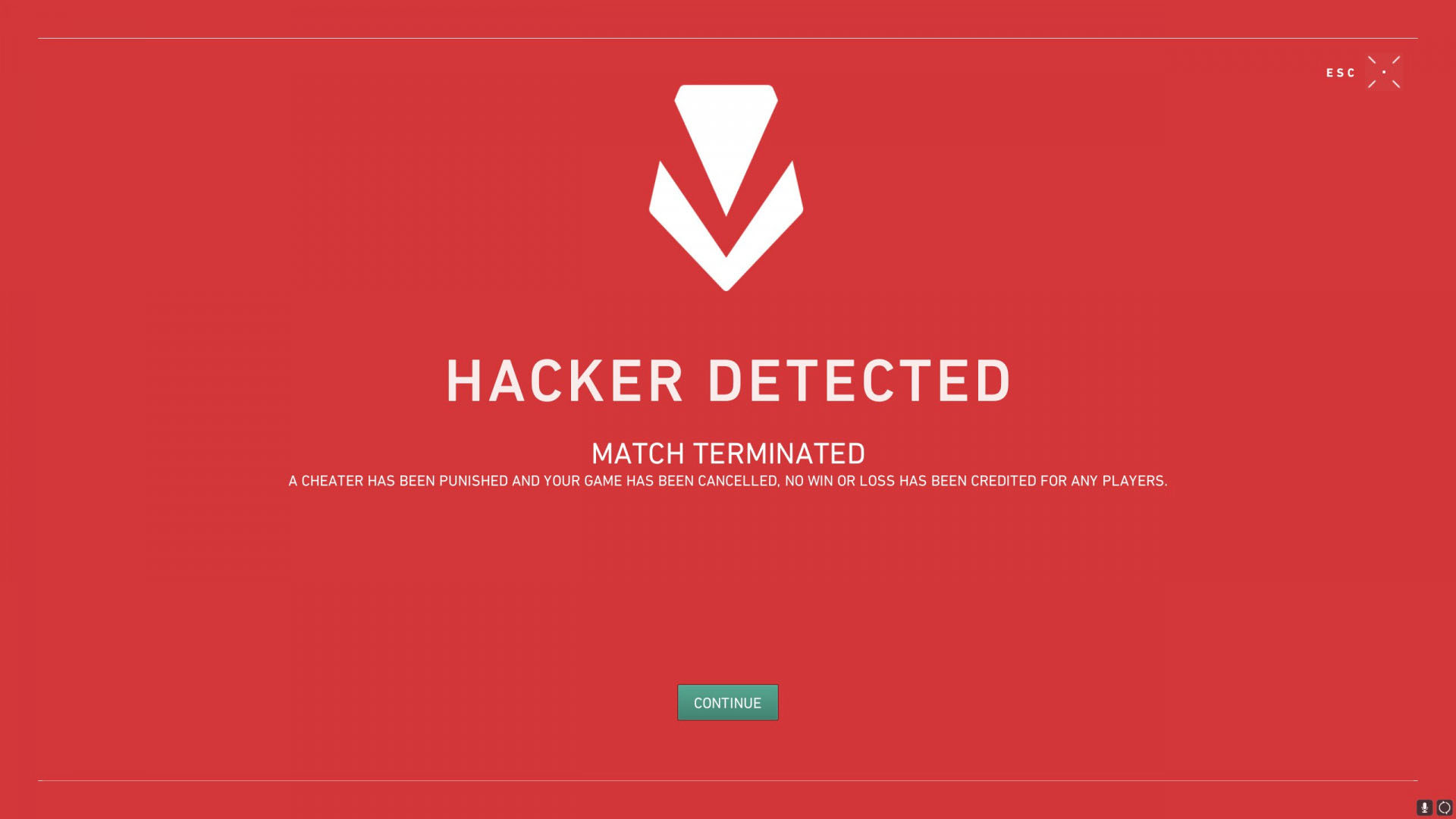
With an environment like that, even the staunchest defenders of their PCs privacy might cave in to Valorant’s anti-cheat. Either that or play third-party servers again – but you can’t just let ESEA and FaceIt do all the work, can you, Valve?
For sure, not even Riot Games’ anti-cheat solution is perfect. Cheaters might still pop out and ruin your games, but the satisfaction of seeing the cheater banned right before your eyes and your seemingly inevitable MMR loss averted makes up for that tenfold.
Skins!
Now, why don’t we take a break from all the competitive tribulations and focus on some of the finer things in life? Player experience is indeed important, having cheaters not enjoy their games is also important, but one thing trumps all of it – a man’s desire to look swag money while blasting heads off.
No doubt that CS:GO’s skin trading enthusiasts have made their trade known even by the non-gamers out there. Buying in-game items for ludicrous amounts of money is a fantastic display of wealth and passion – and craziness. Yet, for all their bling and rarity, I have always found CS:GO skins a little… lacking.

Valorant’s AK-47 counterpart, Vandal, in a comparison between its League of Legends-themed skin and its base model.
Even though CS:GO skins have significantly improved over the years in their quality, they are frankly no match for Valorant’s. CS:GO skins are the definition of “skin” – they are simply paint jobs applied to weapons, going only skin-deep and never changing any of the weapon’s geometry or even sounds. For sure, the question of competitive integrity is in play, but given Valve’s recent stance on player skins, weapon skins seem innocuous enough.
Another question is, of course, the setting. While Valorant is not bound by the conventions of down-to-earth realism and is free to change up weapon models as it pleases even if it makes real gun manufacturers cry in pain, CS:GO can not afford such a luxury. However, there still is a solution to this issue: imagine a world where Valve did not commit the great pocket AWP incident of 2015. Imagine a world where Valve decided to add the infamous R8 simply as a skin for the fan-favorite Desert Eagle. The possibilities are endless: why not make an AK-47 look like the modern AK12? Why limit the players to choosing between just the M4A4 and M4A1-S if you could customize your weapon to look like an MCX? If the numbers are not affected and the relative silhouette is preserved, surely Valve can even make these model variations work competitively.
Counter-Strike is, without a doubt, a genre-defining masterpiece most game developers study and follow. But, as they say, a true master is an eternal student, so here’s hoping that Valve will heed to these lessons and deliver something amazing. We know they can.