
The argument over the top 10 best cyclists of all time never really ends. One fan leans into nostalgia, another into raw numbers, someone else just trusts what they’ve seen with their own eyes on brutal mountain stages. That tension is exactly why rankings like this still matter.
This best cyclists ranking isn’t just a list of trophy cabinets. It’s about dominance, race intelligence, adaptability, and the way certain riders bend races around themselves. Some names here crushed entire generations. Others redefined how cycling is raced today — faster, sharper, less forgiving.
You’ll find Grand Tour kings, tactical masterminds, and riders who turned suffering into spectacle. The greatest cyclists of all time don’t just win. They change expectations. And yeah, a few picks here might annoy you. Good. That’s part of it.
Other rankings by tips.gg:
Criteria for Determining the Best 10 Cyclists of All Time
Ranking the top 10 best cyclists in the world isn’t clean or simple. Cycling spans eras where equipment, team tactics, and even race calendars look nothing alike. So the approach here mixes measurable success with context — what a rider meant to their time, and how far ahead they stood from rivals.
Some riders dominated one race. Others ruled everything. That difference matters.
We focused on consistency at the highest level, especially in Grand Tours, but also looked at versatility. A rider who wins across terrains — mountains, time trials, classics — carries more weight than a specialist.
There’s also the uncomfortable part: eras aren’t equal. Training science, nutrition, even race intensity shifted massively. So comparisons lean on relative dominance, not just raw totals.
Key Evaluation Criteria
| Criteria | Description |
| Grand Tour Wins | Tour de France, Giro d’Italia, Vuelta a España victories |
| Versatility | Ability across mountains, time trials, and classics |
| Longevity | Sustained performance over multiple seasons |
| Race Dominance | Margin of victory, control over peloton |
| Historical Impact | Influence on cycling tactics and legacy |
| Competition Level | Strength of rivals in their era |
This blend gives a more grounded top cyclist rankings in world cycling, rather than a shallow medal count.
The Best 10 Cyclists of All Time
So here it is — the core of this top 10 best cyclists list. Ten riders who didn’t just win, but imposed themselves on the sport in ways that still echo.
Different eras. Different styles. Same outcome: control.
From relentless attackers to ice-cold strategists, this list reflects what cycling greatness actually looks like when you strip away hype. Some names are obvious. A couple might feel early or controversial.
The Top 10 Best Cyclists of All Time
10. Louison Bobet — France
9. Gino Bartali — Italy
8. Greg LeMond — USA
7. Chris Froome — Great Britain
6. Alberto Contador — Spain
5. Fausto Coppi — Italy
4. Miguel Indurain — Spain
3. Jacques Anquetil — France
2. Bernard Hinault — France
1. Eddy Merckx — Belgium
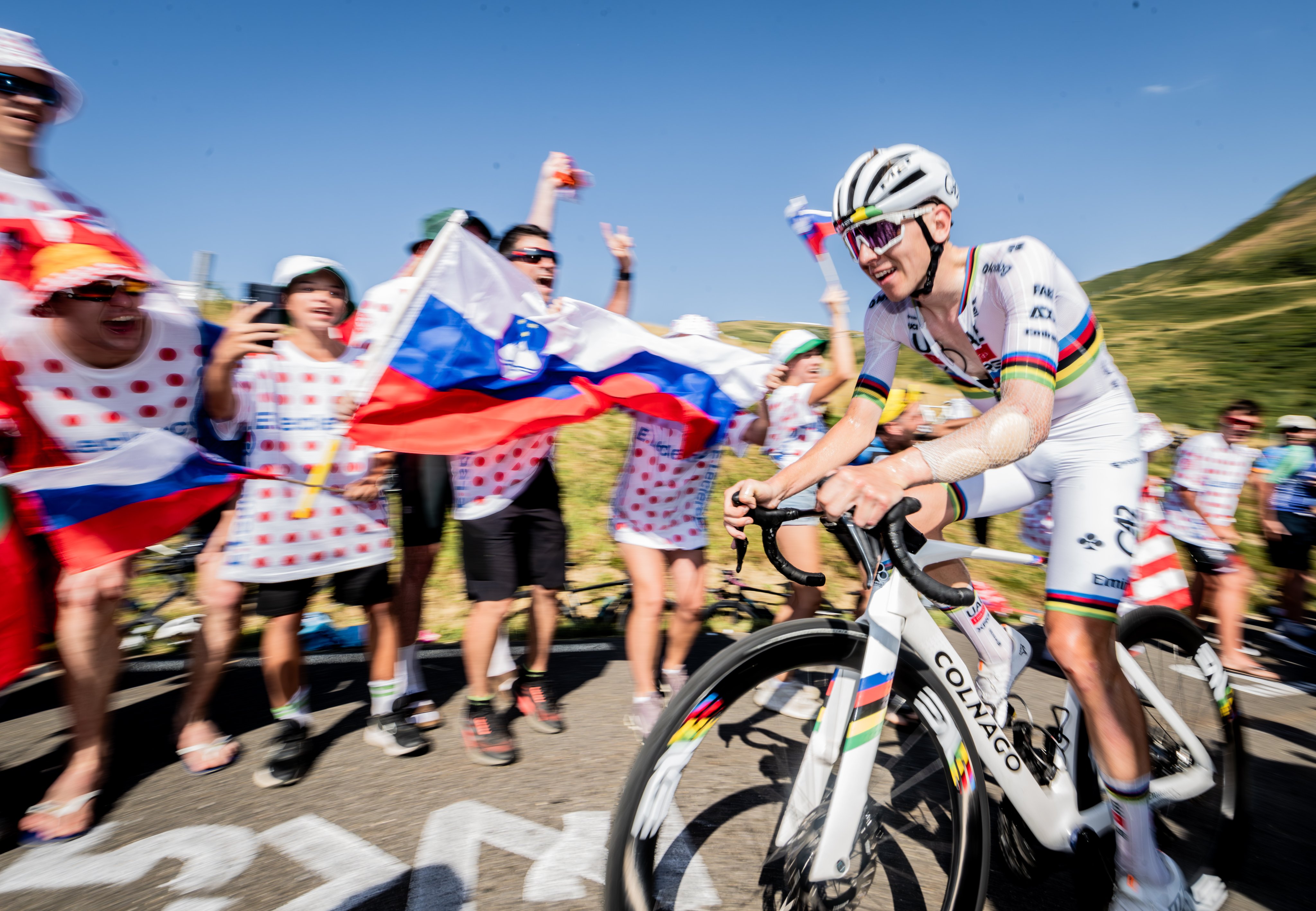
10. Tadej Pogačar — Slovenia
Source: https://x.com/Domestique___
The Slovenian races with an aggression and unpredictability that feels almost out of place in the modern, data-obsessed peloton — and it works spectacularly. He doesn’t wait for rivals to crack. He attacks, repeatedly, on his own terms. What separates Pogačar from most of his contemporaries is his range — capable of winning a brutal spring classic on Sunday and dominating a Grand Tour mountain stage the following month. At 26, he is already rewriting what the ceiling of cycling achievement looks like, and he is almost certainly not finished yet.
Key achievements:
- 3× Tour de France winner (2020, 2021, 2024)
- Monument victories including Tour of Flanders and Liège–Bastogne–Liège
- 2× Il Lombardia winner
- 2024 Giro d’Italia winner — completing a Giro–Tour double in the same season
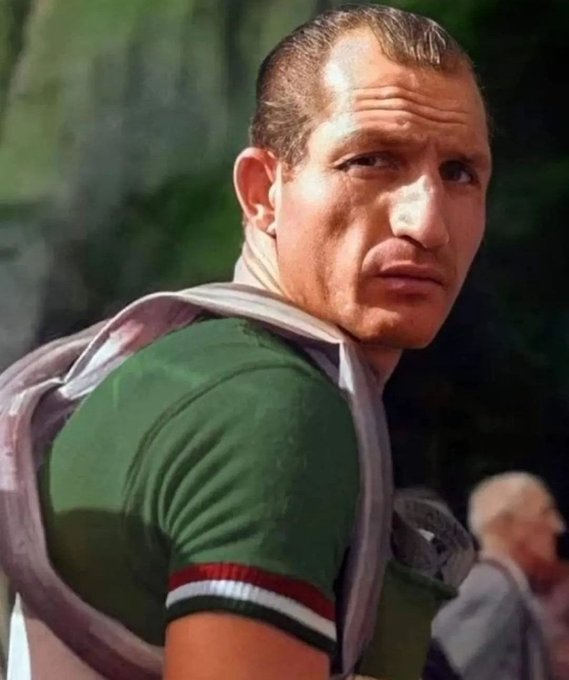
9. Gino Bartali — Italy
Source: https://x.com/twocGAME
Gino Bartali was a rider of extraordinary resilience whose career spanned one of the most turbulent periods in European history. The Tuscan climber won his first Tour de France in 1938 and his second a decade later in 1948 — a ten-year gap interrupted entirely by World War II, making him the only rider to win the Tour with such a span between victories. Beyond cycling, Bartali is credited with saving hundreds of Jewish lives during the war by smuggling forged documents in his bicycle frame under the cover of training rides. His longevity and consistency across two completely different eras of the sport make him one of the most unique champions cycling has ever produced.
Key achievements:
- 2× Tour de France winner (1938, 1948 — ten years apart)
- 3× Giro d’Italia winner
- Multiple King of the Mountains titles at both the Tour and Giro
- Recognized by Yad Vashem as Righteous Among the Nations (2013)
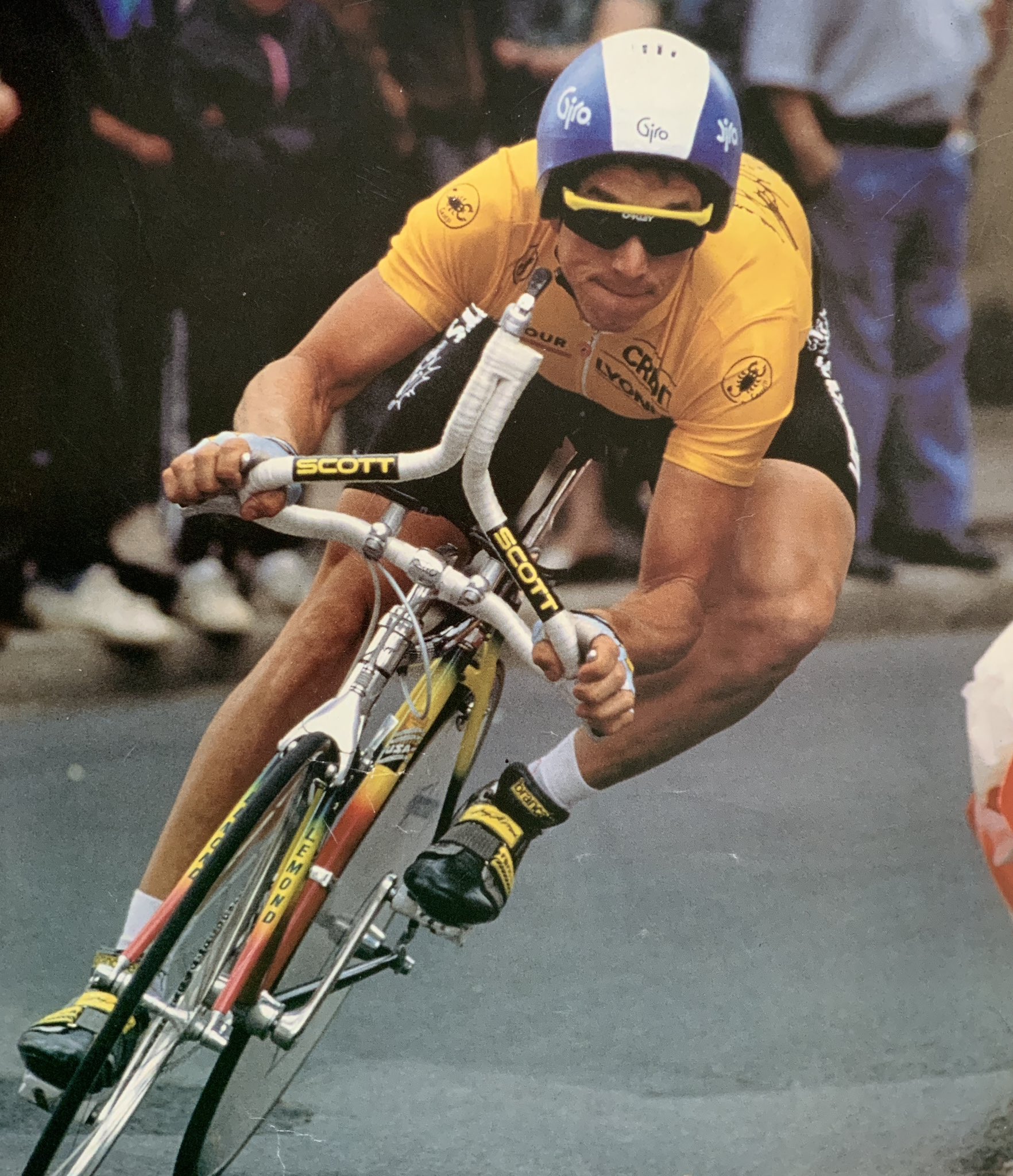
8. Greg LeMond — USA
Source: https://x.com/mission753
Greg LeMond didn’t just win races — he modernised the sport. The American arrived in European cycling with a fresh perspective on training, technology and tactics that the established peloton hadn’t seen before. He was the first rider from outside Europe to win the Tour de France, but his influence stretched far beyond that milestone. LeMond popularised aerodynamic time trial bars and introduced a data-driven approach to preparation that gradually reshaped how professionals trained. His 1989 Tour victory remains one of the greatest sporting comebacks ever — overturning a 50-second deficit on the final day time trial into Paris to win by just eight seconds.
Key achievements:
- 3× Tour de France winner (1986, 1989, 1990)
- 2× UCI Road World Champion (1983, 1989)
- Pioneer of aerodynamic innovation in professional cycling
- Returned to win the 1989 Tour after a near-fatal hunting accident in 1987
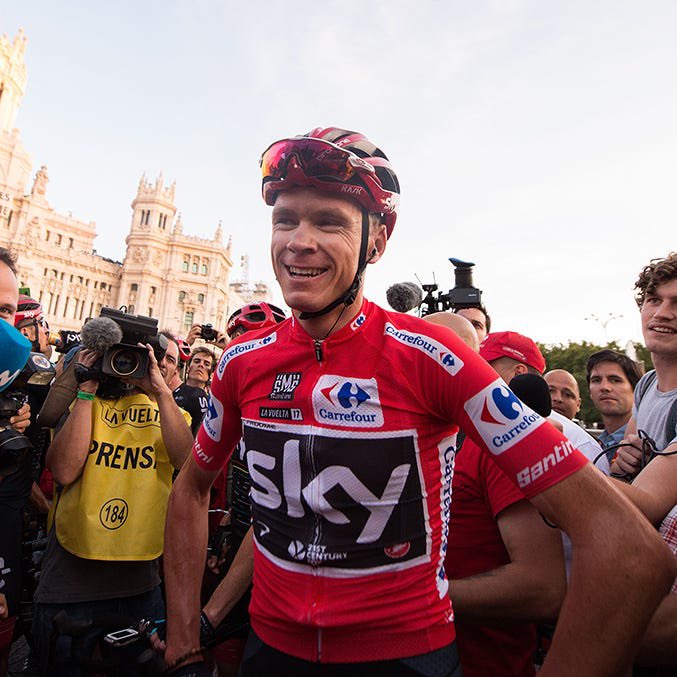
7. Chris Froome — Great Britain
Source: https://x.com/lucasaganronald
Chris Froome may not have been the most aesthetically pleasing rider to watch, but few understood the mechanics of winning a Grand Tour better. The Kenyan-born Briton built his success on relentless preparation, superior data analysis and an ability to control races through his Team Sky domestiques before delivering decisive blows on key climbs. His unusual position on the bike and distinctive riding style drew criticism, but his results silenced most doubters. A near-fatal crash in 2019 threatened to end his career entirely, making his four Tour titles and broader Grand Tour record all the more remarkable in hindsight.
Key achievements:
- 4× Tour de France winner, 1× Giro d’Italia winner, 2× Vuelta a España winner
- First rider since Bernard Hinault to hold all three Grand Tour titles simultaneously
- 7 Grand Tour victories in total across his career
6. Alberto Contador — Spain
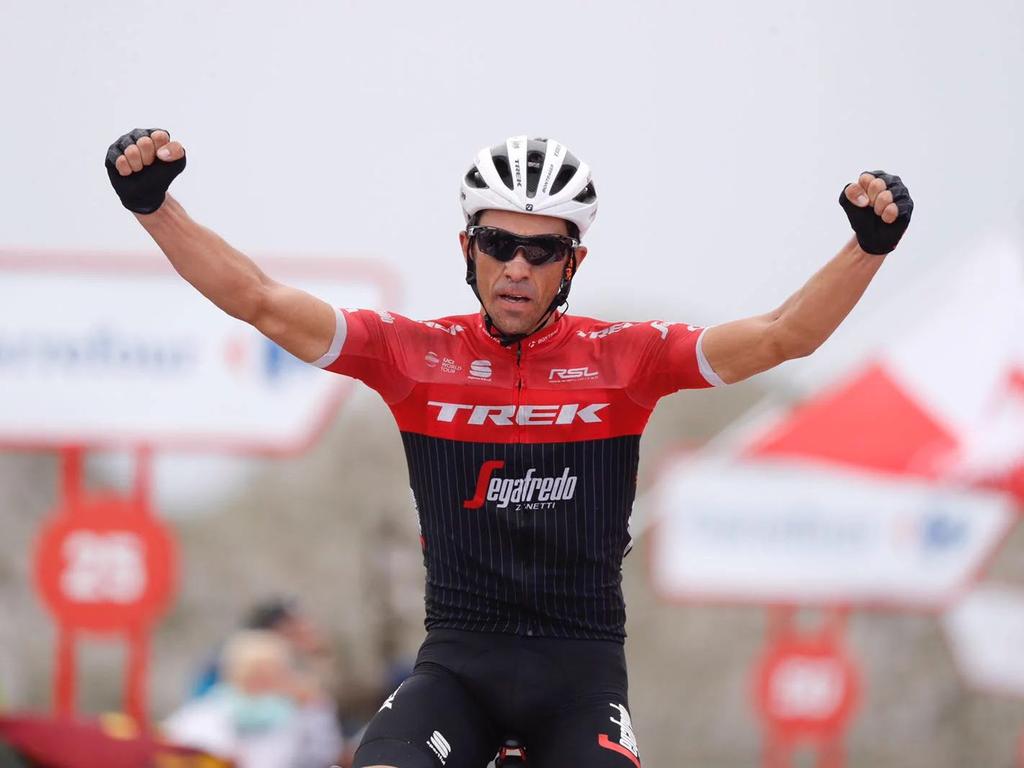
Source: https://x.com/amantes_cycling
Alberto Contador was one of the most explosive and dangerous climbers of his generation. The Spaniard had an instinctive, aggressive racing style that made him unpredictable and thrilling to watch — famous for his trademark pistol celebration and his ability to accelerate out of nowhere on steep gradients. He won all three Grand Tours, a feat only a handful of riders in history have achieved, and he did it with a flair and attacking mentality that set him apart from the more conservative champions of his era. His rivalry with Froome, Andy Schleck and Vincenzo Nibali defined a golden decade of Grand Tour racing.
Key achievements:
- Winner of all three Grand Tours — Tour de France, Giro d’Italia and Vuelta a España
- 2× Giro d’Italia winner, 3× Vuelta a España winner
- 2× Tour de France winner (one title stripped for doping in 2010)
- Known for some of the most aggressive and memorable climbing attacks in modern cycling
5. Fausto Coppi — Italy
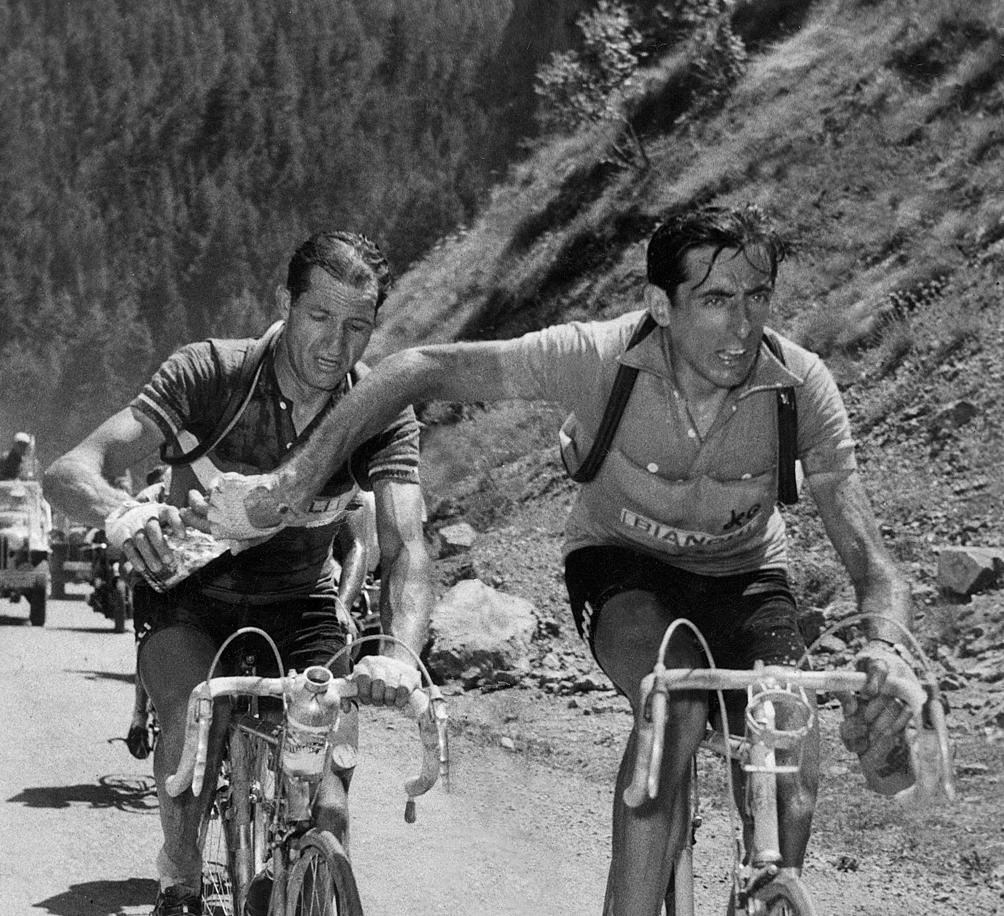
Source: https://x.com/prestigelisten
Fausto Coppi was more than a cyclist — he was the defining figure of post-war Italian sport and a rider whose elegance and authority on a bike bordered on the theatrical. Racing through the 1940s and 1950s, Coppi pioneered the concept of the complete cyclist decades before the term existed. His climbing was effortless, his solo attacks devastating, and his ability to open gaps on rivals made him almost untouchable at his peak. His rivalry with Gino Bartali divided an entire nation and captured the imagination of a generation. Coppi didn’t just win races — he made them look inevitable.
Key achievements:
- 2× Tour de France winner, 5× Giro d’Italia winner
- Monument victories including 3× Milan–San Remo and 5× Il Lombardia
- World Road Race Champion (1953)
- Hour Record holder (1942) — a record that stood for 14 years
4. Miguel Indurain — Spain
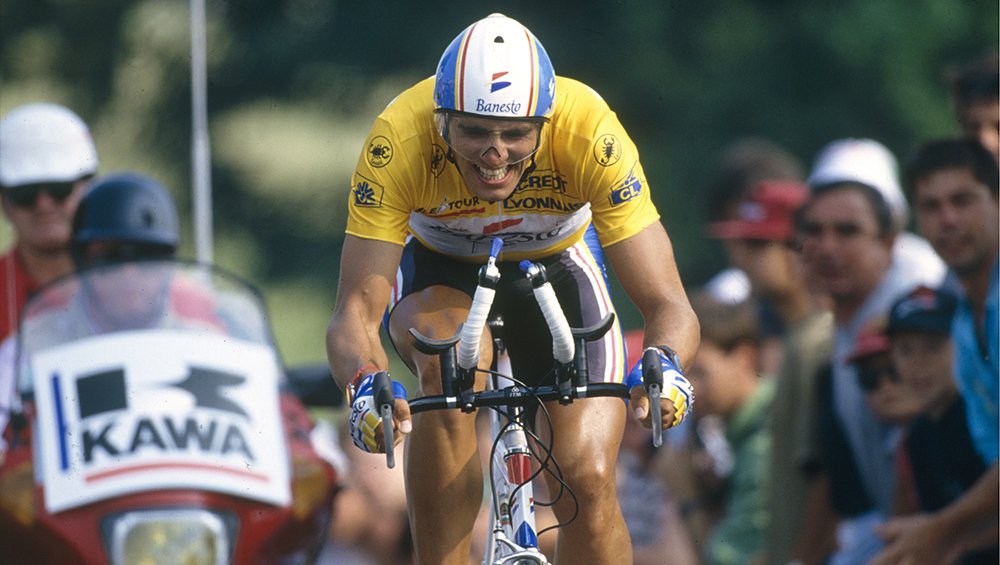
Source: https://x.com/lavuelta
Miguel Indurain redefined Grand Tour dominance in the 1990s through sheer physical superiority and tactical discipline. The Spaniard possessed one of the most powerful engines ever measured in professional cycling — a resting heart rate of just 28 beats per minute and a VO2 max among the highest ever recorded. He didn’t attack for show or race with aggression. Instead he controlled races quietly and ruthlessly, building unassailable leads in time trials and defending them with composed, metronomic climbing. Five consecutive Tour de France titles between 1991 and 1995 remains one of the most remarkable streaks in sporting history.
Key achievements:
- 5× consecutive Tour de France winner (1991–1995)
- 2× Giro d’Italia winner
- Olympic time trial gold medal, Atlanta 1996
- World Hour Record holder (1994)
3. Jacques Anquetil — France
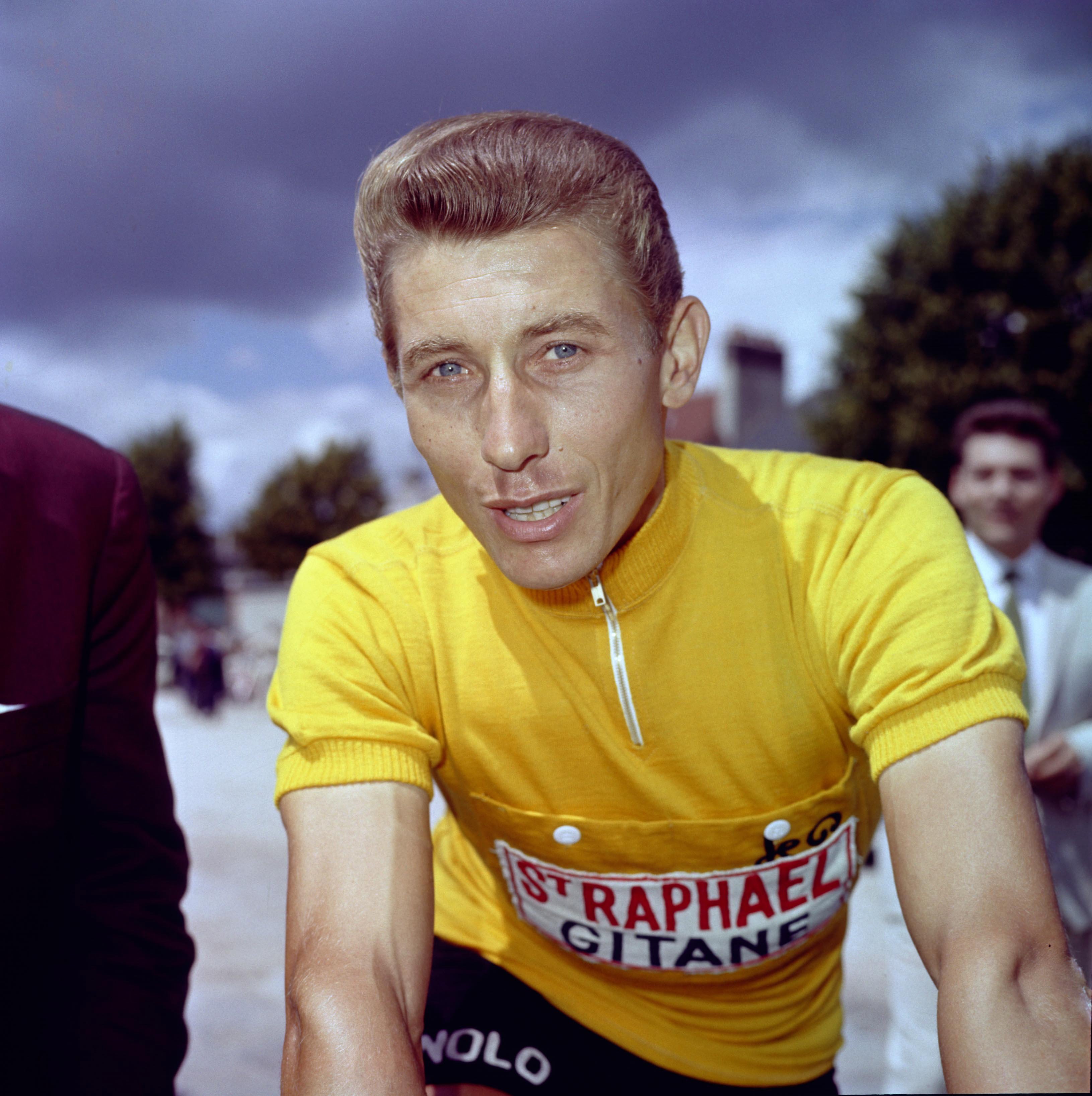
Source: https://x.com/LeTour
Jacques Anquetil was a calculating and supremely efficient racer who redefined what it meant to dominate professional cycling in the 1950s and 1960s. The Frenchman built his victories on an extraordinary ability in time trials, using precision and pacing to dismantle rivals systematically rather than through explosive attacks. He was never the crowd’s favourite — his measured, controlled style lacked the drama fans craved — but his results were impossible to argue with. Anquetil was one of the first riders to conquer all three Grand Tours and became the first cyclist to win five Tour de France titles, setting a benchmark that stood for decades.
Key achievements:
- 5× Tour de France, 2× Giro d’Italia, 1× Vuelta a España
- One of the earliest riders to win all three Grand Tours
- First ever five-time Tour de France winner
- 2× Bordeaux–Paris winner and multiple Grand Prix des Nations titles
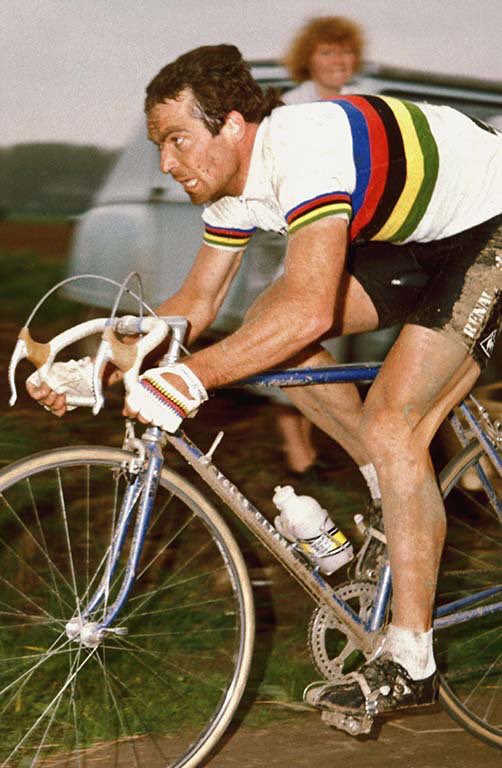
2. Bernard Hinault — France
Source: https://x.com/UCI_cycling
Bernard Hinault was one of the most forceful and combative riders professional cycling has ever seen. The Frenchman raced with an intensity that made him both feared and respected across the peloton throughout the late 1970s and 1980s. Known as “The Badger” for his tenacious, never-surrender attitude, Hinault excelled in all conditions and across all terrains. He won all three Grand Tours and remains the last Frenchman to win the Tour de France. Unlike many champions who picked their battles, Hinault attacked races relentlessly, turning every edition into a statement of dominance. His 10 Grand Tour victories in total place him among the most decorated stage racers in history.
Key achievements:
- 5× Tour de France, 3× Giro d’Italia, 2× Vuelta a España
- Monument victories including Paris–Roubaix and Liège–Bastogne–Liège
- 2× UCI Road World Champion
- Never abandoned a Tour de France he started
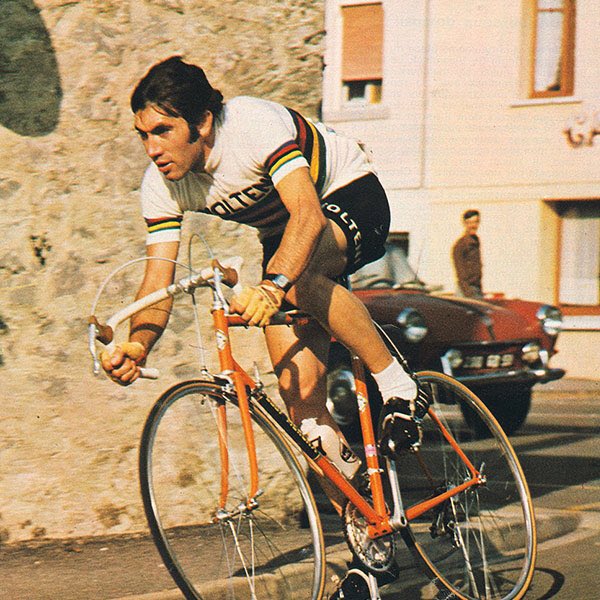
1. Eddy Merckx — Belgium
Source: https://x.com/Copedaleando
Eddy Merckx is widely regarded as the greatest cyclist of all time. The Belgian dominated the sport throughout the late 1960s and 1970s, winning across every format — Grand Tours, one-day classics, time trials and mountain stages. Nicknamed “The Cannibal” for his insatiable appetite for victory, Merckx never settled for enough when more was possible. He won all three Grand Tours, claimed the Hour Record in 1972, and collected Monument victories with remarkable consistency. No rider in history has matched his combination of versatility, longevity and sheer volume of wins across an entire decade of near-total dominance.
Key achievements:
- 5× Tour de France, 5× Giro d’Italia, 1× Vuelta a España
- 34 Tour de France stage wins across all participations
- 19 Monument victories including Milan–San Remo, Paris–Roubaix and Liège–Bastogne–Liège
- 3× UCI Road World Champion and 1972 Hour Record holder
Honourable Mentions
Some names didn’t make the final cut, and yeah — that’s where arguments really start:
- Lance Armstrong — USA — seven Tour de France titles, all stripped for systematic doping. Undeniable physical dominance and racing intelligence, but a legacy permanently overshadowed by one of sport’s biggest scandals
- Louison Bobet — France — three consecutive Tour de France titles (1953–1955), World Champion in 1954, and a pioneer of structured race preparation who helped shape the modern approach to Grand Tour racing
- Sean Kelly — Ireland — one of the most complete classics riders of the 1980s, four-time points classification winner at the Tour de France and a dominant force across the spring classics, including multiple victories at Liège–Bastogne–Liège and consistent success in races like Paris–Nice and Milan–San Remo
- Raymond Poulidor — France — never won the Tour de France yet finished on the podium eight times across three decades, earning legendary status as cycling’s most beloved nearly-man and a symbol of resilience
- Francesco Moser — Italy — 1984 Hour Record holder, Paris–Roubaix winner three times, and a powerful classics specialist whose Hour Record stood for nearly a decade and revolutionised aerodynamic thinking in cycling
What this shows is simple: cycling greatness isn’t fixed. It moves, evolves, gets reinterpreted.
Legacy and Future of the Best Cyclists of All Time
Cycling keeps accelerating — not just in speed, but in mindset. The best cyclists in the world race with a level of intensity and precision that feels almost relentless. Riders like Pogačar, Vingegaard, and Evenepoel aren’t waiting for races to unfold; they force them open early and live with the consequences.
Modern teams run on data, structure, and control. Every watt, every climb, every recovery window is calculated. Still, when things crack and they always do it comes down to instinct and resilience.
That’s why the legends still define the ceiling. In any top cyclist rankings in world cycling, names like Merckx and Hinault represent more than results. They represent total dominance.
The sport evolves. The standard doesn’t.
Frequently Asked Questions
Who is the greatest cyclist of all time?
Most analysts point to Eddy Merckx due to unmatched versatility and total wins.
Who is the best cyclist in the world?
Tadej Pogačar remains a leading contender based on recent dominance.
What defines a top cyclist?
Grand Tour success, versatility, consistency, and race impact.
Why are older cyclists still ranked highly?
Their dominance relative to their era remains unmatched.
Is modern cycling more competitive?
Yes, deeper talent pools and advanced training increased competition.
Who has the most Tour de France wins?
Several riders share the record with five victories.
Will current riders enter this top 10 soon?
Very likely. The current generation is already challenging historical standards.