 Rafael Nogueira
The Spanish Supercopa final ignited early in Jeddah as Álvaro Carreras escaped punishment for a controversial stamp on Lamine Yamal, a decision that immediately infuriated Barcelona and intensified the tension on the pitch.
The Real Madrid full-back caught Yamal on the foot during a late challenge. While referee Munuera Montero awarded the foul, he opted not to show a yellow card — a call that sparked furious protests from Barça players.
Barcelona Protest Refereeing Leniency
From Barcelona’s perspective, the issue went far beyond a single challenge. Allowing Carreras to continue without a booking so early in the match was viewed as a tactical green light for Madrid to maintain aggressive pressure on their most dangerous attacker.
With no disciplinary action taken, Madrid’s defense could continue targeting Yamal without the immediate risk of suspension, a scenario the Catalan coaching staff believes tilted the balance unfairly.
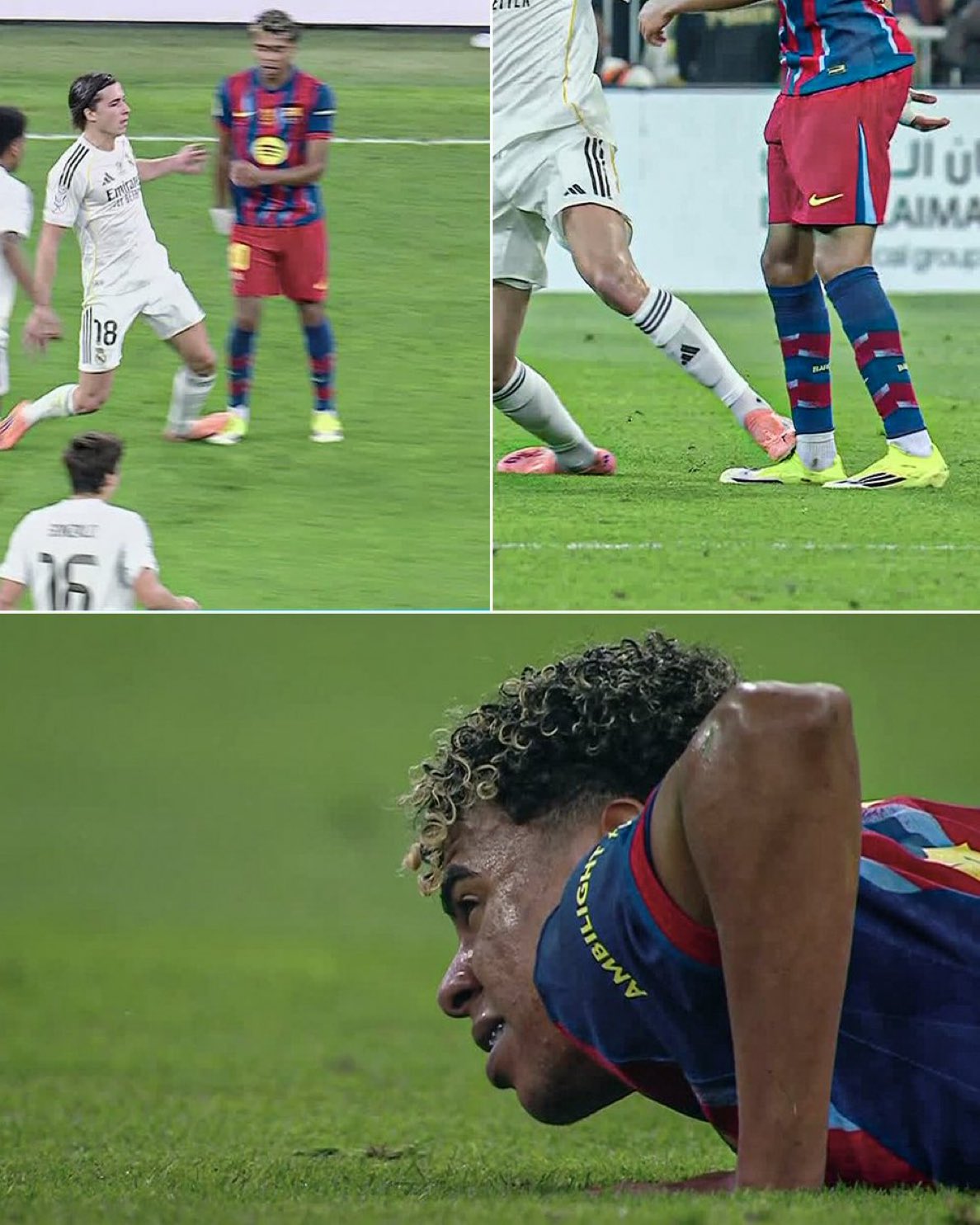
Source: x.com/BobbyBlueschels
VAR Unable to Intervene
VAR did not intervene in the incident, as the challenge was not classified as violent conduct or a straight red-card offense under current regulations. That technical limitation only added to Barcelona’s frustration, with the sense that clear misconduct had gone insufficiently punished.
Hansi Flick Loses His Cool
The controversy spilled over to the sidelines. Hansi Flick, typically calm and restrained, left his technical area to confront the fourth official, demanding greater protection for his players.
Flick’s animated protest underscored Barcelona’s fear that the match could devolve into a physical battle aimed at disrupting their young talents — particularly Yamal, who remains central to their attacking threat.
Refereeing Under the Spotlight
As El Clásico intensity continues to rise, Munuera Montero’s refereeing standards are already under intense scrutiny. The opening controversy has ensured that every subsequent decision will be closely examined by both benches and millions watching worldwide.
The Supercopa final has barely settled into rhythm — and it already has its defining flashpoint.