 Liam Duckstein
The 2010 World Cup in South Africa had its share of memorable moments, but the conversation kept returning to Adidas’ Jabulani. Its eight thermally bonded and grooved panels produced one of the most unpredictable footballs ever used at a major tournament, drawing sharp criticism from elite goalkeepers and becoming a talking point that outlasted the competition itself.

100% 1st Deposit Bonus up to €750 + 100 FS — World Championship 2026 on TipsGG × Casino Prestige
Follow every match of the World Championship 2026, analyze live, and place bets on the best terms. Get a 100% bonus up to €750 + 100 FS on Casino Prestige and don’t miss the chance to boost your bankroll for the biggest tournament of the year.
Diego Forlan famously mastered the Jabulani’s quirks, turning its unpredictability into a personal highlight reel that earned him the Goal of the Tournament. Jabulani translates to “be happy” and “rejoice” in Zulu, a sentiment Forlan clearly shared. The goalkeepers did not. Spain’s Iker Casillas called it “horrible”, while Italy’s Gianluigi Buffon went further, labelling it “inadequate and shameful” for a World Cup.
Sixteen years on, at the 2026 tournament across North America, a similar debate is forming around Adidas’ new match ball, the Trionda.
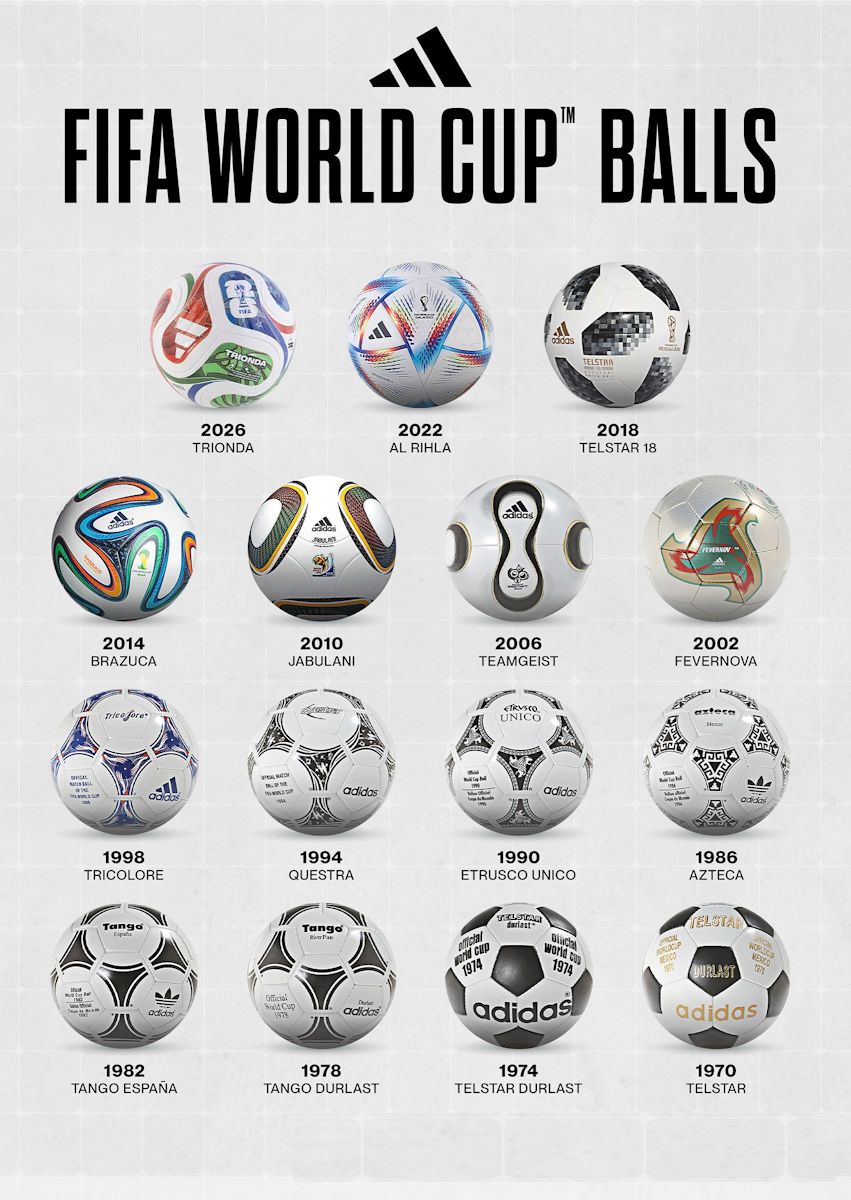
World Cup Balls. Source: Official Facebook Adidas
Familiar Pattern Emerging in the Group Stage
Several long-range goals have already been scored during the group stage, and the common thread is not precision into the corners or awkward angles. Goalkeepers have reached the ball, made contact, and still conceded. England’s Jordan Pickford could not keep out Martin Baturina’s effort against Croatia. Algeria’s Luca Zidane was beaten by Lionel Messi in the same fashion. Iraq’s Ahmed Basil got fingertips to Kylian Mbappe’s strike but could not hold it, despite appearing to get there in time.
Mbappe’s goal was well struck but not placed in a difficult position by traditional standards. That a goalkeeper could reach it and still not save it is the detail drawing scrutiny.
Joe Hart, who played through the Jabulani era and said in 2010 that the ball was “doing anything but staying in my gloves”, has spoken directly about what he is observing.
“I’m seeing this goal way too many times for a World Cup for there not to be something up with that football,” Hart said. “It’s that kind of shoulder height… as soon as they’re not using the curling technique, as soon as that ball is not moving, it’s not spinning, the goalkeepers are struggling.”
“I’m noticing in this tournament that goalkeepers are getting touches on above their shoulder, and they’re just not able to keep it out, so something’s up.”
What Makes the Trionda Different
The Trionda uses four panels, the fewest ever on a World Cup match ball, with embossed surface textures that FIFA says “produces optimal in-flight stability”. The reduced panel count raised concerns about replicating the Jabulani’s slippery flight, so Adidas deepened the seams and added three pronounced grooves to each panel to regulate airflow. The ball was also engineered with North American summer humidity in mind, with added grip intended to aid striking in hot and sticky conditions.
The environment compounds the equation. Matches played at high altitude, such as those in Mexico City, feature thinner air that reduces drag, causing the ball to fly straighter and faster with less resistance. The contrast between venues, from Mexico City to New Jersey, introduces a range of flight conditions across the same tournament.
- Four panels: lowest panel count in World Cup history
- Deepened seams and three grooves per panel for airflow stability
- Designed for high-humidity North American summer conditions
- High-altitude venues reduce air resistance and increase ball speed
Players spend the bulk of their season with a familiar club ball and are then required to calibrate quickly to a new one under the pressure of the world’s biggest tournament. The margin is small, but at elite level, small margins decide outcomes for both attackers and goalkeepers.
A more straightforward explanation is also available: the tournament is still in its early stages, and nerves factor into performance between the posts. As the competition advances and goalkeepers accumulate more time with the Trionda, it will become clearer whether the pattern of shoulder-height goals holds. The next few rounds should answer that question. Follow TipsGG for continued coverage and analysis throughout the World Cup 2026.