
Senegal arrive at the 2026 World Cup ranked 14th in the FIFA standings — a position that reflects genuine progress over the past decade and a squad that has matured from African promise into consistent global contender. The Lions of Teranga are no longer a team that surprises by competing at this level. They are expected to compete, and the pressure of that expectation shapes everything about how this tournament will be measured.

Get 200% Bonus up to $500 – FIFA World Cup 2026 on TipsGG × Stake
The FIFA World Cup 2026 is almost here. Follow every match with expert betting tips, live odds, and tournament news – all in one place. Bet smarter with Stake’s 200% Welcome Bonus up to $500.
The foundation remains Sadio Mané, now 34 and approaching the end of his international career, but still the emotional and attacking nucleus of everything Senegal build. Around him, a generation of European-based talent — Pape Matar Sarr at Spurs, Lamine Camara at Monaco, Nicolas Jackson at Bayern Munich — provides a depth and technical quality the national team has rarely possessed before.
Drawn into Group I alongside France (1st in the world), Norway (31st), and Iraq (57th), Senegal face a defining challenge in their opening fixture. France are the world’s top-ranked side and clear group favourites. Norway carry Haaland and Ødegaard. Iraq represent the clearest points opportunity. Senegal’s path to the knockout rounds runs through a sequence of results that demands maximum efficiency — no dropped points against Iraq, and something from the Norway fixture.
This is not a group Senegal will dominate. But it is a group they can escape — and if they do, the tournament’s later stages offer genuine possibility for a side with this combination of defensive structure, physical intensity, and individual quality in attack.

Senegal World Cup History: Results, Stats & Past Performances
Senegal’s World Cup history is relatively brief but exceptionally memorable. They have appeared at three tournaments — 2002, 2018, and 2022 — with their best performance coming at their debut, a run to the quarter-finals in 2002 that remains one of the most extraordinary stories in World Cup history.
That 2002 campaign, in Japan and South Korea, defined a generation. Senegal defeated France — the defending champions — in their opening match, with Papa Bouba Diop scoring the only goal in a result that reverberated across Africa and the footballing world. They reached the quarter-finals, losing to Turkey in extra time, and returned home as heroes. The template of physical intensity, collective organisation, and individual brilliance in the final third has shaped Senegalese football ever since.
Senegal then failed to qualify for 2006, 2010 and 2014 before returning in 2018, where they came agonisingly close to the Round of 16 — eliminated on the fair play rule after finishing level on points, goals scored, and goal difference with Japan. It remains one of the tournament’s harshest exits.
The 2022 tournament in Qatar began with the loss of Mané to injury before the group stage, a blow from which the squad never fully recovered. Despite reaching the Round of 16 — where they lost to England — Senegal’s tournament felt incomplete, a reminder of how heavily the team’s ceiling depends on their star player’s availability.
Their overall record across four appearances is respectable for a nation of their resources: advancing from the group in three of four attempts, reaching the quarter-finals once, and consistently demonstrating the capacity to defeat higher-ranked opponents when organised and motivated.
How Senegal Qualified for the 2026 World Cup: Results & Recent Form
Senegal qualified through the CAF section, navigating African qualification with the efficiency expected of the continent’s top-ranked side. Their campaign was built on defensive solidity and the ability to decide tight matches through individual moments — a pattern that has characterised Senegal across multiple qualification cycles.
Mané was the primary goalscoring contributor, combining for the majority of Senegal’s attacking output. Pape Matar Sarr’s influence from midfield grew throughout the campaign — his ability to cover ground, win second balls, and arrive late in the box added a dimension that became increasingly important as opposing sides organised to stop Mané directly.
The defensive unit, anchored by Kalidou Koulibaly, conceded sparingly throughout. Koulibaly’s experience, positional intelligence, and ability to organise the defensive line under pressure remain central to Senegal’s structural identity — even at 34, he is the player opponents look to exploit and rarely manage to.
The margin between the Senegal that beats France in 2002 and the Senegal that exits on fair play in 2018 is narrower than it looks — and managing that margin is the tournament’s central question.
Senegal Squad for the 2026 World Cup: Key Players, Lineup & Team News
Senegal carry exceptional quality in several key positions, with a wide range of European-based players who bring weekly top-flight experience to the squad. The depth beyond the first eleven is genuine, particularly in midfield and attack.
Senegal 2026 FIFA World Cup squad
- Goalkeepers: Edouard Mendy (Al-Ahli), Yehvann Diouf (Nice), Mory Diaw (Le Havre).
- Defenders: Krepin Diatta (Monaco), Antoine Mendy (Nice), Abdoulaye Seck (Maccabi Haifa), Kalidou Koulibaly (Al-Hilal), Ilay Camara (Anderlecht), Moussa Niakhate (Lyon), Mamadou Sarr (Chelsea), El-Hadji Malick Diouf (West Ham United), Moustapha Mbow (Paris FC), Ismail Jakobs (Galatasaray).
- Midfielders: Idrissa Gueye (Everton), Habib Diarra (Sunderland), Pape Matar Sarr (Tottenham), Pape Gueye (Villarreal), Lamine Camara (Monaco), Pathe Ciss (Rayo Vallecano), Bara Ndiaye (Bayern Munich).
- Forwards: Sadio Mane (Al-Nassr), Bamba Dieng (Lorient), Iliman Ndiaye (Everton), Nicolas Jackson (Bayern Munich), Assane Diao (Como), Ibrahim Mbaye (Paris St-Germain), Cherif Ndiaye (Samsunspor), Ismaila Sarr (Crystal Palace).
Expected Formation: 4-3-3 / 4-2-3-1
Key Players:
Sadio Mané (Al-Nassr, LW/CF) — The central figure of Senegalese football for over a decade. At 34, Mané’s physical profile has shifted — he is no longer the explosive, pace-driven winger who terrorised Premier League defences — but his football intelligence, movement in tight spaces, and ability to decide matches in single moments remain elite. His 2022 absence illustrated just how significant he is to everything Senegal do going forward. This is almost certainly his final World Cup, and the weight of that context will be felt throughout the tournament.
Kalidou Koulibaly (Al-Hilal, CB) — The most experienced and tactically authoritative defender in Senegal’s squad. Koulibaly’s ability to read attacking movements, organise the defensive line, and carry the ball out under pressure gives Senegal a defensive foundation that very few African nations can match. At 33, fitness management will be important, but his presence in high-stakes matches remains non-negotiable.
Pape Matar Sarr (Tottenham, CM) — The most complete midfielder in the squad and the player most likely to define Senegal’s transition from the Mané generation to what follows. Sarr’s ability to cover ground, recover possession, and contribute in both phases of play make him the midfield engine Senegal have lacked at previous tournaments. His Premier League experience gives him a baseline of intensity and technical demand that elevates the squad’s collective standard.
Lamine Camara (Monaco, CM) — One of the most exciting young midfielders in European football. Camara’s combination of physical intensity, technical quality, and football intelligence make him a genuine starter despite his age. His performances at Monaco — where he has been a consistent Ligue 1 contributor — give Senegal a midfield pair capable of competing with teams significantly higher up the ranking.
Nicolas Jackson (Bayern Munich, ST) — The primary striker and Senegal’s most physically imposing forward option. Jackson’s move to Bayern Munich represents a step up in quality from his Chelsea years and adds a European elite dimension to his profile. His combination of pace, physicality, and improving finishing makes him the ideal partner for Mané’s movement across the front line.
Iliman Ndiaye (Everton, AM/RW) — The most technically gifted player in the forward line beyond Mané. Ndiaye’s ability to operate in tight spaces, create chances from wide areas, and contribute goals in important moments makes him a key figure in Senegal’s attacking structure. His directness and unpredictability complement Mané’s more intelligent, positional style.
Ismaila Sarr (Crystal Palace, RW) — A winger with genuine pace and crossing quality who provides Senegal with a direct, wide threat capable of stretching defensive lines. Sarr’s ability to deliver from wide areas creates opportunities for Jackson and Mané in the penalty area.
In goal, Édouard Mendy at Al-Ahli remains the first choice, though his move away from Chelsea has reduced his weekly competitive intensity. His shot-stopping quality is not in doubt — his distribution under pressure occasionally is.
The squad’s depth in midfield — Idrissa Gueye providing experience and defensive cover, Pape Gueye offering physical presence, Habib Diarra bringing energy from Sunderland — gives Senegal genuine options when rotation is required.
Senegal Coach, Tactics & Analysis for the 2026 World Cup
Pape Thiaw has managed Senegal since December 2024, taking over and guiding the Lions of Teranga through qualification for the 2026 World Cup and the 2025 AFCON campaign. His rapid appointment and the federation’s backing reflect confidence in his deep familiarity with the squad (as former assistant) and his proven ability to deliver results quickly in a high-pressure environment.
Under Thiaw, Senegal remain a structured, transition-oriented side. They defend with discipline and organisation, lean on Koulibaly’s leadership at the back, and look to release Mané (when available), Ndiaye, Sarr, and Jackson into space with pace and directness. The midfield — anchored by Pape Matar Sarr, with support from players like Idrissa Gueye or Camara — focuses on winning the ball back high or in midfield and launching quick attacks, rather than prolonged possession phases.
Against weaker opponents, Senegal play more expansively, using their physicality and technical edge to dominate territory and create opportunities, particularly through wide areas and overlapping runs. Against stronger sides — notably France in the group stage opener — Thiaw is expected to set up in a compact 4-4-2 or 4-5-1, ceding possession while staying ready to strike on the counter.
The tactical challenge echoes Senegal’s long-standing dynamics: when key attackers drop deep to aid build-up, the team can lose its primary threat in the final third. Thiaw has worked to mitigate this by granting more positional freedom to players like Ndiaye and integrating Jackson’s movement, but the side’s creativity still often funnels through a handful of standout individuals, which organised opponents can target.
One clear evolution is the counter-pressing. Led by Jackson’s relentless work rate, Pape Matar Sarr’s intelligent covering, and improved coordination across the squad, Senegal’s ability to win the ball back quickly has become even sharper — a potent weapon in a tournament where moments of chaos often decide matches.
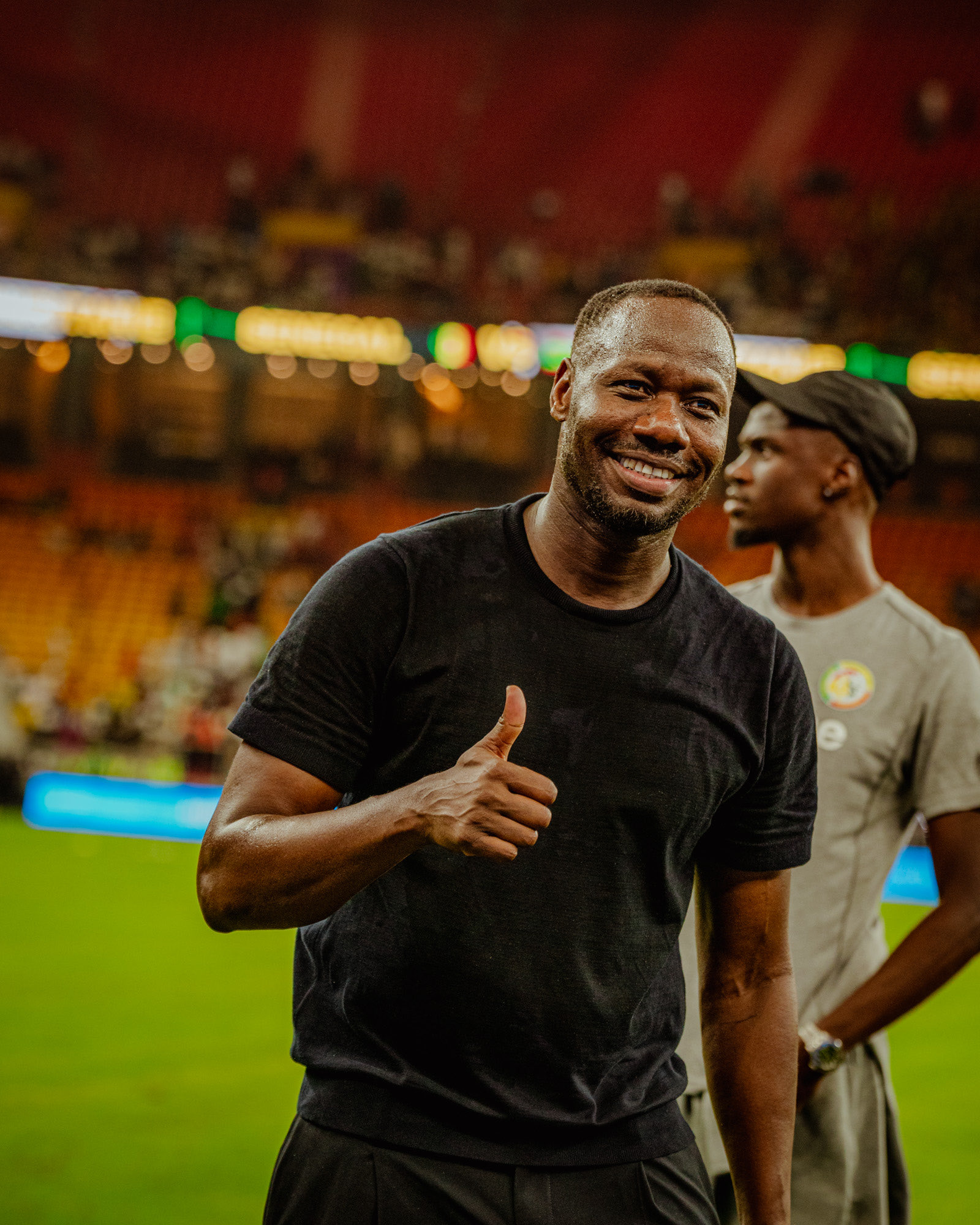
Source: sportnewsafrica.com
Senegal Fixtures (Match Schedule) at 2026 World Cup
Senegal enter Group I as the second strongest side on paper — behind France, ahead of Norway in terms of ranking, but facing a group that tests every aspect of their capability.
Strengths:
Koulibaly’s defensive leadership and experience at the highest level. Mané’s match-deciding quality and movement, even at 34. Pape Matar Sarr and Lamine Camara form a physically formidable midfield pairing. Jackson’s pace and physicality creates consistent problems for centre-back pairings. Strong collective identity and defensive organisation under Cissé.
Weaknesses:
Dependence on Mané — his availability and form are the single most important variable. Édouard Mendy’s reduced competitive intensity since leaving Chelsea. The attacking structure can become predictable against compact, well-organised defences. France in Match 1 is a near-impossible opener, with the psychological shadow potentially extending to subsequent fixtures.
Group I Schedule:
Match 1: vs France — June 16, 21:00 CEST. The most difficult opening fixture Senegal could have faced. France are world-ranked first, carry a squad of extraordinary depth, and will be at full intensity for the tournament opener. Senegal’s realistic aim is a competitive performance and ideally a draw — which would transform their group prospects entirely.
Match 2: vs Norway — June 23, 02:00 CEST. The pivotal fixture for qualification. Norway carry Haaland and Ødegaard, making them a formidable opponent, but Senegal’s physical intensity and defensive organisation are well-suited to disrupting Norway’s build-up play. Koulibaly versus Haaland is the individual contest that defines this match.
Match 3: vs Iraq — June 26, 21:00 CEST. The must-win fixture, and the one Senegal cannot afford to drop points in. Iraq are ranked 57th and making their first World Cup appearance since 1986. Senegal’s superiority in every position should be decisive here.
Qualification requires at minimum a win over Iraq and a draw against Norway. A draw against France would make Senegal strong favourites to progress in first place.
Senegal Odds & Best Bets for the 2026 World Cup: Value Picks & Predictions
Outright and Group Markets:
| Market | Odds | Bookmaker | Value? |
|---|---|---|---|
| Reach Round of 16 | 3.50 | Sapphirebet | Yes |
| Reach Quarter-finals | 8.00 | Sapphirebet | Yes |
| Reach Semi-finals | 21.00 | Sapphirebet | Medium |
| Reach Final | 31.00 | Sapphirebet | Low |
| Win World Cup | 100.00 | Sapphirebet | No |
Analysis:
The Round of 16 at 3.50 is the most compelling starting point in Senegal’s market. An implied probability of roughly 29% for a team ranked 14th in the world, with a win over Iraq as the minimum qualification requirement and a squad capable of competing with Norway, significantly undervalues their group-stage prospects. Senegal have qualified from three of their four World Cup group stages — the historical baseline supports a higher probability than 29%.
The Quarter-finals at 8.00 is the most interesting outright market. An implied probability of ~12.5% for a team with this defensive foundation, this attacking quality, and the potential for a favourable knockout draw feels too conservative. If Senegal qualify from the group — which is the more likely than not outcome — they enter a Round of 32 where opponents of roughly equal or lesser ranking are entirely beatable. Reaching the last eight is not a realistic peak of optimism; it is the outcome a 14th-ranked team with Koulibaly, Mané, and Pape Matar Sarr should be planning for.
The Semi-finals at 21.00 is speculative territory. Senegal have never reached a World Cup semi-final, and the structural requirements — sustained defensive organisation across five matches, consistent goalscoring, and a degree of draw fortune — make it genuinely difficult to build a probability case above 10%. At 21.00, the implied probability of ~5% is too low, but the bet requires a sequence of events that goes beyond the realistic base case.
Where the clearest value lies:
Senegal to Qualify from Group at shorter odds (implied ~1.70–1.90 in accumulator markets) is the safest entry point. Iraq represents three near-certain points, and Senegal’s physical and technical quality makes Norway a winnable fixture even accounting for Haaland’s individual threat.
The Quarter-finals at 8.00 is the standout value recommendation. The market is pricing Senegal as a team whose ceiling is the Round of 16 — and historically, that may have been accurate. But this squad, with Jackson at Bayern Munich, Pape Matar Sarr at Spurs, and Mané still capable of a moment of individual brilliance, has more ceiling than the odds suggest.
Sadio Mané to Score Anytime in the Tournament (~2.00–2.50 where available) is a player-level bet with genuine logic. Even at 34, Mané remains Senegal’s most creative and decisive attacker, and across four or five matches — if Senegal progress — his involvement in goal-related moments is highly probable.
Recommended Bets:
1. Senegal to Reach Quarter-finals (8.00) — Value bet. An implied 12.5% probability undervalues a top-15 ranked team with defensive elite quality, a match-defining striker, and a realistic path through the knockout rounds. The combination of Koulibaly’s organisation and Jackson’s physical threat makes Senegal dangerous beyond the group.
2. Senegal to Qualify from Group (~1.75 in accumulators) — Safe bet. Three points against Iraq is the minimum, and Senegal’s physical profile suits the Norway fixture well. Historical qualification rate of 75% across four World Cups supports a probability significantly above the implied market rate.
3. Sadio Mané Anytime Scorer — Group Stage (~2.20) — Value bet. This is almost certainly his last World Cup, and the emotional weight of that context — combined with his continued quality at Al-Nassr — makes him a motivated performer in high-stakes group fixtures. His movement and finishing remain elite even if his explosive pace has diminished.
4. Senegal to Beat Iraq (~1.35–1.50) — Safe bet. Iraq are ranked 57th, making their first World Cup appearance since 1986, and Senegal’s superiority across the squad is comprehensive. A win here is the foundation on which any Senegal tournament run is built.
Risk Factors:
A heavy defeat against France in the opener could disrupt squad confidence heading into the Norway fixture. Mané’s age and reduced explosiveness make him more containable than at previous tournaments — a prolonged period of suppression could force Senegal to rely on Jackson and Ndiaye as the primary threats. Koulibaly’s fitness management across three group matches and potentially a knockout run requires careful handling at 33. Norway’s Haaland presents a physical challenge Senegal’s defensive line is not accustomed to facing in African qualification or AFCON football.
Senegal Prediction for the 2026 World Cup: Can They Qualify from Group?
Yes — and the case is more convincing than the 3.50 Round of 16 odds suggest. Iraq provides three points. The Norway fixture is genuinely competitive but winnable. And even a narrow defeat to France — which is the most likely outcome — leaves Senegal’s qualification prospects intact if the other two results go as expected.
The more meaningful question is what Senegal do after the group. A side with Koulibaly organising the defence, Pape Matar Sarr and Camara dominating midfield, and Mané and Jackson presenting different physical and technical challenges to opposing centre-backs is a dangerous opponent in a one-off knockout match. Round of 16 exits have been the pattern — but this squad has the components to break it.
Realistic projection: Round of 16 as the base case, quarter-finals as the genuine ceiling. A semi-final would require a sequence of results and individual performances that is possible but not the most probable outcome.
Senegal 2026 World Cup FAQ: Predictions, Odds & Key Questions
Will Senegal qualify from Group I at the 2026 World Cup?
Probably yes. Iraq represents three near-certain points, and Senegal’s physical and tactical quality makes the Norway fixture competitive rather than prohibitive. A draw against France would transform the picture entirely, but qualification should be achievable without it.
What are the best bets on Senegal?
The Quarter-finals at 8.00 offers the strongest value — an implied 12.5% probability undervalues a top-15 ranked team with elite defensive organisation and genuine attacking quality. The group-stage qualifier in accumulators is the safer supporting option.
Who is Senegal’s main goalscorer?
Sadio Mané remains the primary attacking reference point, but Nicolas Jackson’s physical profile and Iliman Ndiaye’s creativity mean goals are distributed across the front line. Mané’s contribution is as much about movement and creation as it is about scoring directly.
Can Senegal win the 2026 World Cup?
No — at 100.00, the market is correct. Senegal lack the squad depth and structural cohesion to sustain seven matches at the elite level against the tournament’s strongest sides. Their realistic ceiling is the quarter-finals, with a semi-final representing an extraordinary overachievement.
What is Senegal’s biggest tactical strength?
Defensive organisation and physical intensity. Koulibaly’s leadership at the back, Pape Matar Sarr’s midfield work rate, and the collective pressing structure under Cissé make Senegal extremely difficult to score against in compact, organised phases of the game.
What is Senegal’s main weakness?
Over-reliance on Mané’s individual quality to create and decide attacking moments. When Mané is unavailable or effectively contained, Senegal’s attack can become predictable — a direct, pace-driven system that well-organised defences can manage without excessive difficulty.
Is this Senegal’s strongest ever World Cup squad?
Arguably yes. The combination of Koulibaly’s defensive maturity, Pape Matar Sarr and Camara’s midfield quality, and the depth of European-based talent in attack gives this squad more technical and physical resource than the 2002 side — though that team’s collective spirit and tournament momentum was exceptional.
How does the France opener affect Senegal’s tournament?
Significantly. A competitive result against France — even a narrow defeat — preserves squad confidence and maintains tactical credibility. A heavy defeat could undermine the belief required to beat Norway and approach Iraq with full intensity. Managing the France fixture emotionally, not just tactically, is one of Cissé’s most important preparation challenges.
Is Senegal a Good Bet at the 2026 World Cup?
Senegal enter the 2026 World Cup as a team with a credible structure, elite individual quality in key positions, and the historical resilience to perform in tournament football at the highest level. Their group is demanding but navigable, and their knockout potential is undervalued by a market that has consistently underestimated African representation at the top of the draw.
From a betting perspective, the quarter-final market at 8.00 is the strongest value proposition — a combination of defensive elite quality, individual match-winning capacity, and a realistic knockout pathway that the implied 12.5% probability does not adequately reflect.