 zechs
zechs
The more things change, the more they stay the same. Former England football international, Gary Linker once said “Football is a simple game: 22 men chase a ball for 90 minutes and, in the end, the Germans always win.” Change some of the numbers and replace “Germans” with “Chinese” and the sentiment rings true for League of Legends fans, post-MSI.
 2022South Korea, Busan, Exhibition & Convention Center
 Royal Never Give Up
 T1
T1 G2 Esports
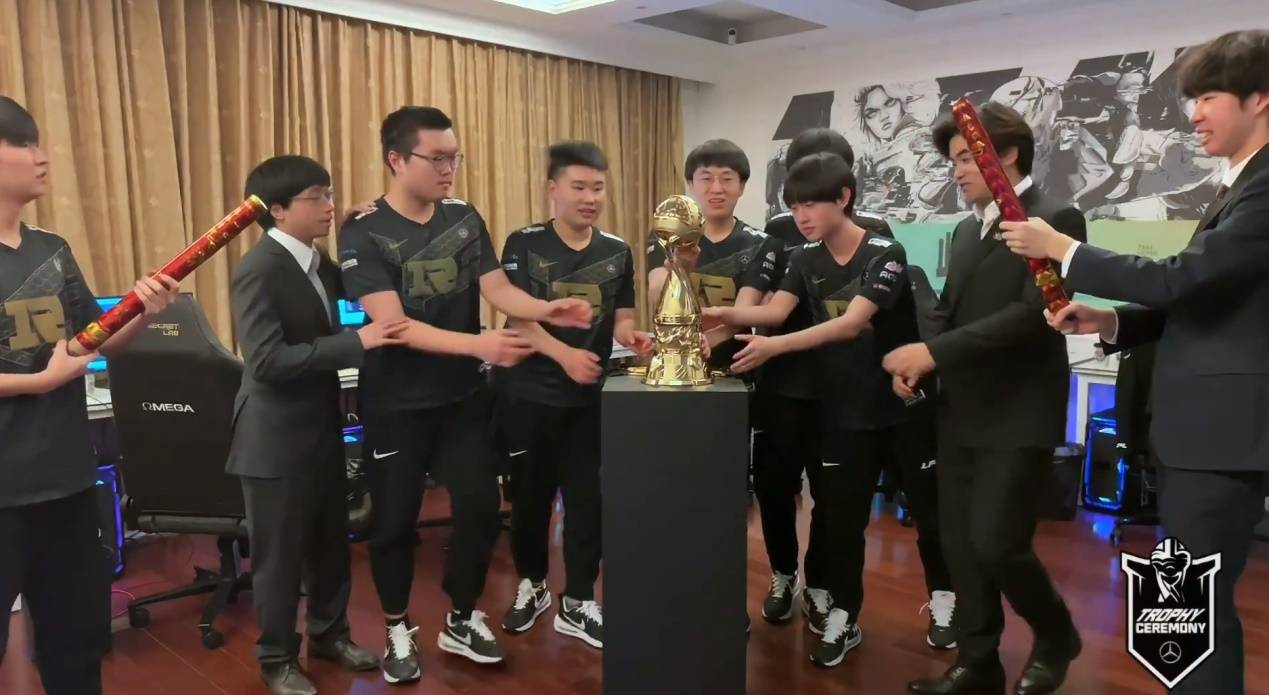
Indeed, even the runners-up were tediously familiar. With Chinese RNG defeating Korean T1, and with both teams winning their semi-final 3-0, it seems as though The Gap (TM) is back. Worse still, despite G2’s best efforts earlier in the tournament, it seems bigger than ever.
The MSI 2022 Format
I saw numerous tweets over the weekend about 60-odd games being played just to end up at the same result as usual, regionally speaking. 2019 already feels like a lifetime ago thanks to COVID, but for Western League fans, it almost feels like a myth at this point. G2’s victory at that year’s MSI (over Team Liquid, remember) is a story to tell the grandkids – a tale they’d struggle to believe.
This, of course, led to a whole ton of #discourse on the tournament format. It’s almost a meme at this point.
Fans: “we want more international games.”
RIOT: “okay.”
Fans: “not like that!”
Personally, I don’t mind the format too much, but I must confess I found it hard to maintain interest as the weeks drew on.
And that’s the problem. The whole thing rather outstayed its welcome. While it was fun to see G2 go 6-0 against EG, many of the other games were a little too predictable and with two different group stages (or a group and a league, whatever you want to call The Rumble Stage), there were just too many uninteresting games.
It’s a tough position for RIOT to be in. When I was younger and disproportionately more self-assured, I was convinced that every tournament should do its best to find a format that guaranteed the best team won. Ideally, everything would be a league, and after every team had played every other team at least two times, there would be no doubt about the winner’s credentials.
Nowadays, I’m not so sure. What I actually want is the highest proportion of hype games; the greatest density of games where the result matters and, ideally, isn’t known ahead of time.
The problem with that, of course, is that you end up with the same few teams playing each other over and over again, which also gets boring.
Another thing I felt when I was younger – and still do to some extent – is that tournaments should be as egalitarian as possible, too. What I mean by that is that regardless of previous results, every team should have to earn their way to the top. Seeding was abhorrent and invitational tournaments (which thankfully are mostly a thing of the past) were unacceptable.
Watching MSI, though, I questioned these beliefs more than ever. When the best teams from the same regions make the finals basically every time, the efficacy of running such long tournaments to end up at the same result becomes questionable. Guess what: no matter the format, China’s top team will beat Japan’s top team 99 times out of a hundred. Moreover, they will do it comfortably most of the time, and in a way that isn’t particularly entertaining.
Too Much of a Good Thing
Everybody wants more international competition, but you can have too much of a good thing. When so many of the games are non-events, much of the received wisdom around international play starts to fall apart.
An important aspect of the egalitarian beliefs I hold (or held) is that, even if one region is clearly stronger than another, a big part of how that weaker region can catch up is by losing to and learning from the stronger one. It doesn’t really seem to work that way, though, does it? With the possible exception of PCS, regions outside the traditional top four always seem to be jostling to be Best of The Rest. No matter how many times they face Chinese and Korean opposition, few regions can consistently take games from them, let alone an entire series. You just have to look at Japan, who have been at Worlds and MSI collecting experience for years, but who also had one of their worst international showings of all time, going 1-5 in the group stage.
America and Europe send multiple teams to Worlds every year and, rather than the gap between us and China and Korea closing, it currently feels the widest it’s been in a while.
Is There a Solution for the MSI Format?
In all honesty, I don’t have a specific answer to these problems. It’s not really RIOT’s responsibility to improve the lot of the lesser regions. It is their responsibility to give them the fairest opportunity they can, but they do a decent job of that. No, I think the aftermath of this MSI is a chance for us all to re-evaluate the purpose of international competition.
Are we trying to find the best team in the world? Are we trying to give the underdogs a chance? Are we trying to make the most entertaining tournament for fans?
Obviously, the answer is that we want to take a little bit of all of those, and probably some other issues I’m not thinking of, too. It is very clear to me that we already know the answer to the first of those questions. It’s also clear that the latter of them was a bit of a whiff, this time around. I would be surprised if the same format returns for MSI 2023, but what will replace it? What should replace it? I don’t think I have the answer to that. Unfortunately, I’m not sure RIOT does right now, either.
