
When Erling Haaland scored twice on Norway’s World Cup debut against Iraq, his father Alf-Inge — who wore the same shirt at the same tournament thirty-two years earlier — was watching a son do what he never could. That moment captures everything that makes father-son World Cup legacies so compelling.

100% 1st Deposit Bonus up to €750 + 100 FS — World Championship 2026 on TipsGG × Casino Prestige
Follow every match of the World Championship 2026, analyze live, and place bets on the best terms. Get a 100% bonus up to €750 + 100 FS on Casino Prestige and don’t miss the chance to boost your bankroll for the biggest tournament of the year.
In this guide, we rank the 10 greatest, measuring not just the father’s fame but the combined weight of both stories: what was built, inherited, and is still being written. From Oslo to Paris, from Buenos Aires to Glasgow, these are the football dynasties whose World Cup stories stretch across decades.
How We Ranked the Greatest Father-Son World Cup Legacies
Not all father-son pairs tell the same kind of story, and this ranking reflects that. To qualify for this list, both father and son must have represented a national team at a FIFA World Cup — fathers who never qualified are excluded regardless of individual fame. Every entry is verified against ESPN’s confirmed 2026 father-son records, FIFA’s official tournament data, and corroborating sources.
| Criterion | Description |
| Father’s World Cup legacy | Caps, goals, tournament impact, and historical significance specifically at the World Cup |
| Son’s current stature | Senior caps, club profile, and tournament impact at 2026 |
| Narrative weight | Does the story carry meaning beyond statistics — different nations, contrasting positions, unfulfilled dreams passed on? |
| Combined legacy | How significant is the family name within the broader history of the sport? |
| 2026 storyline | Is the son actively shaping the tournament, or simply a squad member? |
A father who won the World Cup weighs more heavily than one who made a single group-stage appearance. A son who is his nation’s first-choice starter and already scoring carries more weight than one yet to leave the bench. This is a ranking of legacy, not just lineage.
The 10 Greatest Father-Son World Cup Legacies at 2026
The 2026 tournament is a generational reunion. Fourteen father-son pairings are represented across the competition — the most in World Cup history. Some sons are carrying the burden of legendary surnames. Others are quietly continuing a family tradition the wider world never noticed. A handful are doing something extraordinary: writing their own chapter of a story that already has one of the most celebrated opening lines in football history.
What makes this list particularly striking is the range of nations involved. Norway alone fields three father-son connections. Argentina sends two. The United States, Scotland, Portugal, Sweden, South Korea, and the Netherlands each contribute their own version of the same dream — a son standing where his father once stood, wearing the same colours, or sometimes an entirely different shirt.
Here are the 10 greatest father-son World Cup legacies at the 2026 tournament, ranked by the combined weight of their story:
| Rank | Son (Nation) | Father (Nation, World Cups) |
| 10 | Sebastian Berhalter (USA) | Gregg Berhalter (USA, 2002, 2006) |
| 9 | Angus Gunn (Scotland) | Bryan Gunn (Scotland, 1990) |
| 8 | Kristian Thorstvedt (Norway) | Erik Thorstvedt (Norway, 1994) |
| 7 | Giuliano Simeone (Argentina) | Diego Simeone (Argentina, 1994, 1998, 2002) |
| 6 | Anthony Elanga (Sweden) | Joseph Elanga (Cameroon, 1998) |
| 5 | Francisco Conceição (Portugal) | Sérgio Conceição (Portugal, 2002) |
| 4 | Daley Blind (Netherlands) | Danny Blind (Netherlands, 1990, 1994) |
| 3 | Gio Reyna (USA) | Claudio Reyna (USA, 1994, 1998, 2002, 2006) |
| 2 | Marcus Thuram (France) | Lilian Thuram (France, 1998, 2002, 2006) |
| 1 | Erling Haaland (Norway) | Alf-Inge Haaland (Norway, 1994) |
#10 — Sebastian Berhalter & Gregg Berhalter | USA
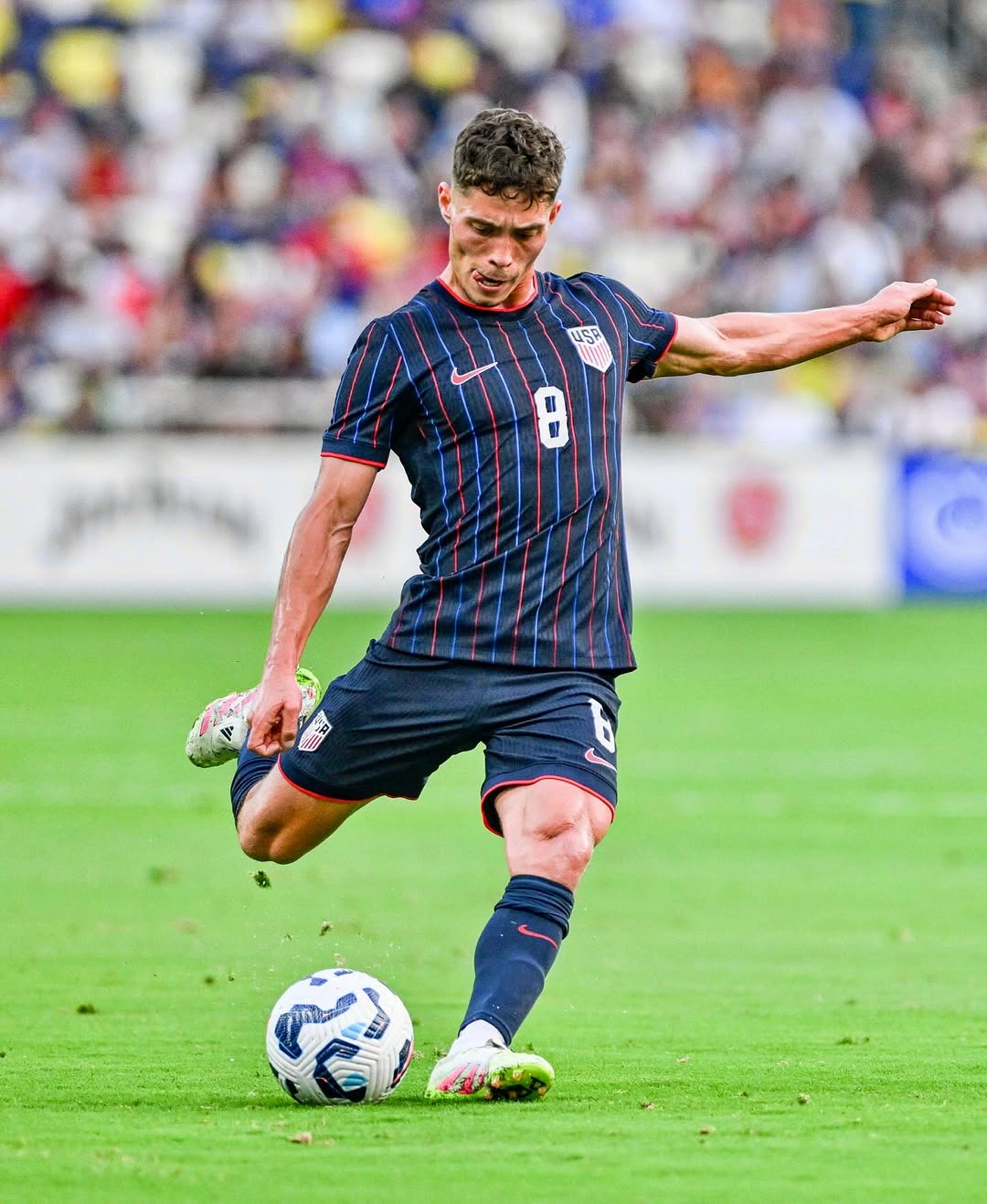
Source: https://x.com/usmntonly
Gregg Berhalter did not just play in World Cups for the United States — he later managed the national team, becoming the first American to both play in and coach the USMNT at the tournament. That dual status makes him uniquely embedded in the history of American football. His son Sebastian has broken into the senior squad under Mauricio Pochettino and appeared in each of the USMNT’s first two group-stage wins at 2026, contributing from midfield in a team with genuine knockout ambitions.
The Berhalters carry a very American version of this story — a family whose commitment to the sport helped build the infrastructure of the game in a country still growing into its own footballing identity. Sebastian is not yet the household name his father became through coaching, but his place in this squad is earned through consistent performances with Vancouver Whitecaps and a senior debut that announced him as a genuine international option.
Key facts:
- Gregg Berhalter: USMNT appearances at 2002 and 2006 World Cups; became head coach at 2022
- Sebastian Berhalter: featured in each of the USMNT’s first two group-stage wins at 2026
- Gregg is the only father on this list to have both played in and managed at a World Cup
- Sebastian scored in a pre-tournament 5-1 win over Uruguay before the 2026 squad was confirmed
- One of two father-son pairs on the 2026 USMNT roster, alongside the Reynas
#9 — Angus Gunn & Bryan Gunn | Scotland
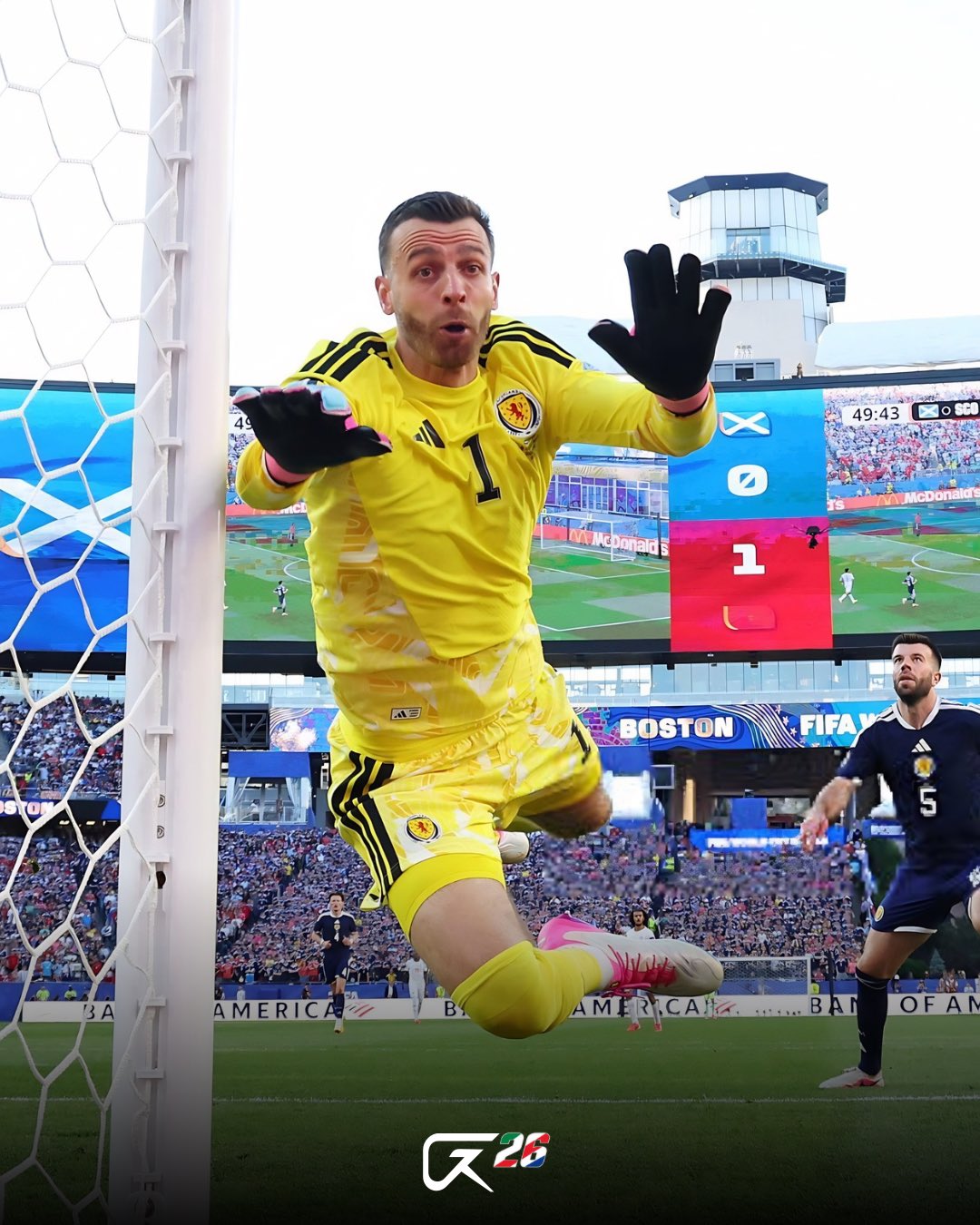
Source: https://x.com/goalkeeper_com
Bryan Gunn travelled to Italia 90 as Scotland’s third-choice goalkeeper — he never made a single appearance in the tournament, but being there mattered. His son Angus has gone considerably further: he is Scotland’s undisputed first-choice starter at the 2026 World Cup, conceding just one goal across two group-stage appearances as the Tartan Army chase their first knockout-stage appearance in a generation.
The Gunns are the only father-son goalkeeper pair at this tournament, a distinction that gives their story a satisfying before-and-after symmetry — same position, same country, same dream, thirty-six years apart. Bryan never played; Angus is playing every minute. That quiet reversal of fortune is its own story, told without fanfare and all the more affecting for it.
Key facts:
- Bryan Gunn: Scotland’s third-choice keeper at Italia 90, zero appearances in the tournament
- Angus Gunn: Scotland’s starting goalkeeper at 2026, one goal conceded across two group matches
- The only father-son goalkeeper pair at the 2026 World Cup
- Angus switched from England youth allegiance to represent Scotland — his father’s country
- Scotland face Brazil in their final group game, their biggest World Cup test in decades
#8 — Kristian Thorstvedt & Erik Thorstvedt | Norway
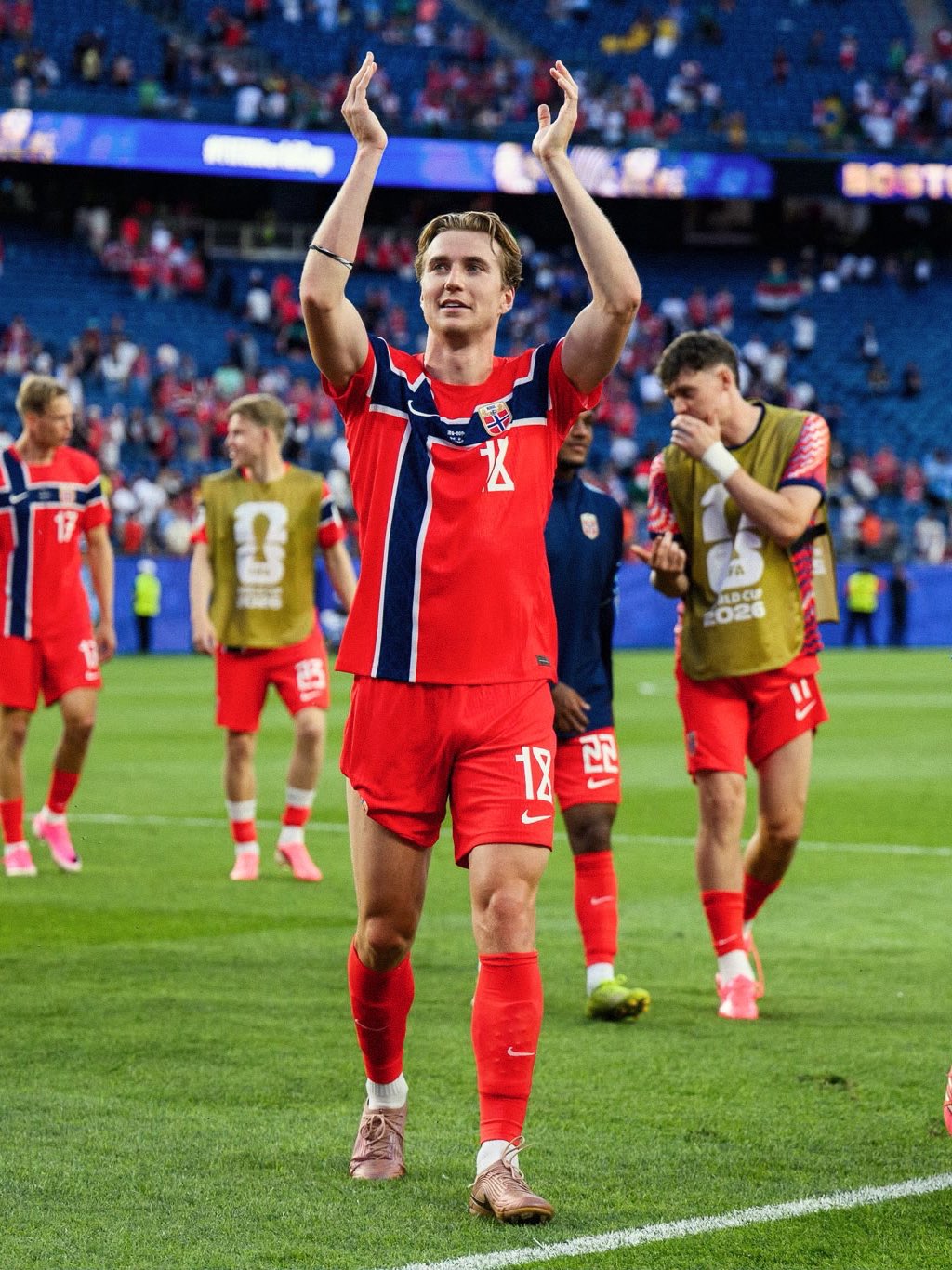
Source: https://x.com/SassuoloUS
Erik Thorstvedt was Norway’s first-choice goalkeeper at the 1994 World Cup, making three appearances across 96 career caps. His son Kristian is a midfielder — not a keeper, not even close — which already says something interesting about how football legacy mutates across generations. What Kristian inherited is not the position but the ambition: he was instrumental in Norway’s World Cup qualification, contributing in the decisive 4-1 win over Italy that sent his country back to the tournament for the first time in twenty-eight years.
At 2026, Kristian came off the bench in Norway’s opening game against Iraq, part of an attacking Norwegian side built around Haaland’s extraordinary output. The Thorstvedts are not the headline act in Norwegian football right now — but their story is a reminder that World Cup families run deeper than the famous surnames, and that the best legacies are not always the loudest ones.
Key facts:
- Erik Thorstvedt: Norway’s first-choice goalkeeper at 1994 World Cup, three appearances, 96 career caps
- Kristian Thorstvedt: contributed to Norway’s decisive 4-1 qualifying win over Italy
- Different positions — goalkeeper father, attacking midfielder son
- Kristian has four goals in 38 senior appearances for Norway
- One of three father-son pairs Norway fields at 2026 — the most of any nation at this tournament
#7 — Giuliano Simeone & Diego Simeone | Argentina
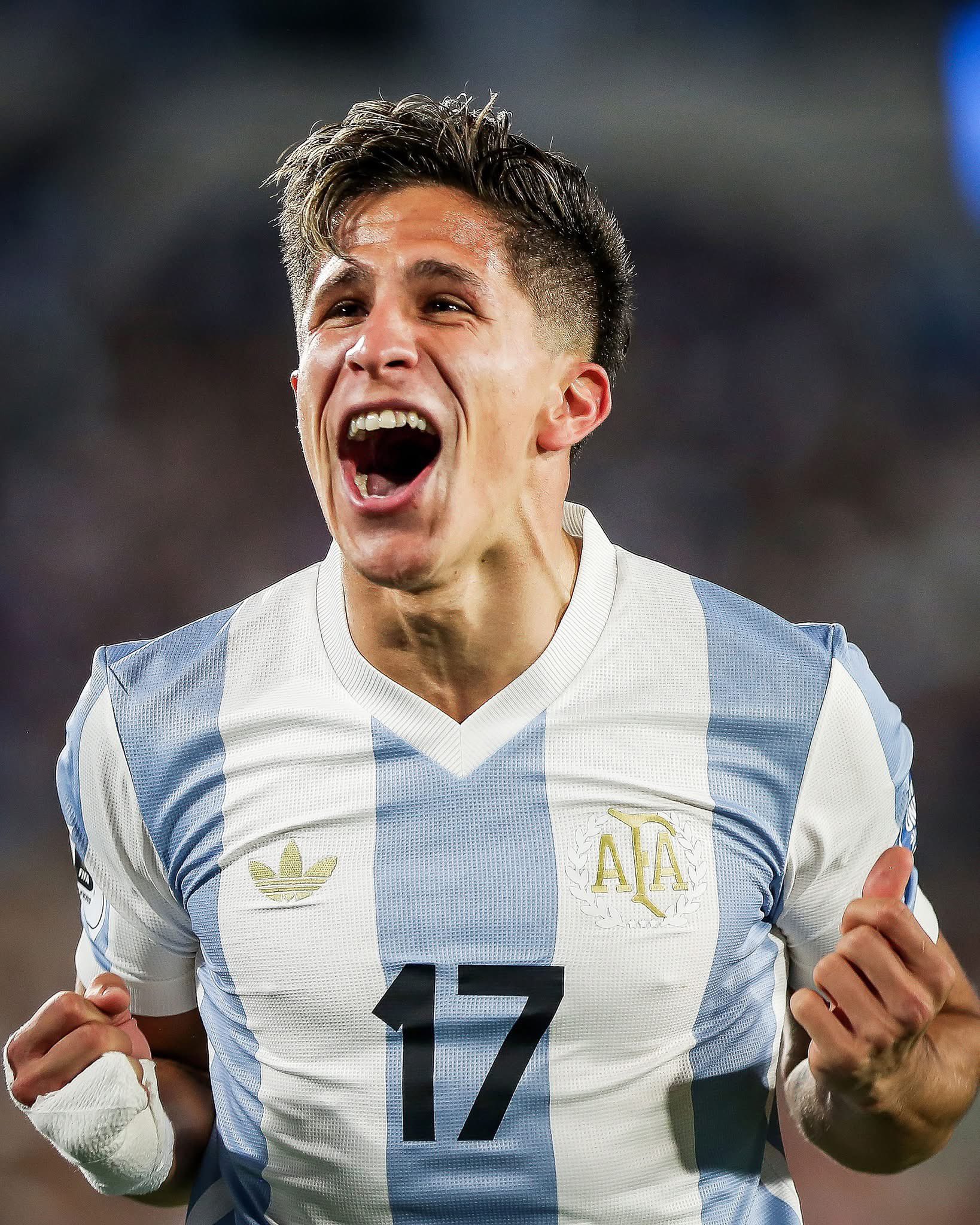
Source: https://x.com/atletiuniverse
Diego Simeone is one of the most significant figures in Argentine football history — not for World Cup goals (he scored none in 11 appearances across three tournaments) but for intensity, leadership, and the 1998 incident involving David Beckham that defined a generation’s memories of Argentina vs England. His son Giuliano is carving his own path at Atlético Madrid, the club his father manages — a relationship that is either uniquely inspiring or uniquely pressured depending on your perspective.
Giuliano scored in Argentina’s 4-1 qualifying win over Brazil, announcing himself as a genuine attacking threat in the Albiceleste setup under Lionel Scaloni. At 22, he is playing for the world champions in a team built around Lionel Messi, while his father watches from the dugout of a rival European giant. The generational story here is still in its very earliest chapters — and that is precisely what makes it worth watching.
Key facts:
- Diego Simeone: 11 Argentina World Cup appearances across 1994, 1998, 2002
- Giuliano Simeone: scored in Argentina’s 4-1 qualifying win over Brazil
- Giuliano plays under his father at Atlético Madrid — the only such club dynamic on this list
- Diego and Pablo Paz (Nico’s father) were Argentina teammates at France 1998
- At 22, Giuliano is the youngest son in Argentina’s father-son World Cup pairings at 2026
#6 — Anthony Elanga & Joseph Elanga | Sweden / Cameroon
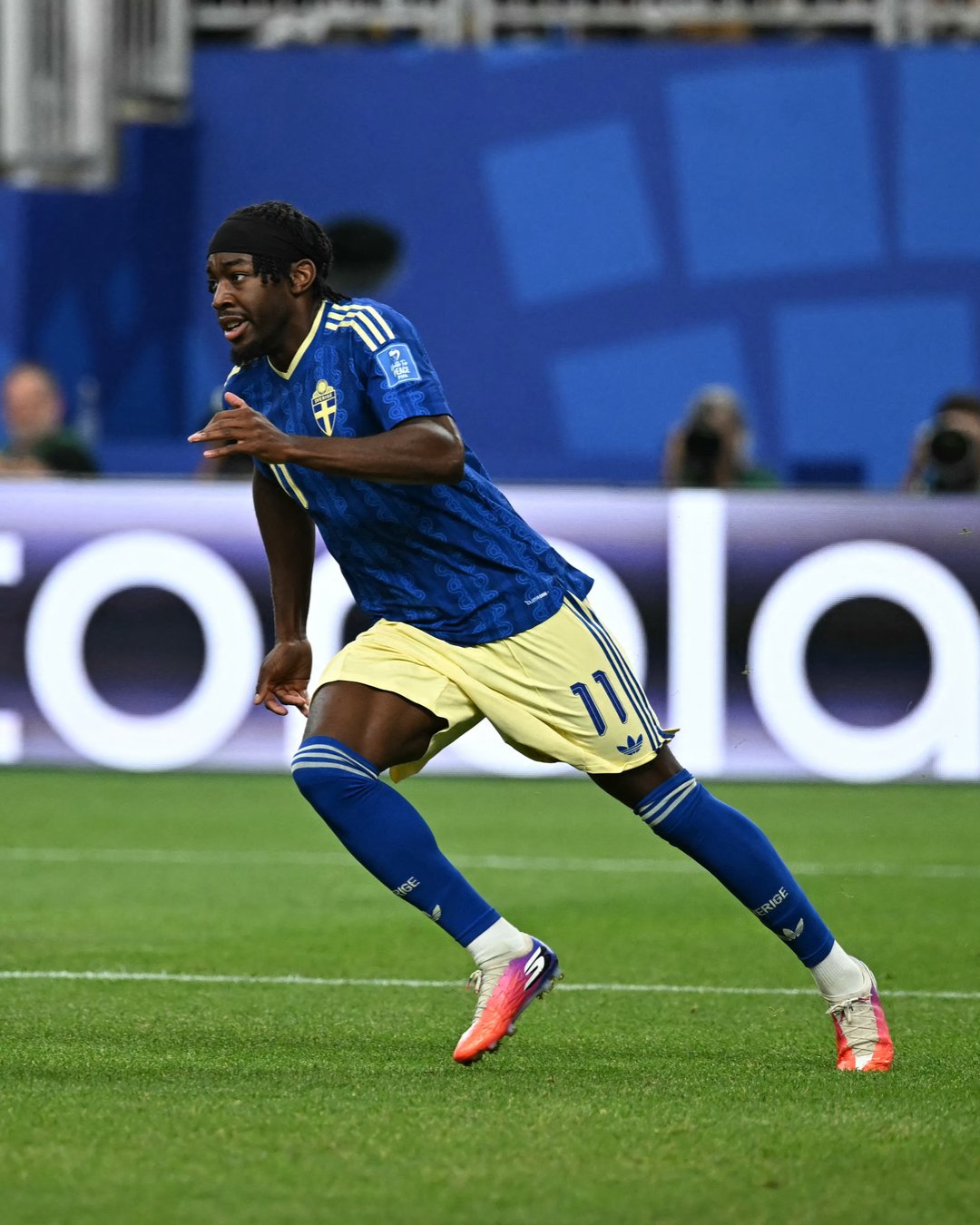
Source: https://x.com/premierleague
Joseph Elanga was included in Cameroon’s 1998 World Cup squad but never appeared in the tournament itself — the shirt was his, the pitch was not. His son Anthony has had no such difficulty. The Swedish winger scored on his 2026 World Cup debut against Tunisia and featured in both of Sweden’s group games, already surpassing everything his father experienced on that stage in France twenty-eight years ago.
What makes the Elangas particularly compelling is the different-countries dimension. Joseph wore Cameroon’s colours; Anthony, born in Sweden, chose the nation where he grew up. It is the same family, the same football instinct, expressed through two entirely different footballing cultures and two different flags. That contrast gives their story a texture most father-son duos on this list simply do not have.
Key facts:
- Joseph Elanga: Cameroon 1998 World Cup squad, zero appearances in the tournament
- Anthony Elanga: scored on his 2026 World Cup debut against Tunisia for Sweden
- One of the father-son pairs at 2026 representing different nations
- Anthony has seven international goals in 32 appearances for Sweden
- Already the more decorated World Cup participant in the family — by some distance
#5 — Francisco Conceição & Sérgio Conceição | Portugal
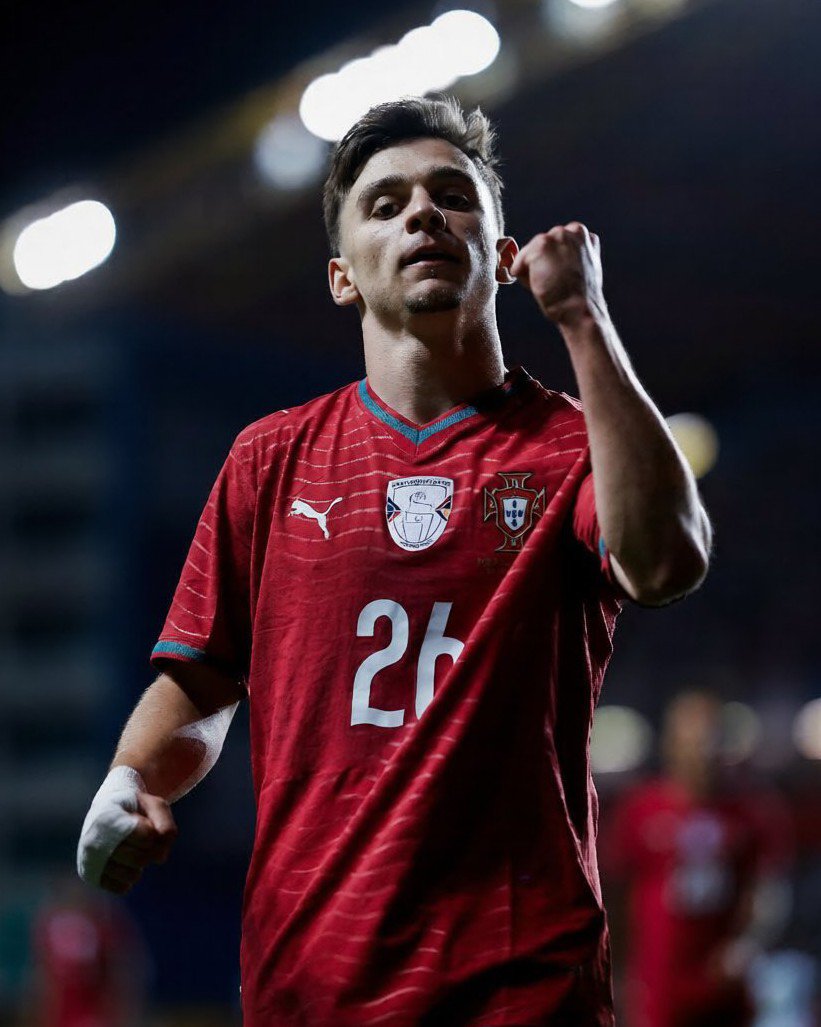
Source: https://x.com/TheFJEN
Sérgio Conceição made 56 international appearances for Portugal, scoring 12 goals, but managed none across three group-stage outings at the 2002 World Cup. His son Francisco arrives at 2026 as a Juventus winger — direct, quick, and capable of producing moments that change matches before defenders have time to adjust. He entered Portugal’s opening draw against Congo as a second-half substitute and immediately registered 0.53 expected assists across 45 minutes.
The Conceições are a clean inheritance story: father was a wide attacker, son is a wide attacker, both in Portugal’s red. What elevates them is the breadth of the family name in Iberian football — Sérgio built a respected playing career and became one of Europe’s more decorated club coaches thereafter. Francisco carries both threads into 2026 with the kind of directness that makes him one of Portugal’s most dangerous options off the bench.
Key facts:
- Sérgio Conceição: 56 Portugal caps, 12 goals, three appearances at 2002 World Cup
- Francisco Conceição: 2026 World Cup debut vs Congo, 0.53 xA in 45 minutes as substitute
- The clearest positional inheritance on this list — both played as wide attackers for Portugal
- Sérgio became one of Portugal’s most celebrated club managers after retiring as a player
- Francisco established himself at Juventus before earning his first World Cup appearance
#4 — Daley Blind & Danny Blind | Netherlands
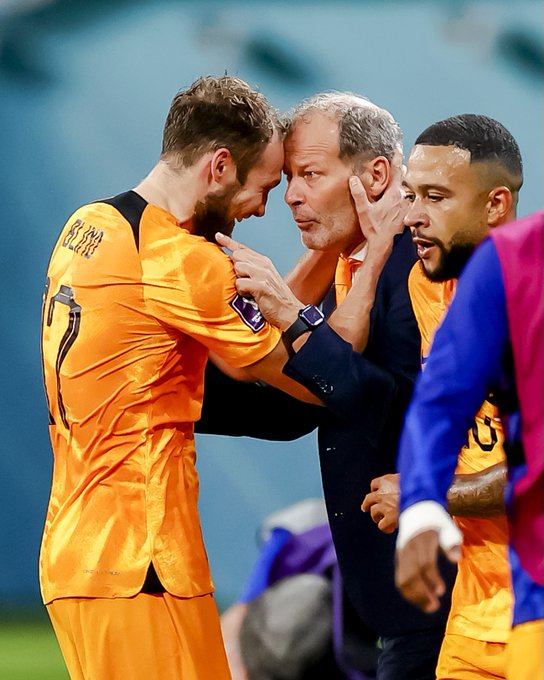
Source: https://x.com/FIFAWorldCup
Danny Blind was a cornerstone of the Ajax and Netherlands defence of the early 1990s — two World Cup appearances (1990, 1994), a Champions League winner’s medal with Ajax in 1995, and later a spell managing the Dutch national team. His son Daley began his career at the same club, won four Eredivisie titles, and became one of the most versatile defenders of his generation, capable of playing left-back, centre-back, and defensive midfield with equal composure.
Daley has now played at three World Cups — 2014, 2022, and 2026 — already surpassing his father’s two in tournament longevity. At 36, he is the senior leader of a Netherlands squad with genuine ambitions. Danny was even Daley’s coach at Ajax for a period, a dynamic that is either uniquely inspiring or uniquely pressured. “Having my father as a coach was not always easy,” Daley has said. “But he taught me everything I know about the game.” The Blinds are Dutch football at its most composed — intelligent, clean, and quietly relentless across two generations.
Key facts:
- Danny Blind: two World Cups (1990, 1994), Champions League winner with Ajax 1995, later KNVB head coach
- Daley Blind: three World Cups (2014, 2022, 2026), already surpassing his father’s tournament appearances
- Danny served as Daley’s coach at Ajax — the only father-coach dynamic on this list
- Daley scored a crucial goal vs Australia in the 2014 World Cup during Netherlands’ run to the semi-finals
- At 36, Daley is one of the oldest players at the 2026 tournament and a key leadership figure
#3 — Gio Reyna & Claudio Reyna | USA
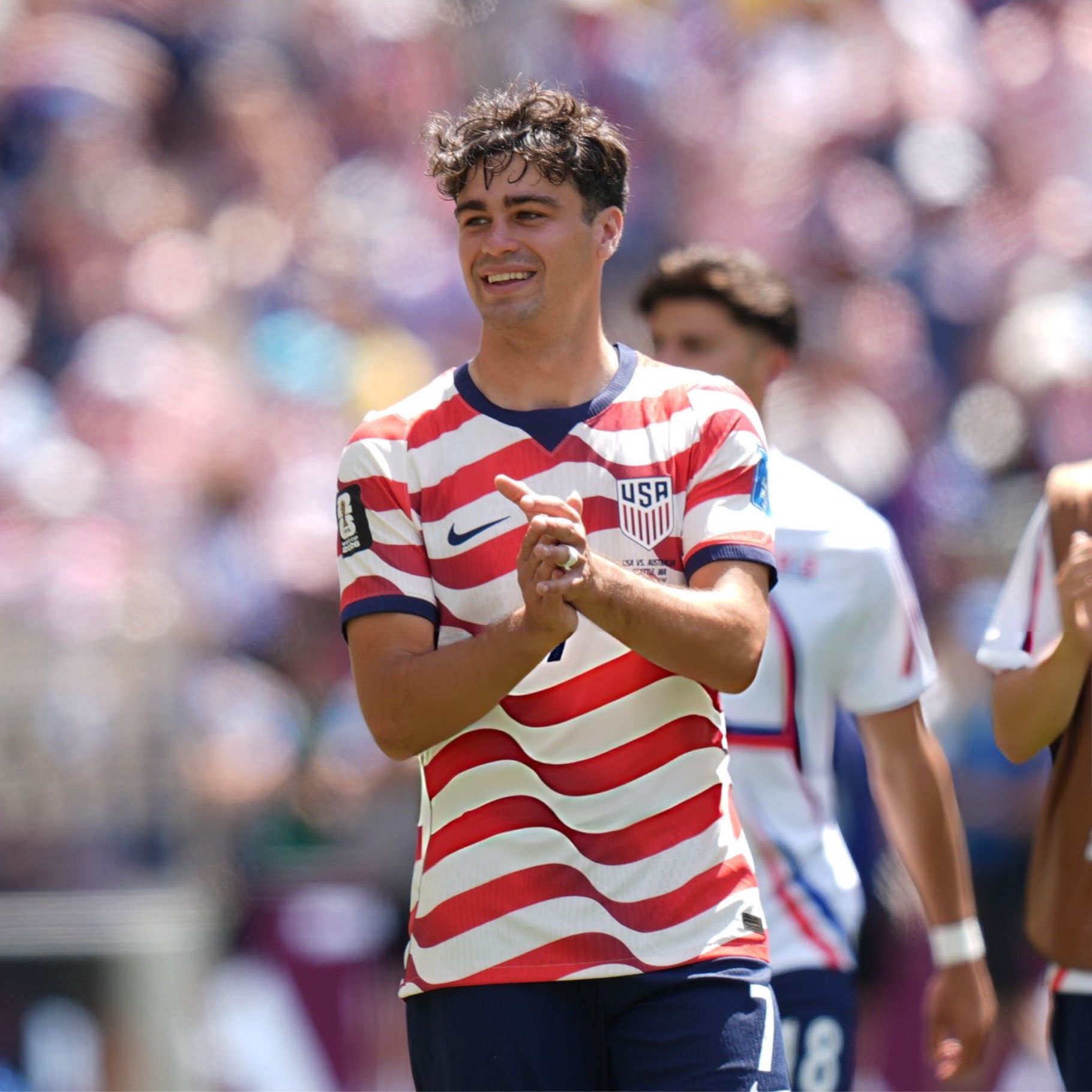
Source: https://x.com/bmg_edits
Claudio Reyna played at four World Cups for the United States — 1994, 1998, 2002, 2006 — logging 10 appearances and becoming one of the most recognisable American footballers of his generation. He never scored at a World Cup despite eight goals across 112 career caps. His son Gio is 23, at his second tournament, and has already done what his father never managed: score on football’s biggest stage.
Gio’s first World Cup goal came in the USMNT’s 4-1 group-stage win over Paraguay in 2026, a moment he celebrated by revealing that he and his wife were expecting a child — turning a footballing milestone into a generational announcement in real time. It is one of the most layered moments this tournament has produced. The Reynas are American football’s defining father-son story, and that story just got a new chapter.
Key facts:
- Claudio Reyna: four World Cups (1994–2006), 10 appearances, 112 senior caps, zero World Cup goals
- Gio Reyna: scored his first World Cup goal in 2026 vs Paraguay, celebrated with baby announcement
- Claudio never scored at a World Cup; Gio achieved it in his second tournament at age 23
- The most decorated father-son footballing family in USMNT history
- Gio is at his second World Cup following a difficult 2022 tournament in Qatar
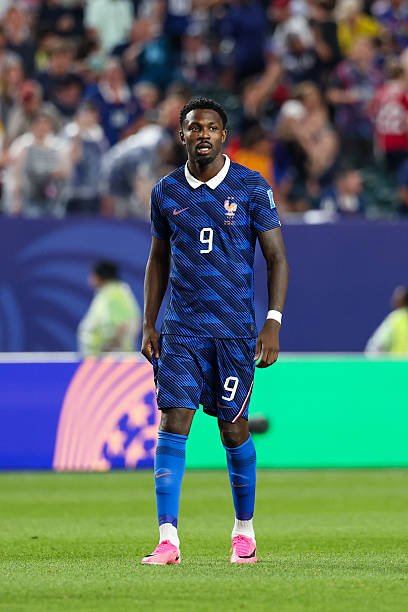
#2 — Marcus Thuram & Lilian Thuram | France
Source: https://x.com/FansNerazzurri
Lilian Thuram is one of the greatest defenders in football history — 142 caps for France, the 1998 World Cup on home soil, and both goals in the semi-final against Croatia. A man who scored twice in his entire international career and produced both in the same match, the one that sent France to the final they won. He reached two World Cup finals across three tournaments and remains one of the most authoritative presences French football has ever produced.
His son Marcus is built entirely differently: a 6’4″ striker at Inter Milan, physical and direct, more forward-facing energy than defensive sculpture. Marcus started the 2022 World Cup final against Argentina and enters 2026 as France’s expected first-choice centre-forward on a side that arrives as tournament favourites. The Thurams represent the most complete positional inversion on this list — a defending giant whose son became a striking one. That contrast sharpens the legacy rather than diluting it.
Key facts:
- Lilian Thuram: 142 France caps, 1998 World Cup winner, scored both goals in the semi-final vs Croatia
- Marcus Thuram: started the 2022 World Cup final vs Argentina, expected starter for France at 2026
- Lilian was a defender; Marcus is a striker — the starkest positional contrast among the top-ranked duos
- France are tournament favourites in 2026; Marcus is central to their attacking plans
- Lilian played in three World Cups (1998, 2002, 2006) — Marcus is now at his second
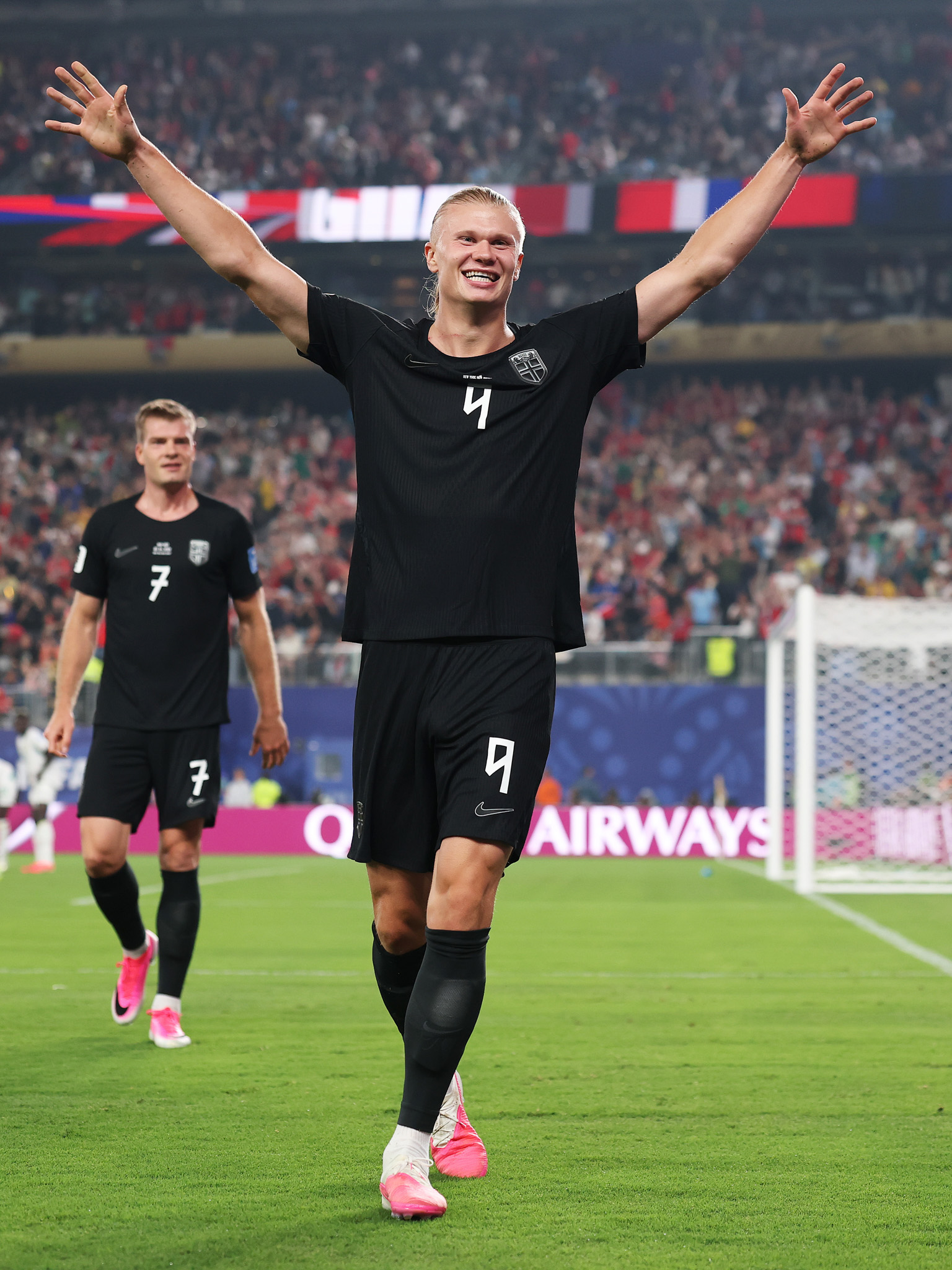
#1 — Erling Haaland & Alf-Inge Haaland | Norway
Source: https://x.com/FIFAWorldCup
Alf-Inge Haaland was a dependable, hard-working midfielder-defender who earned 34 caps for Norway and made two appearances at the 1994 World Cup in the United States. He never scored for his country in international competition. His son Erling is Norway’s all-time leading scorer, the most dominant striker in world football, and the man who scored twice on Norway’s 2026 World Cup debut against Iraq — on the opening weekend of a tournament his father attended as a young professional three decades earlier.
No father-son pairing in World Cup history illustrates the concept of generational leap more vividly. Alf-Inge was solid. Erling is, by any reasonable measure, one of the greatest strikers who has ever lived. The inheritance is not just of footballing ability — it is of Norway’s entire World Cup identity, compressed into one extraordinary athlete. If Norway make a deep run at this tournament, Erling Haaland will be the reason. And his father will know that the dream of a Norwegian World Cup challenge that eluded him in 1994 is now being pursued by his son — with considerably better odds.
Key facts:
- Alf-Inge Haaland: 34 Norway caps, two appearances at 1994 World Cup, zero international goals
- Erling Haaland: Norway’s all-time top scorer, scored twice on his World Cup debut vs Iraq in 2026
- The most dramatic generational leap in quality of any father-son duo on this list
- Erling entered the tournament as one of the leading Golden Boot contenders
- Norway are genuine dark-horse contenders at 2026 — something unthinkable in Alf-Inge’s era
The Most Notable Father-Son Duos in World Cup History
Since 1930, 39 father-son pairs have represented their nations at the World Cup. Here are the most significant:
- Paolo Maldini (Italy, 1990, 1994, 1998, 2002) — son of Cesare Maldini (Italy, 1962)
- Youri Djorkaeff (France, 1998, 2002) — son of Jean Djorkaeff (France, 1966)
- Diego Forlán (Uruguay, 2002, 2010, 2014) — son of Pablo Forlán (Uruguay, 1966, 1974)
- Xabi Alonso (Spain, 2006, 2010, 2014) — son of Periko Alonso (Spain, 1982)
- Javier Hernández (Mexico, 2010, 2014, 2018) — son of Javier Hernández Gutiérrez (Mexico, 1986)
- Kasper Schmeichel (Denmark, 2018, 2022) — son of Peter Schmeichel (Denmark, 1998)
- Cha Du-ri (South Korea, 2002, 2010) — son of Cha Bum-kun (South Korea, 1986)
- Pepe Reina (Spain, 2006, 2010, 2014, 2018) — son of Miguel Reina (Spain, 1966)
- Thiago Alcântara (Spain, 2018) — son of Mazinho (Brazil, 1990, 1994)
- Celso Borges (Costa Rica, 2014, 2018, 2022) — son of Alexandre Guimarães (Costa Rica, 1990)
- Patrik Andersson (Sweden, 1994) — son of Roy Andersson (Sweden, 1978)
- Daniel Andersson (Sweden, 2002, 2006) — son of Roy Andersson (Sweden, 1978)
The Legacy and Future of Football’s World Cup Dynasties
The 2026 World Cup will be remembered as the tournament where footballing bloodlines became a storyline in their own right. Fourteen father-son pairs at a single edition is unprecedented, and the stories they carry — the Thurams inverting position and style across a generation, the Haalands rewriting what a Norwegian striker can be, the Reynas turning a goal celebration into a third-generation announcement — reflect something deeper than coincidence. Elite football is being passed down with increasing intentionality, and 2026 is the most vivid proof of that yet.
What is shifting is the nature of the inheritance itself. In earlier generations, sons broadly followed fathers into similar roles. At 2026 the gaps are wider and more interesting: defenders producing strikers, fathers who represented one nation producing sons who chose another, fathers who reached four World Cups producing sons still on their first. The football dynasty is becoming less about replication and more about transformation.
The players to watch going forward are those still in the earliest chapters of their World Cup careers. Giuliano Simeone at 22, Nico Paz, Francisco Conceição — these are sons with multiple tournaments ahead of them. And beyond them, the next generation is already forming. When Gio Reyna revealed his wife’s pregnancy in his 2026 goal celebration, he reminded everyone watching that the cycle, quite literally, never stops.
Frequently Asked Questions
How many father-son pairs are at the 2026 World Cup?
Fourteen confirmed father-son pairs are represented at 2026 — the highest number ever at a single World Cup edition.
Which father-son duo ranks #1 for legacy at the 2026 World Cup?
Erling and Alf-Inge Haaland — the most dramatic generational leap in quality of any pairing, with Erling already Norway’s all-time top scorer at his first tournament.
Did any fathers at the 2026 World Cup win the tournament?
Yes. Lilian Thuram won the 1998 World Cup with France. His son Marcus is now France’s starting striker at 2026 as they enter as tournament favourites.
Which father-son pairs at 2026 represent different countries?
At least two confirmed pairs: the Elangas (Joseph for Cameroon, Anthony for Sweden) and the Zidanes, though Luca Zidane’s participation at 2026 is unverified.
Has any World Cup family produced three generations of players?
Yes — the Maldinis (Cesare, Paolo, and Daniel) and the Hernández family in Mexico both achieved three-generation World Cup representation across different editions.
What makes the Reyna family story unique at 2026?
Claudio played at four World Cups but never scored. Gio scored his first World Cup goal at 2026 and celebrated by announcing his wife’s pregnancy — connecting three generations in a single moment.
Which nation has the most father-son pairs at the 2026 World Cup?
Norway leads with three confirmed pairs — Haaland, Thorstvedt, and Sørloth — reflecting a remarkable concentration of generational football talent from a single nation.