
Six defeats in seven have exposed Liverpool’s uneasy balance between creativity and control. Arne Slot’s team look overcomplicated, underconnected, and out of sync — but not beyond repair.
Liverpool are in trouble. Not the kind that demands panic yet, but the kind that gnaws at the edges of confidence, where every mistake feels heavier and every pass carries a hint of hesitation. Six defeats in seven games — for a reigning Premier League champion — isn’t just a wobble. It’s a pattern. And that pattern is beginning to define Arne Slot’s second season in charge.
Their 3–0 defeat at home to Crystal Palace in the Carabao Cup wasn’t just another bad night. It was symptomatic. The malaise isn’t about effort or attitude; it’s structural, tactical, psychological. Every problem Liverpool have suffered in recent weeks showed up again under the Anfield rain — loose in possession, disorganised when pressed, vulnerable in transition, and curiously indecisive in their build-up.
And yet, this was a team that, only months ago, looked capable of dominating English football again. So what’s gone wrong?

Too Much Talent, Too Little Structure
Liverpool’s summer was full of promise. Isak, Wirtz, Ekitike, Frimpong, Kerkez — a statement window, really. Slot had inherited a team that had just rediscovered its swagger under his first campaign and reinforced it with a collection of gifted technicians and versatile forwards.
But in football, adding world-class players isn’t the same as building a world-class team.
You can see it in how Liverpool move the ball. Too many players trying to do too much. Sequences that should be quick and clean — a one-two through midfield, a simple pass to open the pitch — turn into chaotic improvisation. Someone cuts inside, another drifts wide, and the rhythm breaks. The ball is lost, the counter begins, and Liverpool are suddenly sprinting backwards.
The numbers tell part of the story. Their possession losses in transition have spiked compared to last season, while their recoveries in the middle third have dropped. Slot’s side concede far more chances from counter-attacks than any of the other “big six” clubs.
It’s not hard to diagnose why.
Players like Wirtz, Isak, Ekitike, and Gravenberch thrive when they can create, when they have space to play instinctively. They’re all used to being the main conductor — the one who takes risks and sees the pass others can’t. Put too many of those personalities on the pitch at once, and the result can feel like an orchestra warming up rather than performing.
As one fan put it after the Brentford defeat: “Sometimes it feels like everyone’s trying to be the assist-maker.”
That creative overcomplication has become a virus. Instead of quick, simple link play, Liverpool’s transitions often involve low-percentage attempts — a lofted through-ball to nobody, an overhit diagonal, a flick toward a player not quite ready for it. The intention is noble, but the execution repeatedly kills momentum.
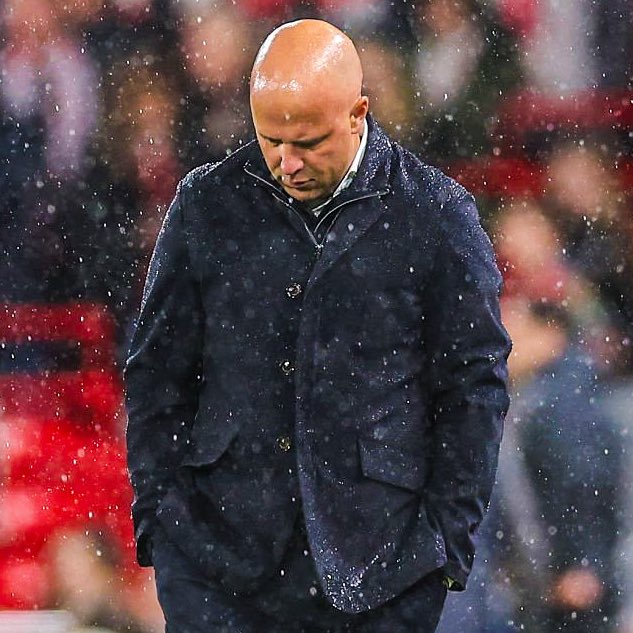
Source: x.com/eurofootcom
Slot’s Tactical Tinkering
Arne Slot was hailed in his first season for his clarity — his 4-2-3-1 shape pressed high, built methodically, and used possession as a weapon. Now, that clarity feels blurred.
In recent weeks, Liverpool have switched between a back four and back three, alternated between a narrow box midfield and a 4-3-3, and used at least five different combinations in the front line. None of it looks settled.
The issue isn’t experimentation itself — every coach tests ideas — but the sense that Slot is guessing rather than guiding.
Jamie Redknapp said it bluntly after the Palace defeat: “It was the wrong team. Make no mistake. You’ve made ten changes, surrounded your kids with fringe players, and given them no platform. You can’t tell me that team was ever going to beat a good Palace side.”
That quote stings because it’s true. Slot made ten changes, left his best players out completely, and filled the bench with teenagers. His reasoning — that Liverpool use this cup to blood youngsters — isn’t false. But timing matters. When you’ve lost five of six and confidence is crumbling, you don’t feed more uncertainty into the mix.
The defeat wasn’t just about youth. It was about rhythm. Slot’s sides depend on coordination — pressing lines that move in sync, full-backs that time their overlaps with the midfield. With so many new partnerships and unfamiliar roles, Liverpool were exposed.
Even the structure itself looked uneasy. Andy Robertson, a natural full-back, played as a central defender. Wataru Endo was shoehorned into a right-sided centre-back role. The experiment collapsed quickly — Sarr and Pino exploited the gaps ruthlessly.
Slot defended himself after the match: “This club has always used this competition for academy players… it felt to me the right decision and I’ve not changed my opinion of that because we lost.”
Courageous words, but the performance said otherwise.
Defending the Undefendable
The set-piece issue is bordering on farce. Ten straight games without a clean sheet. Far too many goals conceded from corners, wide free kicks, and second balls. Liverpool have allowed 13 goals from dead-ball situations across competitions already — more than they did in the entirety of last season.
Slot admitted after Brentford: “We can’t defend set pieces properly right now.” Honesty is admirable, but as Jamie Redknapp noted, “That will transmit to the players. It’s not a great idea to be saying that publicly.”
The visual pattern is consistent: Liverpool lose the first header, fail to react to the second, and get punished. There’s hesitation, a kind of collective flinch when the ball enters the six-yard box.
Even Virgil van Dijk, once the league’s calmest presence, looks uncertain. His body language — shoulders dropped, arms spread after every miscommunication — mirrors the mood of the fan base. Wayne Rooney said on his BBC podcast, “Van Dijk and Salah don’t look like leaders right now. You can see it in their body language — it affects everyone else.”
Leadership doesn’t vanish overnight, but it can fade under stress. And this team feels heavy with it.
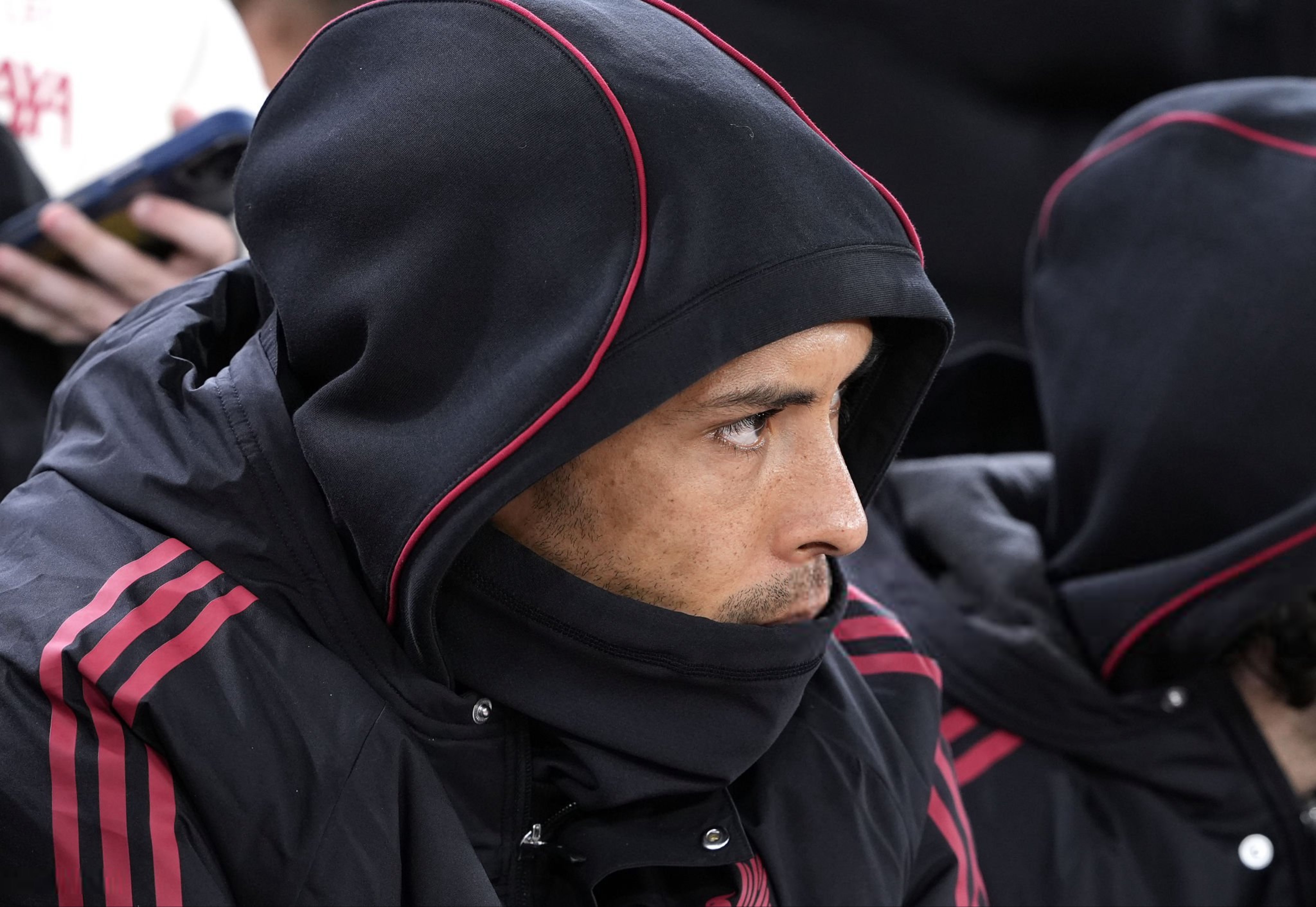
Source: x.com/B0LFC
A Crisis of Rhythm and Roles
Slot’s Liverpool don’t press as a unit anymore. The front line goes, the midfield hesitates, the back four stay pinned. Gaps appear everywhere.
The balance in midfield is part of the problem. Ryan Gravenberch’s injury has hurt more than expected — his ability to recycle possession and connect phases was vital. Without him, Liverpool’s midfield often feels too attacking or too cautious, never both.
Mac Allister looks fatigued, Szoboszlai still searches for fluency, and Wirtz — brilliant but unpredictable — often drifts into the same spaces Salah wants. The chemistry isn’t there yet.
There’s also the matter of Isak and Ekitike, both technically gifted forwards but stylistically different. Slot hasn’t decided who leads the line. Ekitike drops to combine; Isak prefers to run channels. When both play, the spacing collapses, and neither looks comfortable.
As Phil McNulty of BBC Sport wrote, “Liverpool are a dysfunctional, soft touch at the moment. Slot still has credit in the bank, but he needs to find his best team — I’m not sure he knows it yet.”
The Palace Gamble
Everything crystallised against Crystal Palace. The team selection was shocking but not entirely surprising. Slot made a statement — prioritising the league and Champions League over the domestic cup. In theory, logical. In practice, disastrous.
Liverpool’s lineup contained three teenagers, two full-backs playing out of position, and a goalkeeper making his debut. Palace, meanwhile, fielded a near full-strength side. Ismaila Sarr — a perpetual tormentor — punished Liverpool twice before halftime, and Yeremy Pino added a third late on.
It was the first time in 91 years that Liverpool had lost a domestic cup tie at Anfield by three goals without scoring. A statistic that reads like satire.
Former Liverpool defender Stephen Warnock didn’t hold back: “He’s deflecting and making excuses. You can’t moan about fixture congestion at a club that plays in the Champions League. If your depth isn’t good enough, that’s on recruitment.”
Slot, for his part, stood firm. He pointed to fatigue, injuries, and a thin squad. “Our squad is probably not as big as people think it is,” he said. “We mainly have 20 players and then four injuries.”
He has a point — Liverpool did lose Leoni, Isak, and Gravenberch to fitness issues, and the rotation risked more damage. But as many pundits noted, when you’re bleeding form, you don’t voluntarily open another wound.
Echoes of 2014–15
There’s a strange déjà vu to all of this. Liverpool’s current slide mirrors the Brendan Rodgers season after finishing second in 2013–14. A huge summer rebuild, a rush of new talent, but no cohesion. Rodgers rotated heavily, lost rhythm, and was gone within months.
That year, too, Liverpool went to the Bernabéu with a weakened side, prioritising a domestic fixture. Rodgers’ logic was similar to Slot’s: preserve legs, focus on winnable games. The symbolism was brutal — it told the world Liverpool were no longer sure of themselves.
The difference is that Slot isn’t fighting for his job — at least not yet. The club hierarchy, by all reports, remain calm. McNulty again: “Liverpool is not the sort of club to panic… Slot has plenty of credit in the bank.”
But calm doesn’t mean comfortable. The fan base can sense the drift. It’s not the defeats alone, it’s the repetition of them — losing the same way, to the same kinds of goals, week after week.
Mental Fatigue, Not Managerial Collapse
It’s easy to turn every losing streak into a crisis of management, but much of Liverpool’s current problem feels like exhaustion — mental and tactical. The fixture pile-up, the integration of half a new starting eleven, the burden of being defending champions — it all accumulates.
Slot said after the Palace defeat: “I saw a team that is struggling to play three games in seven days. But it’s not an excuse.”
It is, in part, an excuse — but a fair one. The players look spent. Salah has been subdued, Van Dijk reactive, Mac Allister leggy. Even the younger signings seem caught between pressing patterns and instinct.
Still, excuses don’t mask trends. Liverpool have scored first in only one of their last seven matches. They’ve conceded before halftime in five of them. They’re losing duels, losing set-piece battles, and losing structure.
When teams like Crystal Palace, Brentford, and Villa all exploit the same weaknesses week after week — quick counters, high pressing on the right side, balls behind Kerkez — it’s not bad luck. It’s predictability.
Leadership and Accountability
Wayne Rooney made an observation that struck home: “If Salah and Van Dijk’s body language isn’t right, it affects everyone else.” He’s right.
Van Dijk remains an elite defender, but his presence doesn’t feel commanding anymore. The aura — that sense of inevitability when he’s in control — has dimmed. Salah, too, still scores, still threatens, but often feels isolated, detached from the collective rhythm.
Liverpool have leaders, but not communicators. Robertson’s intensity is there, Szoboszlai’s effort visible, but no one seems to marshal the side through adversity. Under Klopp, leadership was a chorus. Under Slot, it’s fragmented.
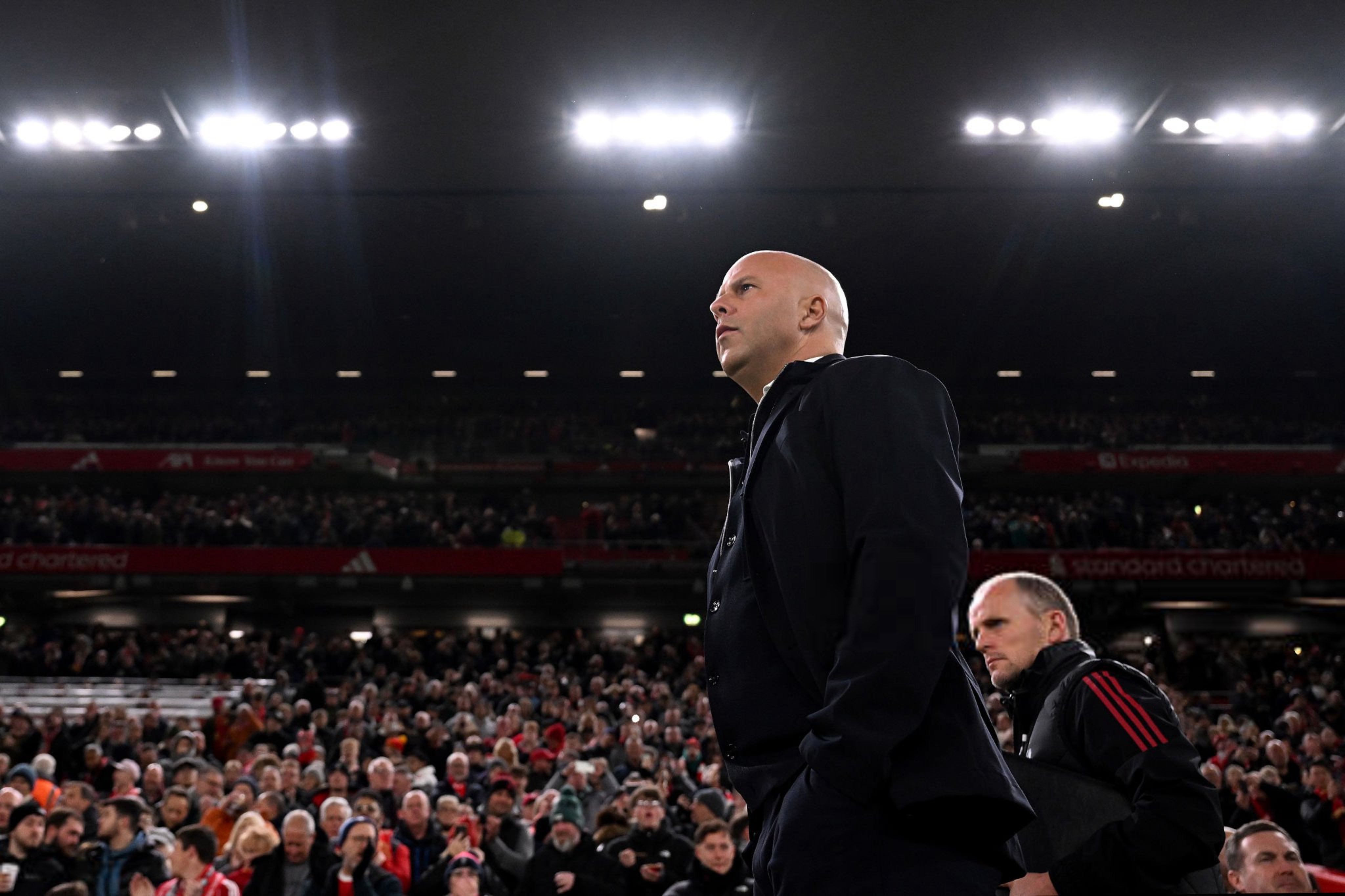
Source: x.com/eurofootcom
The Slot Paradox
Arne Slot isn’t blameless, but neither is he lost. His methods are proven — positional play, vertical passing, structured pressing. The challenge is translating that philosophy to a squad packed with individualists.
What made his Feyenoord sides so effective was their cohesion — everyone knew their lanes, their timings. At Liverpool, his best players thrive in chaos, not choreography. The adjustment is messy.
Slot has also faced circumstances Klopp rarely endured — a mid-season identity rebuild after winning the title, an influx of creative forwards rather than workhorses, and a fan base conditioned to expect instant miracles.
He still has the trust of the board. Fabrizio Romano reported this week that “Liverpool absolutely trust Arne Slot 100 percent… they believe this is tactical, not relational.” That matters. Slot’s job isn’t under threat, but his authority will be if the results don’t shift soon.
The Road Ahead
Aston Villa at home. Real Madrid at Anfield. Manchester City away. That’s Liverpool’s next ten days. A run that could redefine the season — and Slot’s tenure.
Beat Villa, and the tone changes. Compete with Real, and belief flickers back. Lose all three, and the noise will be deafening.
Slot’s biggest task isn’t tactical anymore; it’s psychological. He needs to stop the bleeding — restore confidence, reintroduce simplicity, and remind his team what they were good at. A Liverpool side playing with freedom and aggression is terrifying. Right now, they play with caution and clutter.
He can start by stripping things back. Pick a settled eleven. Rebuild the midfield spine. Use the Carabao Cup exit as a blessing — fewer matches, more training time. Reconnect Salah and Wirtz, stabilise the defensive shape, and let Isak or Ekitike own the role, not share it.
Because this isn’t a lost cause. Slot’s Liverpool are too talented, too smart, too proud to unravel completely. But brilliance without cohesion is useless, and tactical innovation means nothing without defensive backbone.
Right now, Liverpool are learning a painful truth every great side eventually faces — you can’t improvise your way out of a slump.
You fix it. One simple pass at a time.