 feaver
Academies in esports have become very popular. Many big esports organizations already have young lineups that are developing and progressing. The main goal of these squads is not to lead an entire team to the championship but rather to bring up future champions for their primary team. Each player develops individually, some faster than others, some slower. It’s not uncommon to find genuine nuggets in these teams.
Chinese experience
In China, the academy system has existed for a very long time. It is very well developed. In China, young Dota 2 squads started to gain popularity back in 2013. Already in 2014, a team called LGD.CDEC entered the game.
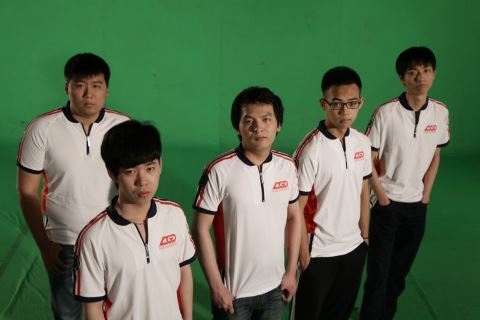
LGD.CDEC 2014
The abbreviation CDEC stands for “Chinese Dota Elite Community.” With this name, the Chinese Dota scene claimed its importance on the world stage. By the way, in that famous LGD.CDEC lineup, a young talent with the nickname Maybe made his first public appearance. Now a lot of people know him as Somnus. By the way, Maybe became the main player of LGD.CDEC. Despite his young age, he was the captain of the team. CDEC Gaming became a separate brand six months later, and we don’t see LGD in the team tag anymore.
Maybe is the young star
Then, in November, when Maybe was 19, he moved from CDEC to the main LGD Gaming squad, where he eventually reached his peak form and became the big discovery of the year. The young talent crushed anyone who came on his lane. In the end, LGD signed Maybe to a very long-term contract. Maybe would spend the next 2,340 days under the wing of LGD Gaming and lead the team to the top more than once.
This is one of the most high-profile and unprecedented cases of a player moving from the academy to the main roster. After all, the LGD organization essentially raised this star. Of course, that doesn’t take away from the talent of Maybe. He’s a terrific player.
The fate of CDEC
After Maybe left, the CDEC roster changed. In 2015, just before TI5, Shiki and Xz joined the team. CDEC Gaming sensationally made it to Wild Card after the Chinese qualifiers at TI5. It was CDEC that won the open qualification in China. They left behind other academies like Vici Gaming Potential, Newbee Young, and TongFu.WanZhou.
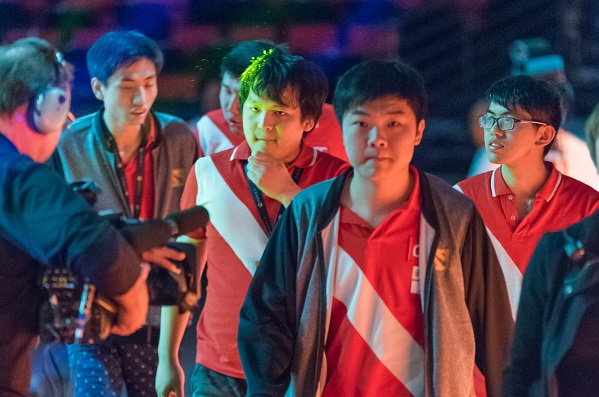
Next, the TI5 scenario became as unpredictable as possible. Who would have thought that a team from China’s open qualifiers, the academy, would win the Wild Card and make it to the Grand Final of The International? Many favorites couldn’t even dream of that, but CDEC did. Yes, they lost the Grand Final, but they gave us a lot of spectacular and fantastic games.
IG.Vitality and Papparazi
Invictus Gaming also had its academy in 2016. That’s when IG.Vitality took the stage for the first time. They had a roster of young players. They rocked the Chinese tier-2 tournaments and also played at the top level. Yes, at Majors and TI, they could not show good results because of the high competition, but this team gave us one of the most famous Chinese carry players – Paparazzi, also known as Eurus.
Newbee Young and Sccc
The legendary Newbee, winners of The International 2014, also had several young rosters. The first academy founded by the organization was Newbee Young. The team played for the first time in 2014.
As time passed, Chinese Dota fans noticed a young and very ambitious mider of the young academy. Sccc was amazed by his skills. He always won his lane steadily and afterward made very spectacular and sometimes even unconventional actions. Song Chun played to develop his skills in the junior squad of Newbee until he was transferred to the main roster in 2016. Sccc elevated Newbee’s game to a new level. In 2017, Newbee finished 2nd at The International. At the time, they were rightfully one of the best teams in the world, thanks in large part to Sccc.
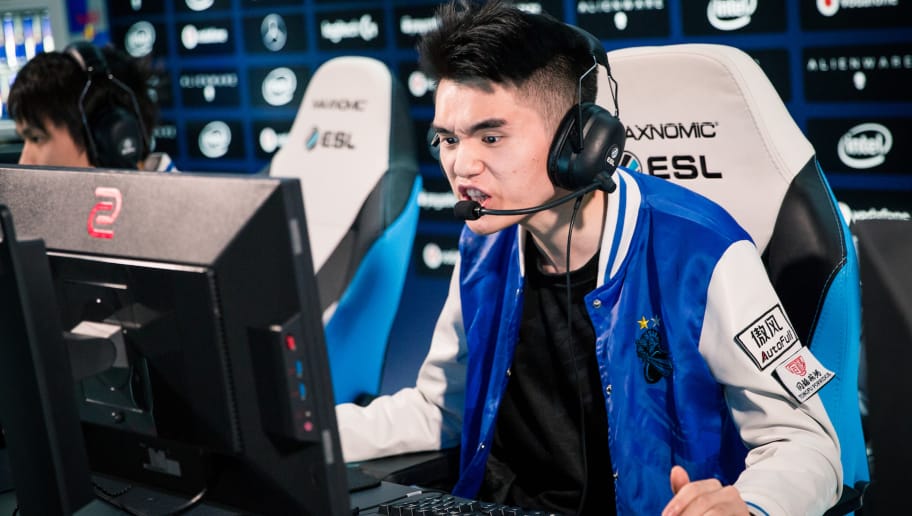
This is another example of how a young academy undergrad has become a true titan of the Dota scene.
What we have now
After several precedent-setting cases, Chinese teams are actively using the academy system. Many large organizations have multiple rosters each. This is very convenient in today’s DPC system, as these squads can compete in different divisions. Plus, you can always hope that you don’t have to scramble to find new players before the season starts. In the current DPC season, China’s second division already has two academies – Aster.Aries and CDEC. There are also still open qualifiers in China.
Eastern European Experience
Eastern Europe, too, not long ago, began to test the strategies of Chinese teams. Many notable EEU players got their start in these teams, such as fng and lil.
The Virtus.Pro squad at that time was simply incapable of continuing to play. The players in the old lineup had lost motivation, and the results were very poor. Already in April 2015, Virtus.Pro took the entire ASUS.Polar squad under its wing.
Not to say that academies are very popular in Eastern Europe, but even this season has several teams.
For example, AS Monaco Gambit currently has two squads that play in two divisions.
Team Empire created their second squad Empire.Hope back in 2018. There is a certain symbolism in the name Hope, because the meaning of the academy is to educate young players. These young players are supposed to be the organization’s hope for a better future.
VP.Prodigy
VP.Prodigy is the next experiment of the VP new CEO Sergey Glamazda. He created a team of young players who performed very well in public games. In addition, Glamazda emphasized that the players brought together were friends and communicated well with each other.
The result was not long in coming. After a short time Glamazda disbanded the old VP all-star squad and a secondary squad with young guys, some of whom were only 18 years old, became the main roster.
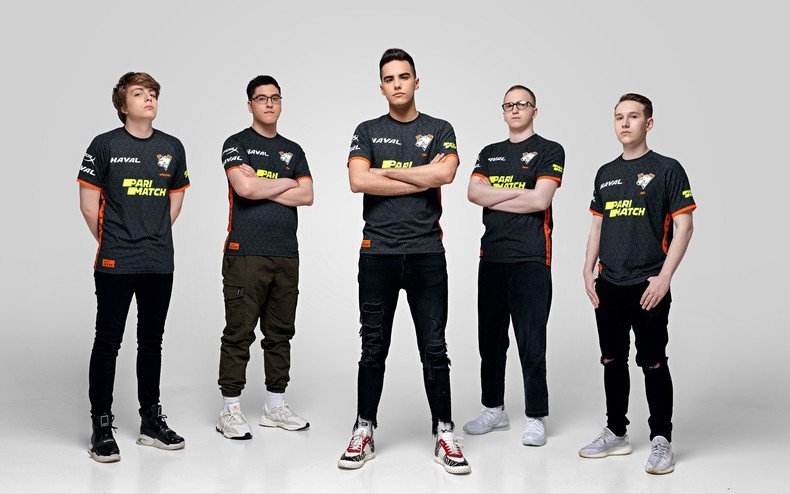
A little later, this team would become one of the best in the region and take 5-6th place at The International 10.
As for Western Europe and North America, the academy system did not take root in these regions, although there were attempts.
Academies in CS:GO
But in CS:GO, the situation is completely different. There the system of academies in Europe and the CIS is very well developed. Almost all of the top organizations have second rosters. We can evaluate their effectiveness in practice. Just take the transfer of b1t in 2020 from Na’Vi Junior to the main roster. Now, the Internet is filled with rumors that the 16-year-old Na’Vi Junior m0NESY may move to G2 or another Tier-1 club.
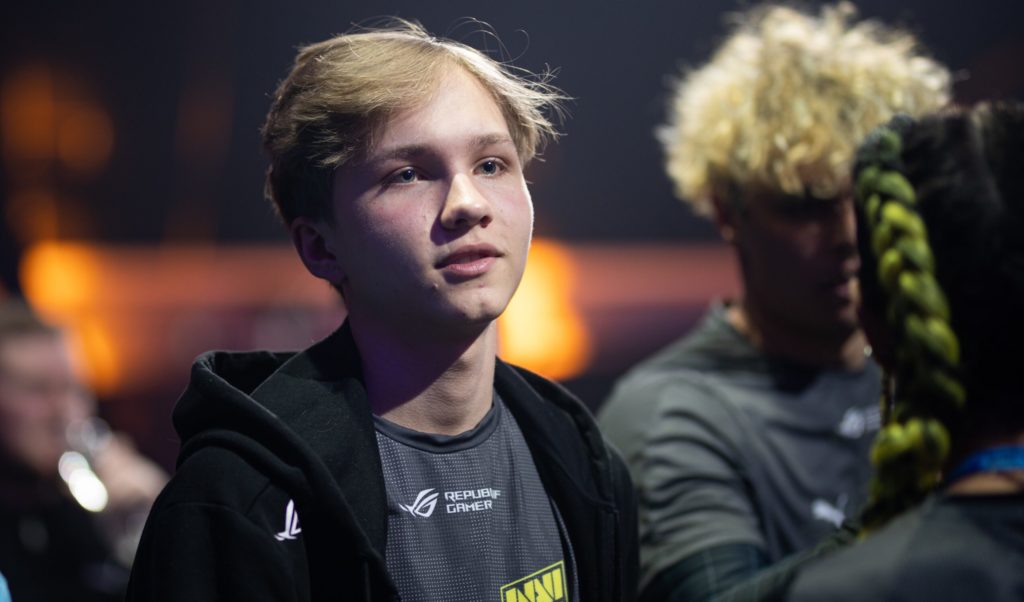
With the help of academies, top teams rejuvenate their rosters, and the variety of different small tournaments make it possible to maintain such rosters. Counter-Strike has more tournaments, especially smaller online tournaments, where you can fight for prize pools of $1,000 to $5,000. This allows players with younger rosters to stay afloat. Organizations do not incur great losses by keeping young teams.
The Ukrainian company WePlay Esports has even created a tournament with LAN finals in Kyiv, called WePlay Academy League. This is a tournament for young teams where academies from different organizations take part. By the way, MOUZ.NXT are two-time champions of this tournament. Now this team is in the top 30 teams according to HLTV rating.

Now, large organizations are actively interested in players from young teams. They are fighting for the youngest and most promising players. Many of the top teams will get 16-year-old boys into their squads.
Impact
To sum it up, we can conclude that academies have a huge impact on the future of esports. Esports is becoming more and more like a classic sport. The scale of events, salaries, prize pools, and transfer costs continues to grow. Meanwhile, the academies continue to nurture new generations of young players.